Tipping In Paris: Restaurants, Cafes And Food Tour Guides
Paris menus carry a 15 percent service charge inside every printed price, so the tipping math you use at home quietly doubles the cost of a meal here. This guide separates what the law already covers from what Parisians actually leave on the table, and it answers the question every food traveler asks on the walk to the meeting point: does the guide get a tip?
Short answer
No tip is legally required anywhere in Paris. A 15 percent service charge is already included in every printed restaurant and cafe menu price, and no one may demand a pourboire on top of it. In practice, rounding up or leaving 1 to 2 euros per person at casual meals is common, and 5 euros on a 100 euro dinner counts as generous.
The bill arrives, the waiter sets down the card machine, and the moment every visitor rehearses begins: how much do I leave? In Paris the honest answer is usually less than you fear. French law folds a 15 percent service charge into every displayed restaurant and cafe menu price, and the government's consumer guidance is blunt that a pourboire, the optional tip, can never be demanded. What locals do is small and casual: coins at a cafe, rounding up at dinner, nothing at a bakery counter.
That leaves the questions this guide answers properly. What does service compris actually cover on the bill? Do you tip at a counter at all? And the one that comes up on every food walk: does the guide expect anything at the end? Each section below opens with a direct answer, so you can read the parts you need and skip the rest. The figures come from French consumer guidance, the city's own published rules, and the verified tour listings on this site.
Is Tipping Expected In Paris?
No, tipping is not expected in Paris the way it is in the United States. French law builds a 15 percent service charge into every displayed restaurant and cafe menu price, and no staff member may demand a pourboire on top of it. What Parisians actually do is round up or leave a euro or two at casual meals, which makes the whole system lighter and far cheaper for visitors.
The word to know is pourboire, literally "for a drink." It is a voluntary thank-you, not a wage subsidy. The official consumer protection guidance from the French economy ministry states that prices are service compris, service included, and that a tip is optional with no one entitled to ask for one. That single legal fact resets every instinct you brought from home.
Visitors often misread the absence of tipping culture as coldness. It is the opposite. Because the 15 percent is already inside the menu price, your waiter is not working for free, and the price you saw on the menu board outside is the price you actually pay. A small extra is a genuine gesture rather than a social debt.
There is one corner of Paris guiding where the tip is the entire business model, and it gets its own section below. On booked food tours, cooking classes and tastings, the price you paid is the whole price. Before deciding whether a booked tour is right for you at all, it helps to read whether a Paris food tour is worth it, because the tipping question sits inside that bigger one.
How Service Compris Works On Every Paris Restaurant Bill
Every printed menu price in a Paris restaurant already contains the service charge, listed as service compris. The 15 percent covers the staff, so the price you see is the price you pay, apart from items the menu displays separately. A pourboire is a voluntary extra, and the government's consumer guidance states plainly that no one may ask for one.
The mechanics are simple once you see them. Restaurants must display their menus or plats du jour outside during service, from at least 11:30 for lunch and 18:00 for dinner, which is why every bistro sidewalk has a board. Those displayed prices already include service. If you order a 24 euro main, the waiter's service share is inside that 24 euros, not waiting for you to add it.
Two items on a bill trip up visitors. Bread may be charged only if its price is visibly displayed on the menu beforehand, a rule French consumer sites spell out clearly. And free tap water is a right: restaurants must indicate the possibility of a free carafe d'eau and provide it on request to customers eating on site, an obligation that traces back to the 1967 arrêté on the couvert. Asking for "une carafe d'eau" gets you a free jug of tap water, and the rules around it are settled law, not a favor.
| Line or item on the bill | What the rules say | Extra tip needed |
|---|---|---|
| Service compris | 15 percent service charge already inside every displayed menu price | No, a pourboire is optional |
| Bread | Chargeable only if the price is visibly displayed on the menu first | No |
| Carafe d'eau | Free potable tap water must be provided on request for on-site diners | No |
| Card minimum | Allowed only if clearly displayed at entry or in the conditions | No |
A practical note on payment habits: card payment minimums are legal only when clearly displayed, so a small cash reserve is still useful for markets and bakeries. And the rhythm of service matters for planning, because typical Paris lunch service runs noon to 2:30pm with kitchens closing afterward, and dinner starts between 7:00 and 7:30pm with last orders around 10:00 to 10:30pm. None of this affects the tip. It affects whether you get fed at all.
How Much Should You Tip In A Paris Restaurant?
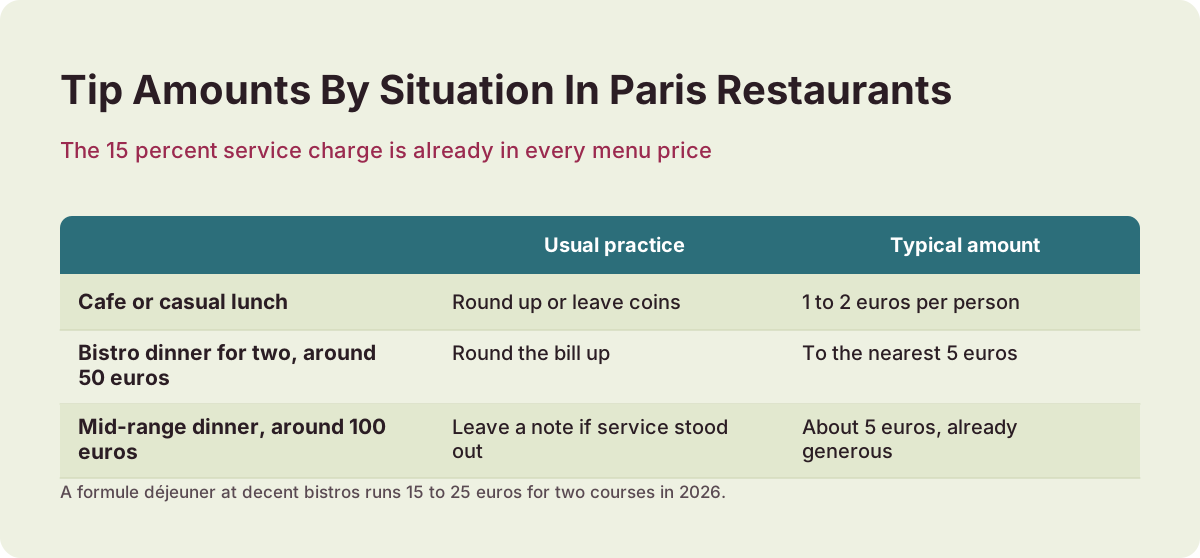
Most Parisians leave nothing at lunch and round up at dinner. The working norms reported for 2026 are small: 1 to 2 euros per person at a casual meal, rounding a 47 euro bill up to 50, and about 5 euros on a 100 euro mid-range dinner for two, which already counts as generous. Anything beyond that is your choice, not a local expectation.
Start with the shape of the meal. A formule déjeuner, the fixed lunch menu at decent bistros, runs 15 to 25 euros for two courses in 2026. On a bill like that, leaving a euro or two per person, or rounding up to the nearest five, matches what the table next to you is doing. At a smarter dinner, 5 euros on a 100 euro check is the figure French etiquette guides describe as generous, not the baseline. The baseline is zero, because the service is paid.
Visitors sometimes ask whether a percentage rule exists. There isn't one. Nobody computes 15 or 20 percent here, and a waiter will not chase you into the street over a tip, because the law forbids demanding one. The mental switch is from arithmetic to gesture: coins you leave because the meal was good, not a percentage you calculate because the system requires it.
| Situation | Usual practice | Typical amount |
|---|---|---|
| Cafe or casual lunch | Round up or leave coins | 1 to 2 euros per person |
| Bistro dinner for two, around 50 euros | Round the bill up | To the nearest 5 euros |
| Mid-range dinner, around 100 euros | Leave a note if service stood out | About 5 euros, already generous |
| Exceptional meal or large group | Discretionary thank-you | Your call, no local norm |
| Counter or takeaway | Nothing expected | Nothing |
Two planning notes round this out. Reservations are strongly recommended even at casual bistros, especially on Fridays and Saturdays, so the table you want may need booking rather than tipping luck. And if you are budgeting a whole food trip around the city, the fixed prices on a booked walking tour remove the tipping guesswork entirely, which is one reason travelers weigh how much a food tour costs against a string of restaurant bills.
Do You Tip Food Tour Guides In Paris?
Food tour guides are not tipped by law or by local convention, and the listings print no suggested gratuity. The price you book, from $73 per person for the Secret Dish, 10+ Tastings walk to $239 for a six-hour evening cooking class, is the full price. Guests who want to thank a guide tip in cash at the end, and a few euros per person is a common shape for that thanks.
Here is the part most visitors get backwards. On a booked, fixed-price tour, the operator pays the guide from the ticket. The Secret Dish, 10+ Tastings walk from Secret Food Tours runs 2 to 3.5 hours in a group capped at 12, from $73 per person, rated 4.8 from 5,387 reviews, with free cancellation up to 24 hours before the start. Nothing in that listing asks for a gratuity. The Le Marais, 10 Tastings walk from Devour Tours, from $107 per person and rated 4.8 from 809 reviews, prints the same structure: a full price, a capped group, and no tip line (see Why Le Marais?).
So the decision is personal, not procedural. If a guide spent three hours opening doors you would never have found, a cash thank-you at the farewell stop lands well, and a few euros per person is the usual shape. Reviews on the listings suggest the guides earn it; one guest on the Secret Dish walk wrote that "Matthew took time to speak to each person and was very personable. Each bite left an impression!" That is the kind of evening people tip for, and the kind they do not need to.
| Booked experience | From price | Group size | Gratuity printed on listing |
|---|---|---|---|
| Secret Dish, 10+ Tastings walk | $73 per person | Max 12 | None, optional cash thanks |
| Le Marais, 10 Tastings walk | $107 per person | Max 12 | None, optional cash thanks |
| Montmartre Full Meal Walk | $102 per person | Max 12 | None, optional cash thanks |
| Evening Class, Dinner Included | $239 per person | Max 12 | None, optional cash thanks |
One cancellation detail matters when you are holding cash for a guide. Most listings on this site's roster print free cancellation up to 24 hours before the start, but the Evening Class, Dinner Included from Le Foodist differs, with free cancellation up to 6 full days before the start and a 50 percent refund 2 to 6 days before. Check the specific listing before assuming the generous window. If the tipping question is really part of a bigger doubt about value, the Secret Dish, 10+ Tastings tour page lays out the full inclusions, and you can Check availability once the budget math is done.
What About Pay What You Want Walking Tours?
Pay what you want walks run on tips alone, and the model prints its own guideline: 15 to 50 euros per participant, with general free-tour guidance citing a typical 10 to 15 euro reference. That is the one corner of Paris guiding where the tip is the entire price. On a booked, fixed-price food tour the economics are different, because the operator pays the guide from the ticket.
The distinction is worth drawing sharply, because it is the only place in this guide where a tip is mandatory in practice. A pay-what-you-want city walk costs nothing to book, and the guide's entire income is what participants hand over at the end. The platforms running these walks publish guideline contributions of 15 to 50 euros per participant, and general free-tour guidance cites a typical 10 to 15 euro reference. Joining one and slipping away without paying is not clever frugality, it is stiffing the guide.
None of the pay-what-you-want walks in Paris is food-themed, and this site says so plainly rather than pretending a free food walk exists. They are history and neighborhood walks, useful for orientation on day one. The food equivalent of a cheap intro is a market stroll or a bakery crawl, which the free and cheap food things to do guide covers with real prices, from a 1.32 euro baguette to a 10 euro falafel on Rue des Rosiers.
The contrast with a booked food tour is the point. A fixed-price walk from $73 per person has already paid its guide, so your cash stays in your pocket unless you choose otherwise. A free walk has not. Budget the second one as a paid tour with a flexible price tag, and the first one as a meal with the tip already inside it.
Do You Tip On Cooking Classes And Wine Tastings?
No cooking class or wine tasting on the roster prints a gratuity, and none is expected. Classes and tastings are booked at a fixed from-price, from $80 per person for a cellar cheese and wine pairing to $246 for a full-day market tour and cooking class with lunch. If a chef or sommelier made the evening, a cash thank-you of a few euros per person is the usual gesture.
The roster makes the pattern easy to check. The Pairing in a Cheese Cellar session from Paroles de Fromagers, 7 cheeses and 3 wines in a 90-minute sitting on Île Saint-Louis, runs from $80 per person and is rated 4.9 from 416 reviews. The Sommelier Cheese Lunch with an expert from Ô Chateau, 5 French wines including a Champagne plus a cheese selection, runs from $97 per person, rated 4.8 from 448 reviews, in a room that takes up to 26 people. Neither listing mentions a tip. The Ten Wines, Ten Cheeses tasting in a royal cellar near the Louvre, from $125 per person, prints the same silence.
Cooking classes behave identically. The Croissant Baking Class with Chef Léo at Studio Pâtisserie, from $134 per person in a group limited to 8, and the Macaron Class from Ateliers Parisiens in the Latin Quarter, from $112 per person, are both full-price bookings. The Full-Day Class and Lunch from Le Foodist, from $246 per person over 6 hours in the Latin Quarter, includes a 4-course meal with wines, recipes to take home, and an apron, and children under 12 are not permitted. The evening version from the same school, from $239 per person, ends in a 3-course dinner.
| Class or tasting | From price | Duration | Gratuity expectation |
|---|---|---|---|
| Pairing in a Cheese Cellar | $80 per person | 1 hour 30 minutes | None printed, optional |
| Sommelier Cheese Lunch | $97 per person | 2 hours | None printed, optional |
| Croissant Baking Class | $134 per person | 3 hours | None printed, optional |
| Macaron Class, 2.5 Hours | $112 per person | 2.5 hours | None printed, optional |
| Full-Day Class and Lunch | $246 per person | 6 hours | None printed, optional |
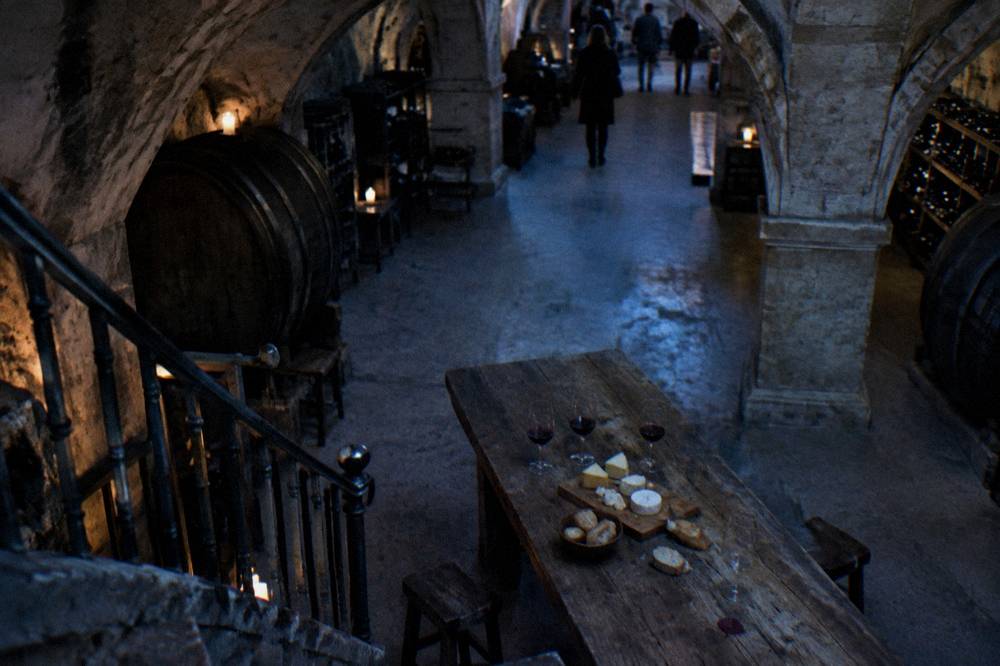
Sommeliers are the one group where guests seem to reach for their wallets most often, and the reviews explain why. One guest on the Sommelier Cheese Lunch wrote, "One of the highlights of our trip! Bastian was so friendly and incredibly informative. We learned so much about the wines of France." If an evening like that earns a thank-you, hand it over in cash at the door. It will be received as a gift, because legally it is one.
Do You Tip At Cafes, Bars And Bakeries?
At a counter, no tip is expected at all. A baguette at 1.32 euros on average or a croissant at 1.20 to 1.60 euros is a cash-and-go transaction, and leaving coins in a tray is optional rather than normal. Table service at a cafe is different, because the same service compris rule covers the printed prices, so rounding up a coffee bill is a courtesy, not a duty.
The bakery counter is the easiest case in this whole guide. The average baguette tradition in Paris costs 1.32 euros, and neighborhood croissants run 1.20 to 1.60 euros as of the latest surveys. You hand over coins, you take your bread, you leave. The small trays beside some tills are for spare change, and dropping your centimes into one is a pleasant habit rather than an obligation. Nobody is watching the tray.
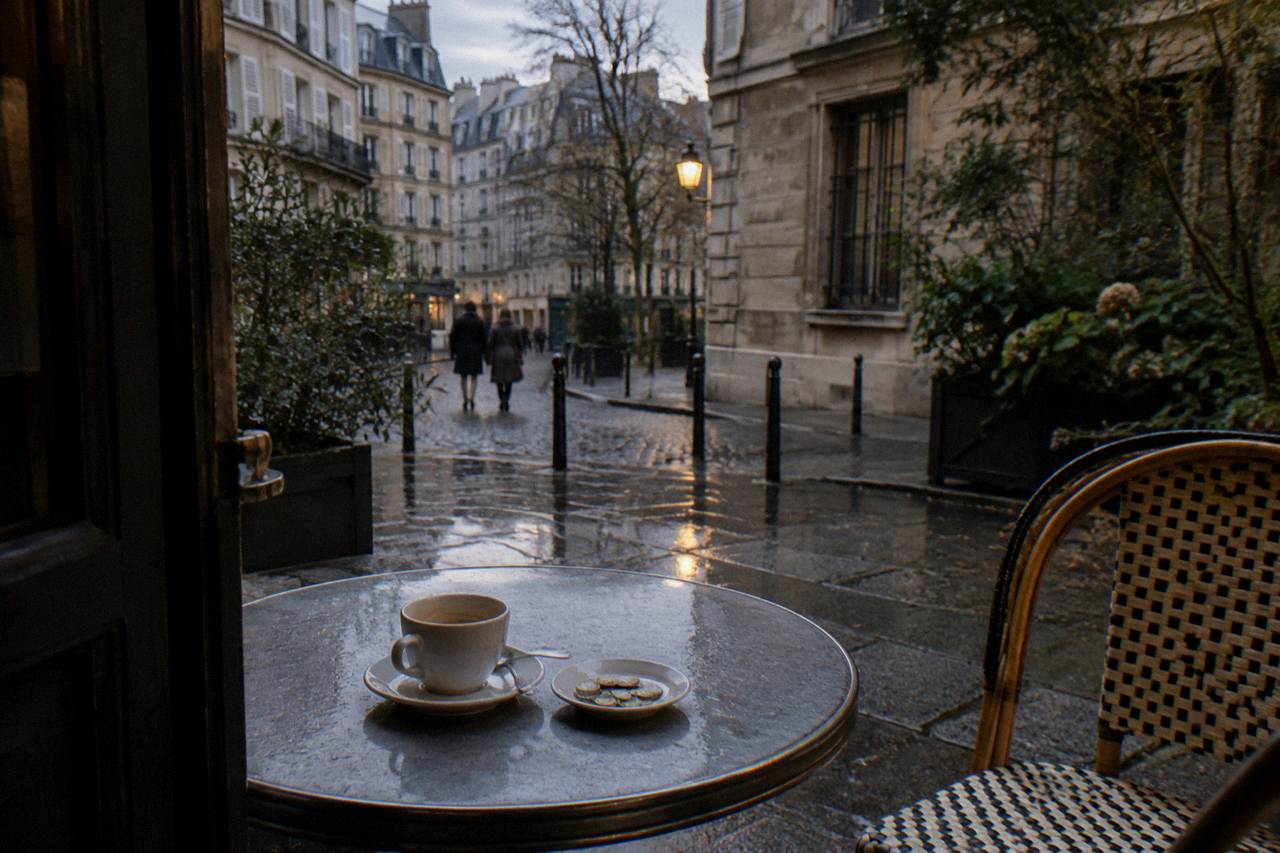
Cafe table service sits in the middle. A coffee at a table carries the same service compris as a dinner, so nothing is owed. Parisians commonly leave the small change, the round-up from a 4.70 euro coffee to 5, and move on. Sitting for an hour with a book and one noisette makes even that optional; you have rented the chair, and the price of the coffee already paid the staff.
| Place | Service style | Tip practice |
|---|---|---|
| Bakery or patisserie | Counter, takeaway | Nothing, coins optional |
| Market stall | Counter | Nothing |
| Cafe at the bar | Counter | Nothing |
| Cafe at a table | Table service | Round up, small change |
| Street food window | Counter, takeaway | Nothing |
Bars follow the cafe pattern. A beer at the counter gets nothing, a round at a table might get the coins from the rounding. Street food, the falafel at 10 euros on Rue des Rosiers, the crêpe from a window, is pure counter culture. The only place where leaving something feels natural is a table where someone brought you the food more than once, and even there the gesture is a euro, not a percentage.
Why Does Tipping In Paris Feel Different From Home?
The difference is structural, not cultural stinginess. American servers depend on tips for wages, while French menu prices legally carry the 15 percent service charge, so the tip in Paris is a small thank-you rather than income. A visitor who tips 20 percent here is not being generous in a way anyone notices; they are paying twice for service that is already on the bill.
Say it once more, because it reframes every transaction of a food trip: the menu price is complete. A 24 euro plat is a 24 euro plat. The waiter's pay is inside it, the kitchen's costs are inside it, and the only things that can be added are items the menu displays separately, like bread with a printed price. This is why French diners can linger, order one course, and leave nothing without a flicker of guilt. The system does the paying for them.
Visitors tip 20 percent anyway, and the money is never refused. But it does not flow to a tip pool the way it might at home, and it does not repair a wage gap, because there is no gap to repair. If you want the extra spend to do visible good, hand a few euros in cash to the person who actually served you, which is the one form of tipping in Paris that lands exactly where you aim it.
The same logic explains why service can feel slower. A waiter is not hovering for the tip, and tables are not being turned to maximize covers. Lunch runs noon to 2:30pm, dinner from 7:00 or 7:30pm, and the kitchen closes between. Once you stop reading that pace as indifference, the whole meal relaxes, and the pourboire question shrinks to what it really is: an optional thank-you for a good evening.
A Tipping Cheat Sheet For A Food Day In Paris
Across a full food day in Paris, the honest budget for tips is close to zero, with a few euros of rounding at most. Bakery and market purchases carry no tip, a bistro lunch formule at 15 to 25 euros might get 1 to 2 euros, and a booked food tour needs nothing beyond its listed price unless you want to thank the guide in cash.
Here is the day assembled. Morning: a croissant at 1.20 to 1.60 euros and a coffee, no tip, or a booked pastry walk such as the Pastry and Chocolate Walk through the covered passages, from $90 per person, which prints no gratuity. Midday: a market stop, Marché d'Aligre or the Bastille market on its Thursday and Sunday days, buying by the kilo with no tip, or a formule déjeuner at 15 to 25 euros where a euro or two is plenty. Evening: a bistro dinner with rounding, or a booked experience where the price is the price.
| Stop in the day | Typical spend | Tip practice |
|---|---|---|
| Morning croissant and coffee | 1.20 to 1.60 euros plus coffee | Nothing |
| Market produce and cheese | By weight | Nothing |
| Bistro lunch formule | 15 to 25 euros | 1 to 2 euros or round up |
| Afternoon street food | 10 euros for a falafel | Nothing |
| Dinner for two, mid-range | Around 100 euros | About 5 euros if generous |
| Booked food tour or class | From $73 per person | Optional cash thanks only |
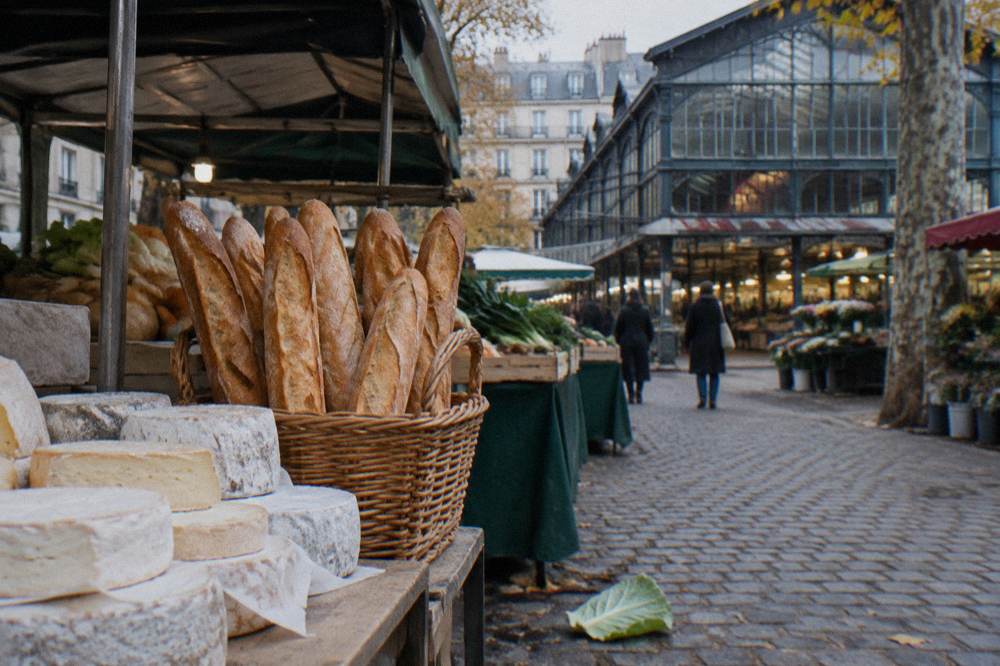
The one line worth carrying in your head is the last one. A booked tour, whether the Secret Dish walk from $73 per person or the Le Marais, 10 Tastings walk from $107 per person, has already settled the money question, and the guide is paid from the ticket. That is why this site, Paris Food Tours, prints full from-prices and cancellation windows on every listing it covers rather than leaving a gratuity to guesswork.
If you want one final rule of thumb, take this one: in Paris, the tip is a message, not a payment. You leave it when someone turned a meal into an evening, and you skip it everywhere else without a second thought. The law has already done the heavy lifting, and your budget gets to enjoy the difference.
Common Questions About Tipping In Paris
Is service included in Paris restaurants?
Yes. A 15 percent service charge is included in every displayed restaurant and cafe menu price under French law, listed as service compris. The price you see on the menu board outside is the price you pay, and no staff member may demand anything further.
How much do you tip in Paris restaurants?
Most people leave nothing or round up. The reported norms are 1 to 2 euros per person at a casual meal, rounding a bill up to the nearest 5 euros, and about 5 euros on a 100 euro mid-range dinner for two, which counts as generous. There is no percentage rule.
Do you tip food tour guides in Paris?
It is optional. Booked tours such as the Secret Dish, 10+ Tastings walk from $73 per person print no suggested gratuity, and the operator pays the guide from the ticket. Guests who want to thank a guide hand over a few euros in cash at the end, which is received as a gift.
Do you tip at cafes and bakeries in Paris?
No. Bakery and counter purchases carry no tip at all, and cafe table service already includes the service charge in the printed prices. Parisians often leave the small change from rounding up at a table, and nothing at the bar or the counter.
Is tap water free in Paris restaurants?
Yes, on request. Restaurants must indicate that a free carafe of tap water is available and provide it to customers consuming on site. Asking for "une carafe d'eau" is a normal request, not an imposition.
Do you tip on cooking classes and wine tastings in Paris?
No gratuity is printed or expected. Classes and tastings from $80 per person for a cellar pairing to $246 for a full-day market tour and cooking class are full-price bookings. A cash thank-you of a few euros for a chef or sommelier who made the session special is the only common gesture.