Free And Cheap Food Things To Do In Paris
Paris rewards budget eaters who know where the free experiences are: markets you can browse for nothing, fountains that pour free water, bakeries with honest prices, and pay-what-you-want walks that pair well with a food neighbourhood.
Short answer
Paris has 83 food markets that are free to wander, more than 1,200 public drinking fountains, and croissants that average 1.22 euros. Falafel on Rue des Rosiers runs 10 euros, a baguette tradition averages 1.32 euros, and pay-what-you-want walking tours expect a tip of roughly 15 to 50 euros per person.
Where Can You Eat Cheaply In Paris Without Getting Trapped?
The honest answer is that cheap eating in Paris works best around three anchors: covered and open-air markets that cost nothing to enter, bakeries where a croissant averages 1.22 euros based on surveys of more than 100 addresses, and streets like Rue des Rosiers where a falafel sandwich runs 10 euros. None of these requires a guide, a ticket or a reservation, and together they can hold a full day's food budget under 20 euros.
The trap version of Paris eating is real, and it clusters in a few predictable places. Local food writers warn specifically against the restaurant rows immediately around major monuments, where the combination of captive foot traffic and transient customers does not reward the kitchen. The fix is simple: walk three streets in any direction from a monument and prices fall while quality rises.
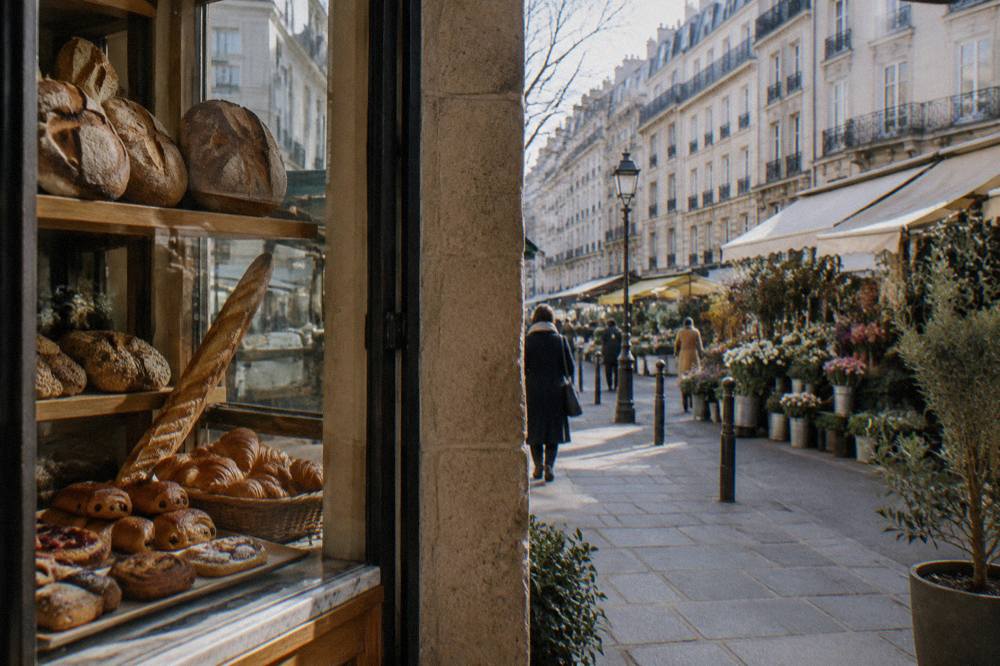
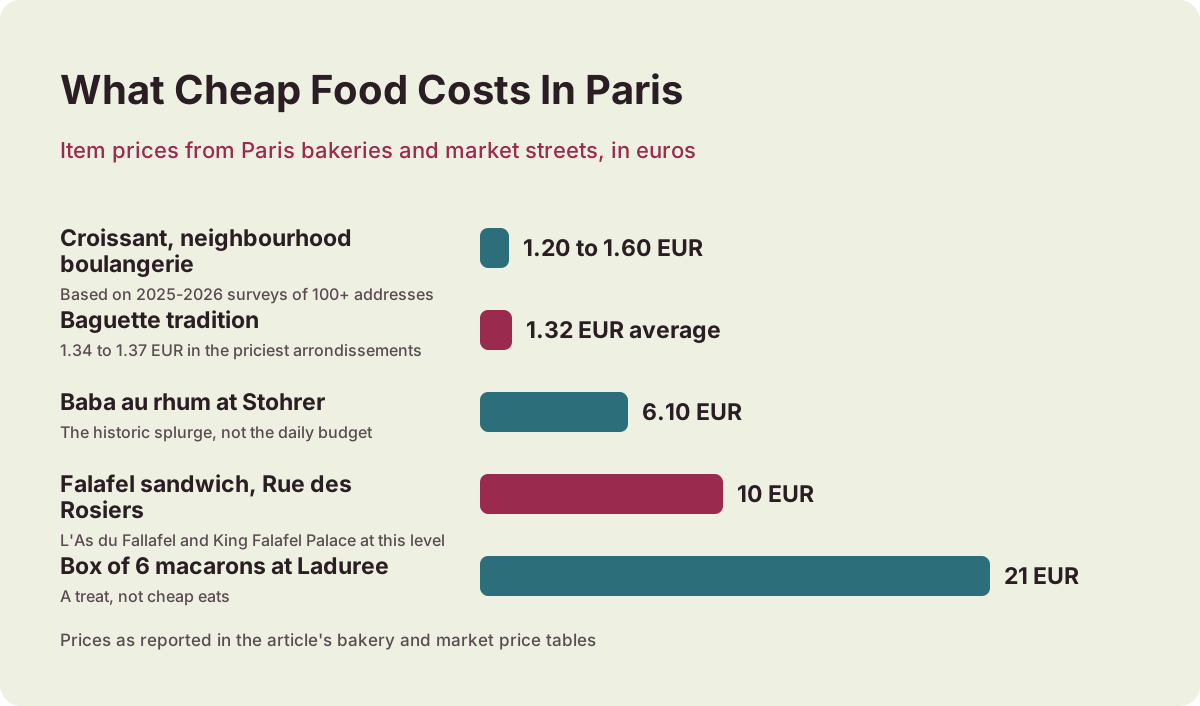
Bakeries are the backbone of budget eating here, and the numbers are stable enough to plan around. The average baguette tradition in Paris is 1.32 euros, with the most expensive arrondissements running 1.34 to 1.37 euros, so even a splurge neighbourhood barely moves the price. A croissant at a neighbourhood boulangerie runs 1.20 to 1.60 euros. For context, UNESCO inscribed the artisanal know-how and culture of the baguette on its intangible heritage list in 2022, which is a nice thought while you eat a 1.32 euro lunch's worth of bread.
Our full bakery guide goes deeper on where to spend those euros: see the best bakeries in Paris for named shops worth the detour, and what to eat in Paris if you want the whole picture of classic dishes and what they should cost.
| Item | Typical price | Notes |
|---|---|---|
| Baguette tradition | 1.32 EUR average | 1.34 to 1.37 EUR in the priciest arrondissements |
| Croissant, neighbourhood boulangerie | 1.20 to 1.60 EUR | Based on 2025-2026 surveys of 100+ addresses |
| Falafel sandwich, Rue des Rosiers | 10 EUR | L'As du Fallafel and King Falafel Palace both at this level |
| Baba au rhum at Stohrer | 6.10 EUR | The historic splurge, not the daily budget |
| Box of 6 macarons at Laduree | 21 EUR | A treat, not cheap eats |
Which Paris Food Markets Cost Nothing To Browse?
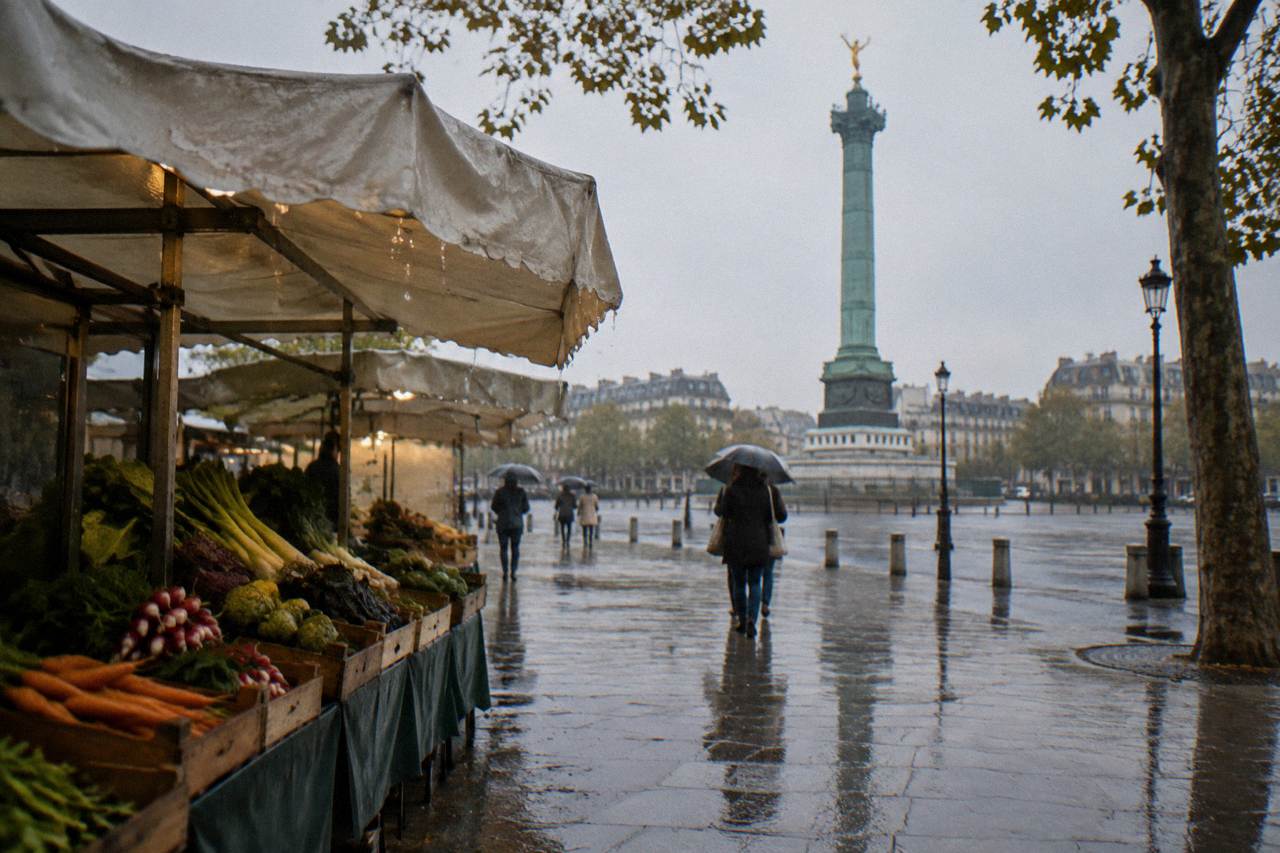
All 83 of Paris's food markets, 74 open-air and 9 covered, are free to enter and wander, and every one of them is closed on Mondays. Morning markets run 7h to 13h30 on weekdays and until 14h30 at weekends; browsing, sampling at producer stalls and soaking up the atmosphere costs nothing at all. You only spend money when something irresistible happens, which it will.
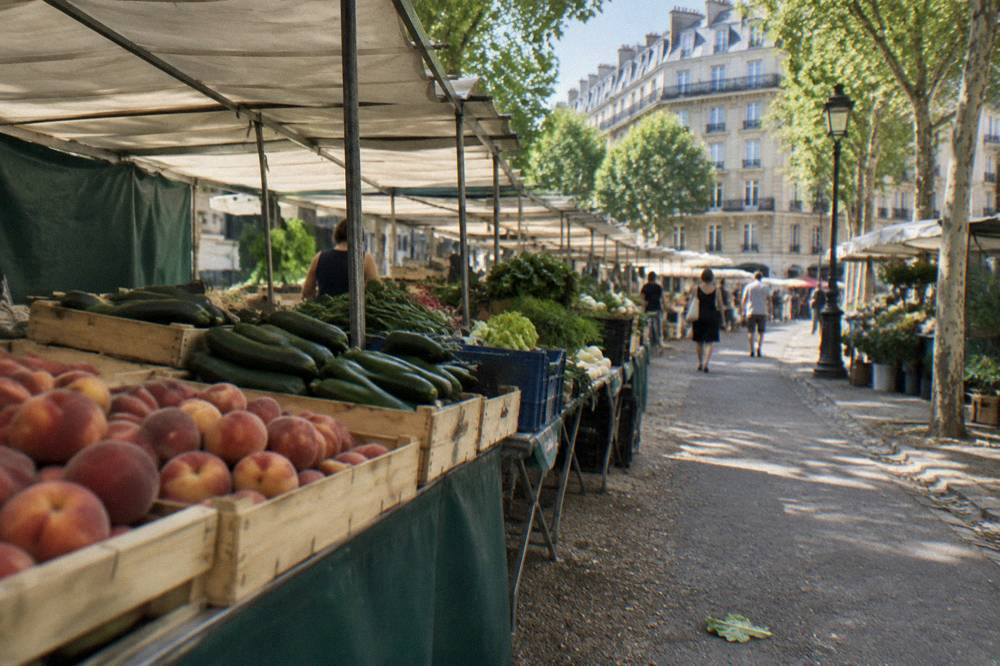
The city's own pages confirm the Monday closure across the board, so plan market days for Tuesday through Sunday. Two markets deserve special attention from budget visitors. Marche d'Aligre in the 12e is the rare Paris market that mixes produce, a brocante flea section and ethnic foods, with a covered hall (Halle Beauvau) open alongside the outdoor stalls, and traders who often stay open past official hours. Marche des Enfants Rouges in the Marais, founded in 1615, is the oldest covered market in the city and packs world-cuisine stalls into a small historic hall; it is busiest at lunch between 12h and 14h30, and stalls do not take reservations, so arriving off-peak gets you a seat.
Marche Raspail in the 6e runs a 100 percent organic market every Sunday from 7h to 14h30 with around 50 certified stalls, and it gets busy before 11h. Even if you buy nothing, the Raspail bio market is a free lesson in French produce culture, and it was the first major organic market in Paris, dating to the late 1980s. The official schedules are maintained by the city at the paris.fr market pages.
| Market | Open | Closed | Free to browse |
|---|---|---|---|
| Marche d'Aligre outdoor | Tue-Fri 7h30-13h30, Sat-Sun 7h30-14h30 | Monday | Yes |
| Halle Beauvau (covered) | Tue-Fri 8h-13h and 16h-19h30, Sat 8h-19h30, Sun 8h-13h30 | Monday | Yes |
| Marche des Enfants Rouges | Tue-Sat 8h30-20h30, Sun 8h30-17h | Monday | Yes |
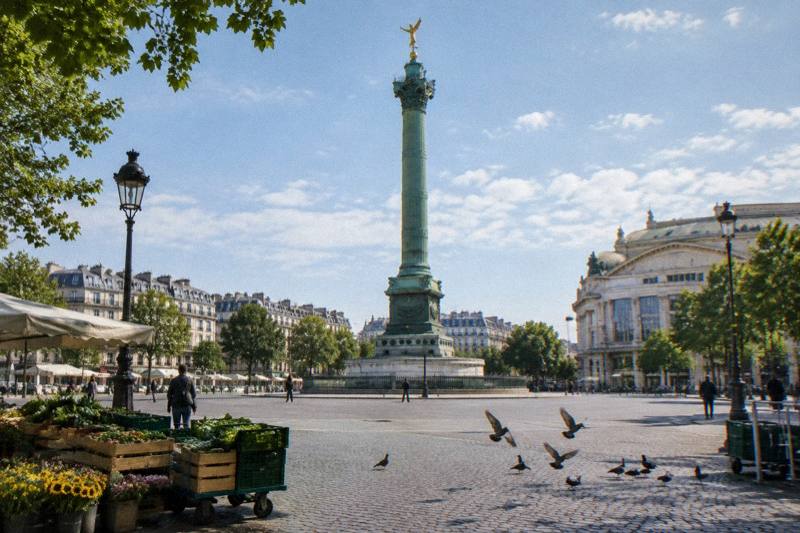
| Marche Bastille | Thu and Sun 7h to 13h30 or 14h30 | All other days | Yes |
| Marche Raspail bio | Sun 7h-14h30 | Monday (bio market) | Yes |
If browsing a market with a guide who buys the tastings appeals, that is exactly what a market tour does, and it is one of the cheapest guided formats in the city. We cover the format in depth in the Paris food markets and market tours guide.
The cheapest of those three is the Taste Bastille guided market tour, from $38 per person, which walks the Bastille Market with cheese, charcuterie and oyster tastings over 105 minutes. The Aligre market walking tour near the Marais, from $126, spends two hours on a market most visitors never find on their own. And the Secret Food Tours 10+ tastings walk, from $73, is the classic small-group format with wine, cheeses and a secret dish in Montmartre.
Are The Free Walking Tours In Paris Actually About Food?
No, and it is worth being direct about this: none of the pay-what-you-want walking tours available in Paris is food-themed. They are general history and neighbourhood walks. What they do offer a budget traveller is a free-to-book way to learn a food neighbourhood's geography and backstory, so that when the walk ends you already know which streets hold the bakeries, markets and cheap counters worth your euros.
The pay-what-you-want model, run on the GuruWalk platform by independent local guides, means the tour itself books for nothing and you tip the guide at the end. That tip is expected, not optional in practice: general guidance on the model suggests a contribution in the range of 15 to 50 euros per participant for the paid GuruWalk tours, with a typical reference of around 10 to 15 euros mentioned in the platform's own free-tour guidance. So "free" really means "you set the price afterwards", and a fair tip for two hours of a guide's time is still far below a paid tour price.
For a food-focused budget day, the best pairing is the Magnificent Montmartre walk, which covers the artists' quarter, the views and the cabaret history of the hill where so many of Paris's food tours also concentrate. It holds a 4.96 rating from 167 reviews on GuruWalk. You finish knowing the layout of the butte, then spend your food money at the market streets and bakeries below the tourist crest rather than the overpriced restaurants nearest the basilica, which local food guides specifically flag as serving microwaved tourist food. One such walk suits a budget day: See this free tour on GuruWalk.
Other walks in the same pay-what-you-want pool include the Essential Paris City Center Tour (4.92 from 2,582 reviews), an Iconic tour of the old Paris around Saint-Germain and Saint-Michel (4.94 from 501 reviews), and The Majestic Latin Quarter Tour (4.95 from 428 reviews). All are history walks, none feeds you, and all are honest ways to orient yourself before eating cheaply on your own.
How Cheap Can A Guided Food Experience Get?
The cheapest guided food experience on our roster is the Taste Bastille market tour, from $38 per person for 105 minutes with cheese, charcuterie and oyster tastings included. Below that price, nothing on the paid market exists except the pay-what-you-want history walks described above, which do not include food. So the real floor for a guided tasting in Paris is around 40 dollars.
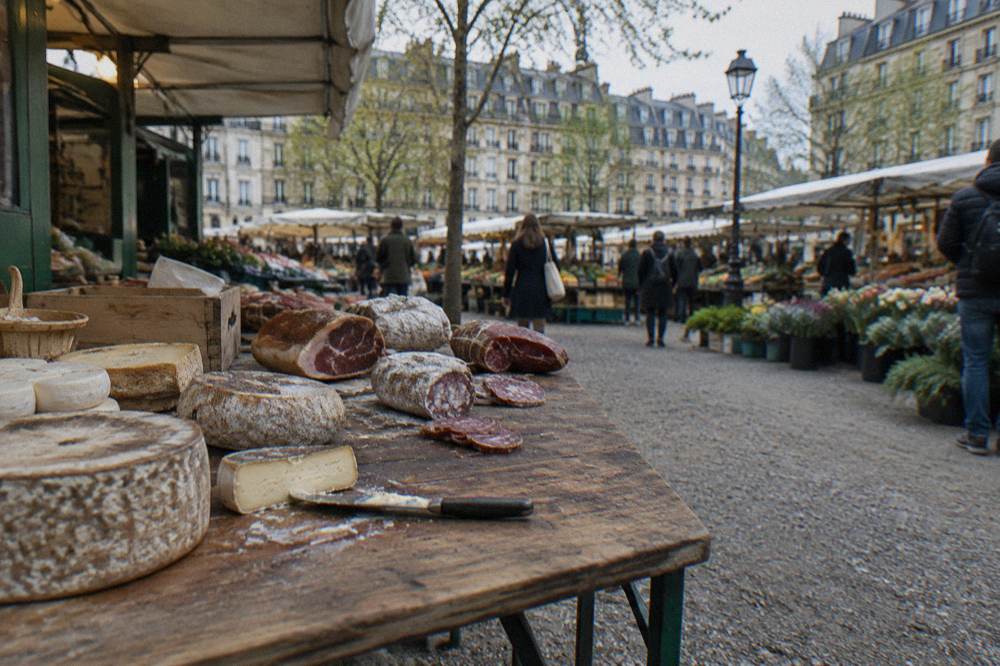
The listing for Taste Bastille: Paris Guided Market Tour with Tastings is run by a small operator called Lazio, caps groups at 10, meets at Place de la Bastille and walks the Bastille Market itself. It currently shows a 5.0 rating, but from only 4 reviews, so treat that number as a small pool rather than a verdict. What it reliably delivers is the cheapest way to have someone else do the buying at a Paris market: welcome and introduction at the Bastille, a guided exploration of the market, then cheese and charcuterie plus an oyster tasting.
One step up, the Local Aligre Food Market Walking Tour near the Marais, from $126 per person, applies the same idea to the Aligre market, with wine tasting and food tastings in a group capped at 10 over two hours. It carries a 4.4 rating from 24 reviews, a genuinely middling score worth knowing about before you book. And for a full tasting walk rather than a market morning, the Paris Food Tour: 10+ Tastings, French Wine, Cheeses & Secret Dish from Secret Food Tours starts at $73, runs 2 to 3.5 hours in a group of at most 12, and holds a 4.8 rating from 5,387 reviews, one of the largest review pools in the city. A guest on that tour describes it as "Lots of local history mixed with incredible bites", which is the format in one sentence.
The pattern across the whole roster is that format drives price more than quality. Market tours cluster between $38 and $172, wine and cheese tastings between $77 and $125, and full walking food tours between $73 and $135. If your budget is tight, the market format is where the value sits, because the raw ingredients are cheap and the guide's knowledge is what you are paying for.
Where Are The Free Drinking Fountains In Paris?
Paris maintains more than 1,200 public drinking fountains citywide, including over 100 of the cast-iron Wallace fountains, and the water is free and potable. Some Wallace fountains are switched off from November to March because of freezing risk, but more than 500 fountains stay running through winter. For a walking day in warm months, this makes bottled water an avoidable expense.
The network is run by Eau de Paris, the public water service, and the Wallace fountains, the dark green four-figure cast iron ones, are the most recognizable subset. Some have even been fitted with misting features for hot days. The figures on the fountain network come from the city's water authority reporting, which you can read at the Paris water authority's fountain overview. For a budget traveller in summer, knowing that nearly every park and many squares have a working fountain changes the math on a day out: a refillable bottle plus the fountain network replaces two or three bottled-water purchases a day.
There is a restaurant-side version of the same rule worth knowing. French law obliges restaurants to provide free tap water, the carafe d'eau, to customers eating on site, under the 1967 arrete on couvert, and establishments must visibly indicate that you can request it. Bread can only be charged if its price is displayed on the menu beforehand. So at lunch, ask for "une carafe d'eau" and the water line on the bill is zero. We cover the full etiquette of this, including how tipping works on top of the included 15 percent service charge, in the tipping in Paris restaurants and tours guide.
Can Students Eat In Paris For Almost Nothing?
Yes, under one specific condition: CROUS Paris, the university restaurant service, has offered complete meals for 1 euro to all students with an Izly account since May 2026, served in two daily services either side of 15h. For everyone else, the student price is closed, and the realistic budget floor is bakery bread, market produce and street food in the 10 euro range for a full day of eating.
The 1 euro meal program is the single cheapest structured meal in the city, and the CROUS Paris page confirms ongoing access for all students, not just French nationals. Two services run daily, one before and one after 15h, across the university canteens. If you are a student visiting with a French university affiliation or enrolled on exchange, this is worth setting up an Izly account for in advance. The program details are on the official CROUS Paris announcement.
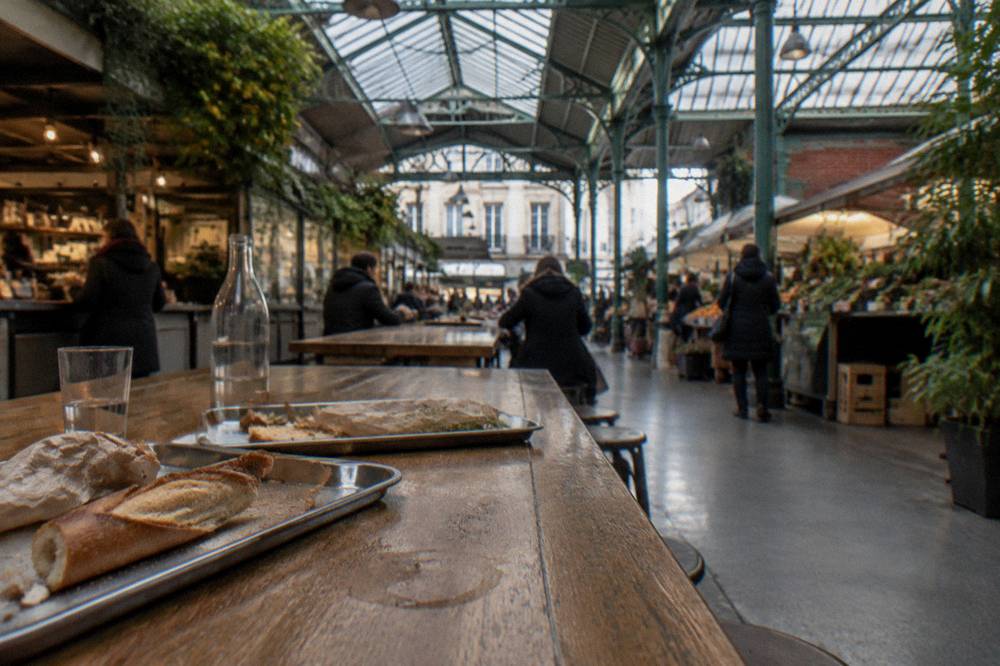
For non-students, the honest floor is the bakery-plus-market combination. A morning croissant at 1.22 euros average, a baguette tradition at 1.32 euros with market cheese, and a 10 euro falafel on Rue des Rosiers totals around 15 euros for a genuinely good eating day. Note that L'As du Fallafel at 34 Rue des Rosiers closes Saturdays and its Friday hours stop at 15h30, while King Falafel Palace on the same street does takeaway pita falafel at the same 10 euro level. The Marais is classified as a tourism zone, so its boutiques, including many on Rue des Rosiers, open Sundays, which makes it one of the few districts where a Sunday budget food walk fully works.
One structural tip that locals use: lunch, not dinner, is the value window. Typical Paris lunch service runs noon to 2:30pm, kitchens close afterward, and decent bistros run formule dejeuner prices of 15 to 25 euros for two courses, with even Michelin-starred venues sometimes offering fixed-price lunches around 32 euros for two courses, well below their dinner menus. Menus must legally be displayed outside from at least 11:30 for lunch and 18:00 for dinner, so you can price a place from the pavement before committing.
What Does A Cheap Eats Day In Paris Look Like?
A realistic cheap eats day looks like this: a morning croissant and baguette from a neighbourhood boulangerie for around 3 euros, a free browse through a morning market before the 13h30 close, a 10 euro falafel or a market-bought picnic for lunch, free fountain refills all day, and a pay-what-you-want history walk in the afternoon with a guide tip you set yourself. Total spend, excluding the walk tip, lands under 20 euros.
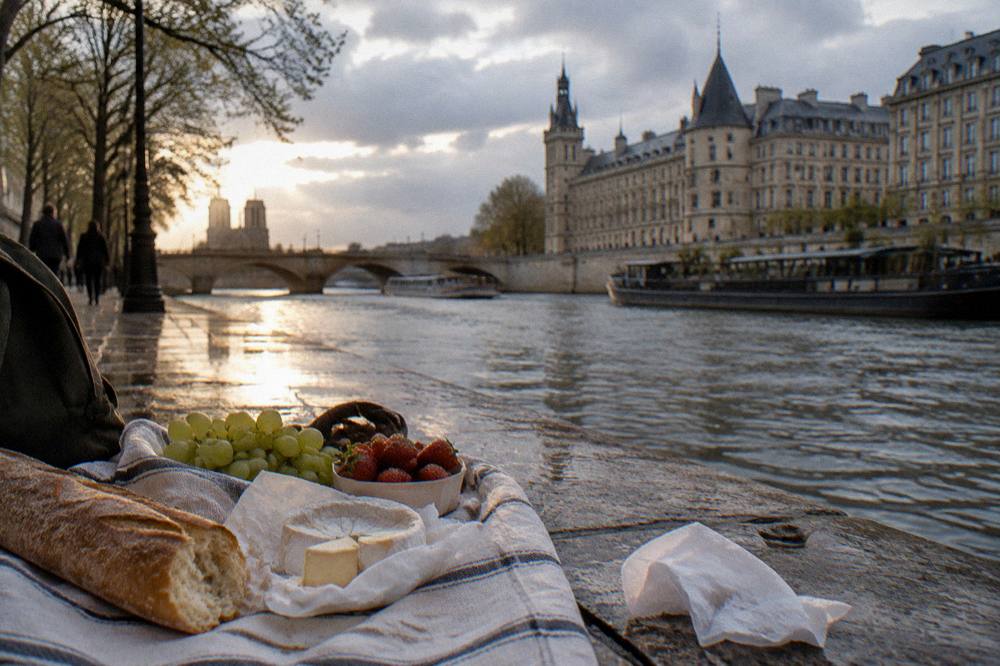
The picnic variant deserves its own sentence, because Paris is built for it. Market cheese, a baguette straight from the oven, fruit from a producer stall and a bench with a view turn a 12 euro spend into the meal most visitors remember. One caution: public alcohol consumption is banned between 16:00 and 07:00 in many central zones under a 2023 prefecture order still in effect, so if wine is part of the plan, keep the picnic to the afternoon hours and check the posted rules in parks.
Timing matters as much as destination. Markets are closed Mondays citywide, so Tuesday and Wednesday mornings are the quietest browsing windows. The Marais works on Sundays when almost everything else is shut. Montmartre rewards mornings before the crowds climb the hill, which is also when the bakeries are fullest. And the second-hand stalls of Aligre's brocante section run daily except Mondays from 8h to mid-afternoon, adding a free rummage to a market morning.
| Time | Activity | Spend |
|---|---|---|
| 8:30 | Croissant and coffee standing at a boulangerie counter | 2 to 4 EUR |
| 10:00 | Browse a morning market, sample at producer stalls | 0 EUR |
| 12:30 | Falafel on Rue des Rosiers or a market picnic | 10 to 12 EUR |
| 15:00 | Pay-what-you-want history walk, tip set by you | Tip expected |
| 17:00 | Free fountain refill, walk a market street | 0 EUR |
| Evening | Baguette, cheese and fruit from the day's purchases | 4 to 6 EUR |
If one guided splurge fits the week, the Aligre market walking tour is the natural upgrade from a self-guided market morning, because the guide buys the tastings and explains every stall. Here is that option again alongside the others for a side-by-side look.
The market tour format also solves the picnic problem on cold or rainy days, when a bench beside the Seine loses its appeal: the covered halls at Aligre and Enfants Rouges keep the market experience indoors, and the 1 euro student canteens aside, a covered market is the cheapest warm place to eat well in central Paris. For more on pairing a cruise with a meal, see the food and Seine cruise combos guide, though that format starts at a higher price point than anything on this page.
When Is Paying For A Tour Better Than Doing It Free?
Paying beats free when you want tastings included, a capped group size and someone who answers questions in English for two or three hours. Free walking tours deliver history and orientation but zero food, and the expected tip is real money too. The break-even is roughly this: if you would otherwise spend 25 to 30 euros on self-bought tastings at a market, the $38 Bastille market tour already pays for itself in food you would have bought anyway.
Budget logic on this site is straightforward, and Paris Food Tours applies the same test to every listing we cover: what does the format cost, what is physically included, and how large is the review pool behind the rating. By that test, the three tours below are the ones a cheap eats reader should compare first, from the $38 market tasting at Bastille through the $73 ten-tastings walk to the $126 Aligre market tour.
Common Questions About Free And Cheap Food In Paris
Are Paris food markets free to enter?
Yes. All 83 of Paris's food markets, open-air and covered, are free to browse. You pay only for what you buy. Every listed market in the city is closed on Mondays, and morning markets run 7h to 13h30 on weekdays and until 14h30 at weekends.
Are the free walking tours in Paris food tours?
No. The pay-what-you-want walking tours available in Paris, including the Montmartre, Latin Quarter and city center walks, are history and neighbourhood tours with no food included. They are a good way to learn a food district's layout before eating there on your own.
Does a free tour really cost nothing?
The booking costs nothing, but a tip to the guide is expected. Guidance on the pay-what-you-want model suggests contributions in the range of 15 to 50 euros per participant for paid GuruWalk tours, with free-tour guidance typically referencing 10 to 15 euros. Pay what you want means you set the amount, not that the guide works for free.
How much does a croissant cost in Paris?
The average croissant price in Paris boulangeries is 1.22 euros based on 2025-2026 surveys of over 100 addresses, and the typical neighbourhood range runs 1.20 to 1.60 euros. A baguette tradition averages 1.32 euros.
Is tap water free in Paris restaurants?
Yes, for customers eating on site. French law obliges restaurants to provide free potable tap water, the carafe d'eau, on request, and bread can only be charged if its price is visibly displayed beforehand. Over 1,200 public drinking fountains also provide free water citywide.
What is the cheapest guided food tour in Paris?
On our roster it is the Taste Bastille guided market tour, from $38 per person, a 105-minute walk through the Bastille Market with cheese, charcuterie and oyster tastings included in a group limited to 10.