Best Bakeries In Paris: Boulangeries Worth The Queue
Paris runs on bread. Here is what the city's own bakery competition, its verified market data and its shop schedules tell you about where to queue, what a baguette should cost and how to turn a bakery list into a walking route.
Short answer
The 2026 Grand Prix de la Baguette was won by Sithamparappillai Jegatheepan of Fournil Didot at 103 rue Didot in the 14e, from 143 entries. The average baguette tradition in Paris costs 1.32 EUR, and a croissant runs about 1.20 to 1.60 EUR. A guided pastry walk such as the Pastry and Chocolate Tour, from $90 per person, strings six or more bakery stops together.
Every spring the city of Paris judges its own bakers, and every morning several thousand boulangeries decide whether Parisians eat well or badly. That makes bakery hunting in this city unusually honest: there is a public competition, there are published schedules and there are price averages you can check a shop against before you hand over two coins. This guide sticks to those verifiable facts, from the Paris Food Tours research file, and then shows how to turn a bakery list into a real day, either self-guided or on a guided pastry walk like the Paris Pastry Tour: Croissants, Macarons & Iconic French Desserts.
Which Bakery Won The 2026 Grand Prix De La Baguette?
The 33rd Grand Prix de la Baguette de Paris was won by Sithamparappillai Jegatheepan of Fournil Didot, 103 rue Didot in the 14th arrondissement, announced on 26 February 2026. The competition drew 143 baguettes and carried a 4,000 EUR prize. The winning bakery is a concrete, named destination for bakery hunters, and the award is the only "best" claim in this guide backed by the city's own records.
The Grand Prix is organized by the City of Paris, and the official results page names the winner, the edition and the address. Judges score the baguette de tradition, the flour, the hydration, the bake and the look. For a visitor the practical takeaway is simple: the winner bakes a baguette the city itself crowned, in a residential corner of the 14th that most itineraries skip.
A second, quieter fact belongs next to it. The artisanal know-how and culture of the baguette was inscribed by UNESCO in 2022, and the gastronomic meal of the French was inscribed in 2010. Bread here is not a snack category, it is listed heritage. That is why the queues at a good counter move fast but stay long, and why the price of a tradition, averaging 1.32 EUR across the city, is watched and reported like an index.
What Does A Baguette Or Croissant Actually Cost In Paris?
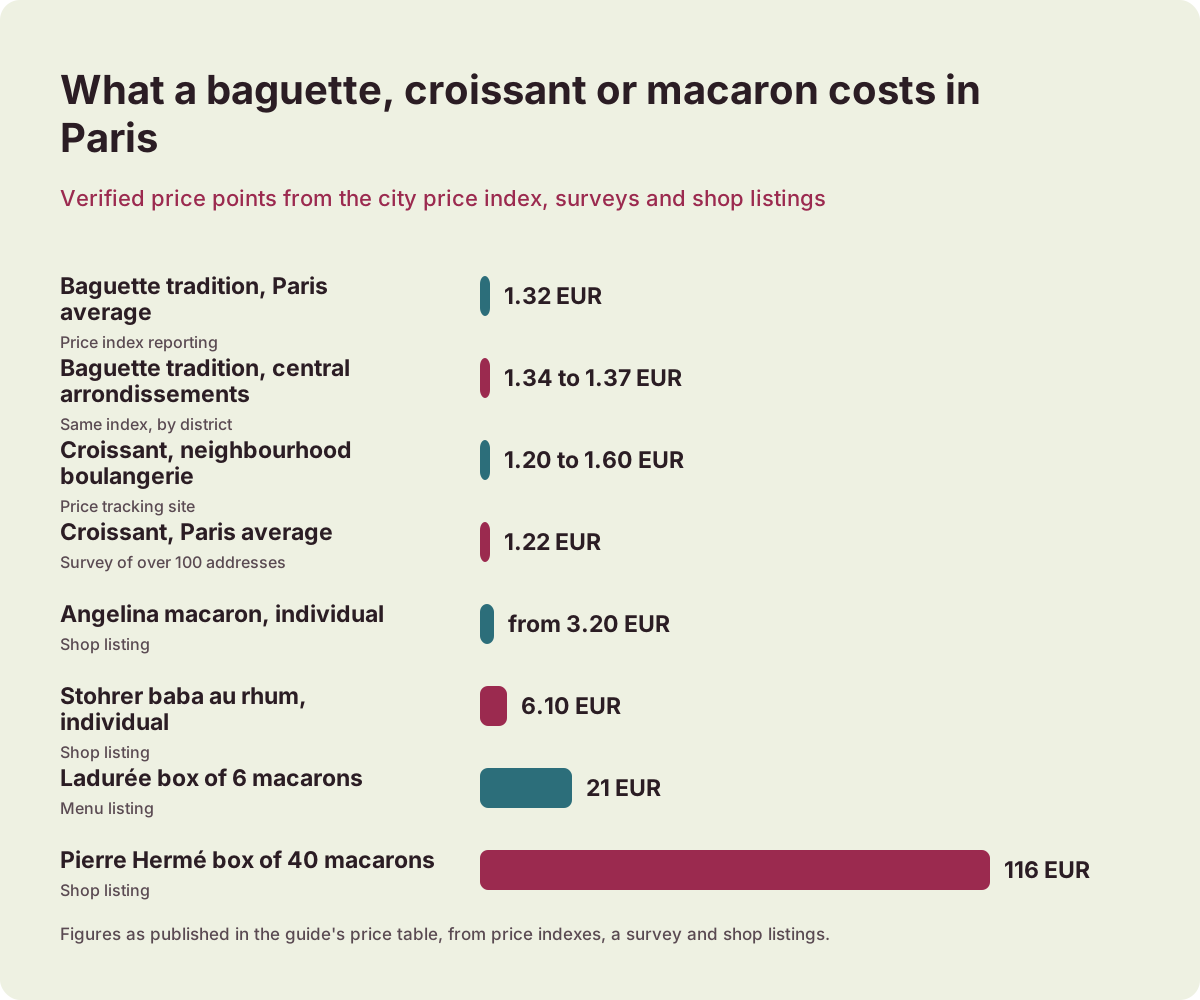
The average baguette tradition in Paris costs 1.32 EUR, with 1.34 to 1.37 EUR typical in the 3e, 6e, 7e, 8e and 16e arrondissements. A croissant at a neighbourhood boulangerie runs 1.20 to 1.60 EUR, and one survey of more than 100 addresses put the average croissant at 1.22 EUR. These are your price anchors: a shop far above them needs to justify it.
Those two anchors come from two different surveys of real counters, so treat them as ranges rather than laws. A bakery on a prime tourist street can charge more and bake worse; a bakery two blocks inland can charge less and bake better. The table below bundles the verified bakery and pastry price points so you can sanity-check any vitrine you press your nose against. For a deeper look at the croissant side of the counter, see our guide to finding the best croissants in Paris.
| Item | Verified price point | Source framing |
|---|---|---|
| Baguette tradition, Paris average | 1.32 EUR | Price index reporting |
| Baguette tradition, central arrondissements | 1.34 to 1.37 EUR | Same index, by district |
| Croissant, neighbourhood boulangerie | 1.20 to 1.60 EUR | Price tracking site |
| Croissant, Paris average | 1.22 EUR | Survey of over 100 addresses |
| Stohrer baba au rhum, individual | 6.10 EUR | Shop listing |
| Stohrer baba Chantilly, individual | 7.20 EUR | Shop listing |
| Ladurée box of 6 macarons | 21 EUR | Menu listing |
| Ladurée box of 12 macarons | 39 EUR | Menu listing |
| Pierre Hermé box of 40 macarons | 116 EUR | Shop listing |
| Angelina macaron, individual | from 3.20 EUR | Shop listing |
Notice the spread. Bread and viennoiserie cost pocket change; gift-box pastry does not. If your bakery day includes a macaron splurge, budget for it separately, and read our guide to the best macarons in Paris before you pick a box.
Bakery hunting also pairs naturally with a guided stop. The Pastry and Chocolate Walk, from $90 per person, builds six or more tastings into a 2.5-hour small-group route through the covered passages, which is one way to taste across several counters without doing the arithmetic yourself.
Which Historic Bakeries And Patisseries Should You Visit?
Two names in the verified files carry both history and published hours: Du Pain et des Idées, at 34 rue Yves Toudic in the 10th, open Monday to Friday 7:00 to 19:30 and closed weekends, and Stohrer, the rue Montorgueil institution whose individual baba au rhum is listed at 6.10 EUR. Maison d'Isabelle in the Latin Quarter, open Tuesday to Sunday 6:00 to 20:00, closes Mondays.
Du Pain et des Idées is the classic detour bakery: a single shop, weekday-only, famous for its bread and its pastries, and closed exactly when most tourists arrive. Plan it on a working morning. Stohrer sits on rue Montorgueil, a pedestrian street of permanent food shops rather than a weekly stall market, which means it is open daily; our rue Montorgueil food street guide covers the full strip, including the bakeries and cheesemongers around it.
Maison d'Isabelle is the Latin Quarter option, opening at 6:00 and closing at 20:00 Tuesday through Sunday. Note the pattern in all three: hours are uneven, and Monday is the danger day. That is true across the city's food rhythm, since all listed Paris food markets are also closed Mondays, per the official Paris market schedules.
| Shop | Address and area | Verified hours | What the files list |
|---|---|---|---|
| Fournil Didot | 103 rue Didot, 14e | Check the shop | 2026 Grand Prix winner, 143 entries |
| Du Pain et des Idées | 34 rue Yves Toudic, 10e | Mon-Fri 7:00-19:30, closed Sat-Sun | Historic neighbourhood bakery |
| Maison d'Isabelle | Latin Quarter | Tue-Sun 6:00-20:00, closed Mon | Croissants from early morning |
| Stohrer | rue Montorgueil, 2e | Daily street of shops | Baba au rhum 6.10 EUR, baba Chantilly 7.20 EUR |
| Angelina | Multiple locations | Check the shop | Macarons from 3.20 EUR, coffret of 4 from 12 EUR |
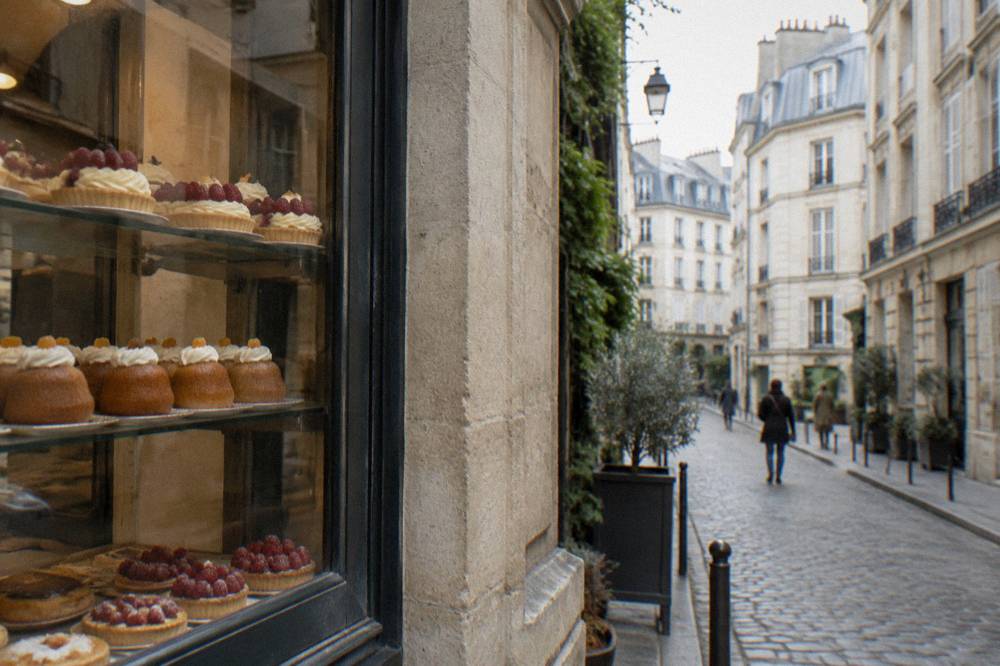
One more verified number frames just how much choice sits behind those counters. France counted 51 AOP and 12 IGP dairy products in 2024, per INAO's key figures, and a good bakery's butter, cheese-adjacent pastries and milk-based creams sit at the top of that ladder. The butter on a proper croissant is itself a controlled product, which is partly why the good ones cost more than the average.
If you would rather have a guide carry the bakery map, the Montmartre Cheese, Wine & Pastry Guided Walking Tour is the pastry-plus variant: three hours, from $135 per person, small groups of up to 12, pairing a selection of French pastries with local savory specialties. One review on the listing calls the pace "nice and relaxed" and praises the guide's knowledge of Paris food history.
How Do You Spot A Good Boulangerie Versus A Tourist Trap?
Judge a bakery by three visible signals: price, product range and turnover. A baguette tradition near the 1.32 EUR average, a short, classic viennoiserie range rather than a wall of novelty cakes, and a queue of locals at rush hours all point the right way. A menu with photographs, a tout outside and croissants far above 1.60 EUR without a reason are warnings.
The croissant price band is your fastest test. The verified neighbourhood range is 1.20 to 1.60 EUR; a shop charging meaningfully more should be selling something identifiable, a named butter, a competition listing, a visible workshop. Location matters less than you would think: the price index found the most expensive traditions in the central 3e, 6e, 7e, 8e and 16e, not necessarily the ones nearest monuments.
Turnover is the invisible test. Viennoiserie has a shelf life of hours, so a counter that restocks through the morning is baking through the morning. Ask what came out of the oven last; a good shop answers with a time. Bread scheduling is public knowledge in France, and bakeries post their bake times more often than not.
| Signal | Points to a good boulangerie | Points to a tourist trap |
|---|---|---|
| Baguette tradition price | Around 1.32 EUR average | Well above with no stated reason |
| Croissant price | 1.20 to 1.60 EUR range | Far above the band, stale stock |
| Range | Classic viennoiserie, few items done well | Dozens of novelty cakes, photos on menus |
| Clientele | Locals at commute hours | Touts and passers-by only |
| Baking schedule | Visible, restocked through the day | Single morning batch sitting all day |
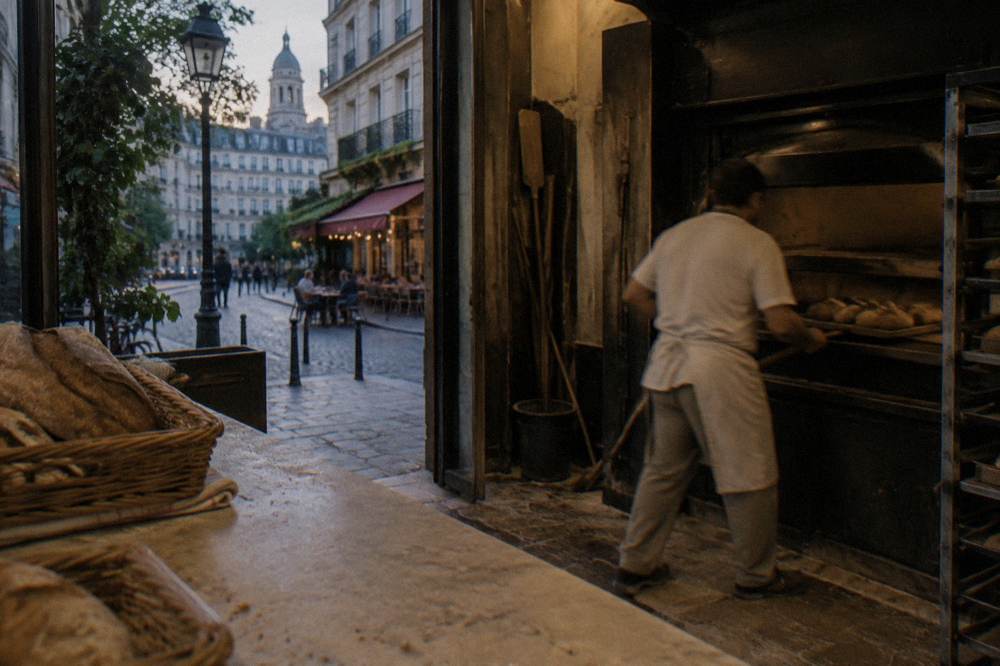
The same logic applies to neighborhoods. In Montmartre, one local food guide warns plainly against the restaurants around Sacré-Cœur for overpriced, reheated tourist food; the better bakeries sit on the streets below the hill. Our Montmartre food tour guide maps that lower slope, and the Montmartre Hill Gourmet Tasting walk (macarons, cheeses, cured meats, wine, from $137 per person) is the guided version of the same idea, rated 4.8 from 2,746 reviews.
How Do Bakery Stops Work On A Guided Food Tour?
A guided walking tour converts four or five bakery decisions into one booking: you meet a guide at a stated point, walk a fixed route, and taste at each stop with the buying handled for you. On the Pastry and Chocolate Walk, from $90 per person, groups of up to 12 cover the Grands Boulevards covered passages with six or more tastings over 2.5 hours; every roster tour here meets at a set point, none picks up at hotels.
The mechanics matter more than the marketing. Every walking food tour on this site's roster is small-group, capped at 12, meets in a named area, and, apart from the exceptions printed per listing, offers free cancellation up to 24 hours before the start. The pastry walk meets at the Grands Boulevards passages and includes Passage Jouffroy and Passage Verdeau, two of the city's surviving glass-roofed arcades, which are themselves open daily as permanent shopping streets.
What you get from a guide at a bakery counter is context you cannot read off a shelf. Which butter, which bake time, which item sells out by 10:00. Reviews for the pastry walk bear this out: one guest praises a guide "knowledgeable about the history of Paris and the foods we ate," another simply enjoyed "walking around discovering unique pastry and chocolate places." Vegetarians are accommodated on that listing, though it notes it is not recommended for vegans or gluten-free visitors.
| Guided option | Duration | From (per person) | Bakery angle | Rating and reviews |
|---|---|---|---|---|
| Pastry and Chocolate Walk | 2.5 hours | $90 | 6+ pastry and chocolate tastings in the passages | 5 from 368 reviews |
| Montmartre Cheese, Wine & Pastry walk | 3 hours | $135 | French pastries plus savory specialties | 4.9 from 2,401 reviews |
| Montmartre Hill Gourmet Tasting | 3 to 3.5 hours | $137 | Macarons, cheeses, cured meats, wine | 4.8 from 2,746 reviews |
| Secret Dish, 10+ Tastings walk | 2 to 3.5 hours | $73 | Breads, viennoiserie, macarons, secret dish | 4.8 from 5,387 reviews |
The Secret Dish, 10+ Tastings tour is the budget entry at from $73 per person, with freshly baked breads and viennoiserie among the stops; its listing notes vegetarians are welcome but that vegan and gluten or dairy allergies cannot be accommodated. One recent guest review sums up the format: "Lots of local history mixed with incredible bites."
Croissant Or Macaron: Should A Bakery Day End In A Baking Class?
If tasting turns into wanting, the roster has three hands-on options: the Croissant Baking Class with a chef, 3 hours at from $134 per person capped at 8 students, the Central Paris Macaron Baking Class, 2.5 hours at from $117 per person, and the French Baking Experience in the Haut-Marais, 2 hours at from $103 where kids under 5 join free. Each ends with what you baked.
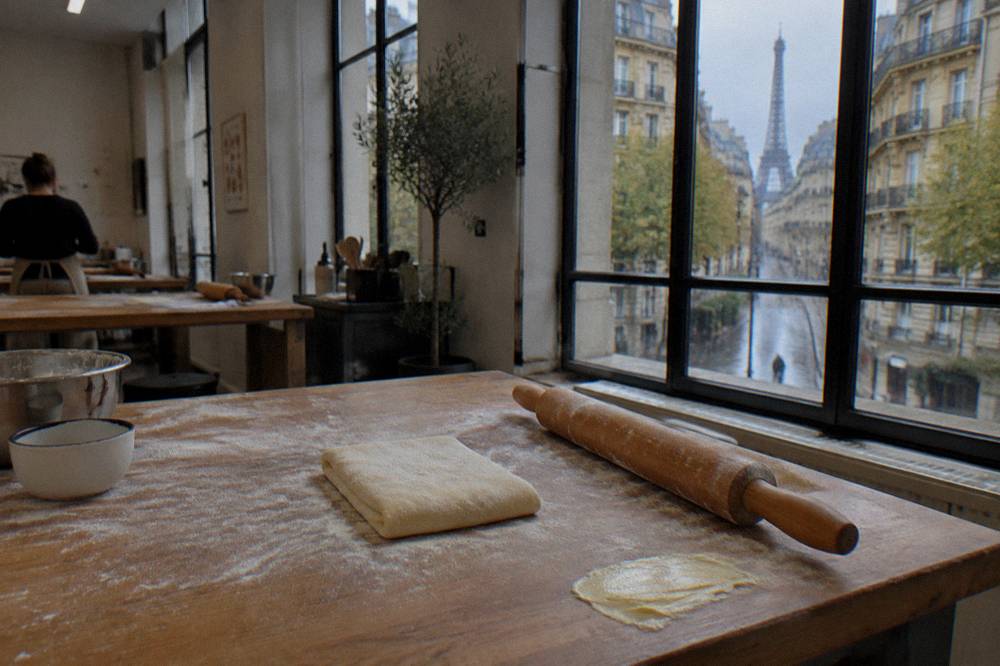
The croissant class is the deepest dive: a professional kitchen, a chef named on the listing, all ingredients, and a bi-colour croissant option. It is capped at eight, which makes it the most personal of the three, and children under 17 must come with a paying adult. The macaron class near Saint-Lazare sends you home with a recipe as well as a box. The Haut-Marais experience is the most flexible, splitting into bread, croissant or macaron tracks, and its listing states children are allowed accompanied, with under-5s free though not participating.
A class reframes everything you tasted that morning. Laminating dough by hand explains why a 1.22 EUR average croissant is a bargain and why the exceptional ones charge more. Our pastry classes in Paris guide compares the full range, and the croissant making class guide covers the croissant track in detail.
| Class | Duration | From (per person) | Group cap | Take-home |
|---|---|---|---|---|
| Croissant Baking Class | 3 hours | $134 | 8 | Your croissants |
| Macaron Culinary Class, Latin Quarter | 2.5 hours | $112 | Small group | Box of macarons |
| Central Paris Macaron Baking | 2.5 hours | $117 | 10 | Recipe and tasting |
| French Baking Experience, Haut-Marais | 2 hours | $103 | 8 | Creations or take-home macarons |
How Do You Plan A One-Day Bakery Crawl In Paris?
Anchor the day around the Monday closure and the morning bake: markets and several top bakeries close Mondays, so crawl Tuesday through Friday. Start at 7:00 or 8:00 when viennoiserie is freshest, cluster stops in one arrondissement, and cap the day with a passage pastry stop or a class. The verified rhythm is morning markets 7:00 to 13:30 on weekdays, afternoon sessions 10:00 to 20:00, markets closed Monday citywide.
Geography beats ambition. A realistic crawl is three or four stops, not eight. The 10th-and-2nd pairing works well: Du Pain et des Idées early on a weekday, then walk or ride to rue Montorgueil for Stohrer and the permanent food shops. The 14th is a dedicated trip to Fournil Didot, the competition winner, best paired with nothing more ambitious than a bench. The Latin Quarter alternative is Maison d'Isabelle at opening, and the neighborhood files warn plainly against the restaurant strips of rue de la Huchette and rue de la Harpe for anything beyond browsing.
Season barely changes the bread but changes the street. Autumn brings squash, apples, pears, figs and plums into the market stalls around the bakeries, citrus arrives from December, and the window displays follow. Timing inside the week matters more than timing inside the year: weekday mornings give you the full city, Sundays give you the Marais boutiques open from around noon, and Mondays give you closed doors.
Two small etiquette notes close the planning. Service is included in French menu prices by law and a pourboire is optional, so nobody at a counter or café expects a tip for a baguette. And if your crawl becomes a picnic ambition, the market-tour roster has guided versions, from the 105-minute Taste Bastille market walk at from $38 per person to the full-day cooking class with market tour and lunch at from $246 per person, so the bread comes with a meal plan attached.
Common Questions About Paris Bakeries
Which bakery won the 2026 baguette competition in Paris?
Sithamparappillai Jegatheepan of Fournil Didot, 103 rue Didot in the 14th arrondissement, won the 33rd Grand Prix de la Baguette de Paris, announced 26 February 2026, from 143 entries, with a 4,000 EUR prize.
How much does a baguette cost in Paris?
The average baguette tradition in Paris costs 1.32 EUR, running 1.34 to 1.37 EUR in the 3e, 6e, 7e, 8e and 16e arrondissements, per verified price-index reporting.
How much should a croissant cost in Paris?
At a neighbourhood boulangerie, expect 1.20 to 1.60 EUR; one survey of more than 100 addresses put the Paris average croissant at 1.22 EUR.
Are Paris bakeries open on Mondays?
Many are not, and all listed Paris food markets close Mondays citywide. Du Pain et des Idées is closed all weekend and open Monday to Friday 7:00 to 19:30; Maison d'Isabelle is closed Mondays. Always check the shop before a Monday visit.
Is a bakery-focused guided tour worth it in Paris?
The Pastry and Chocolate Walk, from $90 per person, includes six or more tastings across 2.5 hours in the covered passages, rated 5 from 368 reviews, with free cancellation up to 24 hours before the start. It converts four or five bakery decisions into one route.
Can I learn to bake croissants or macarons in Paris?
Yes. The roster includes a 3-hour Croissant Baking Class from $134 per person capped at 8 students, macaron classes from $112 per person, and a 2-hour French Baking Experience from $103 per person where kids under 5 join free.