Best Croissants In Paris: Bakeries And Baking Classes
A good Paris croissant costs about the same as a metro ticket and is harder to find than most visitors expect. This guide covers the price benchmarks, the signs of a properly laminated croissant, the bakeries with verified hours and prices, and the baking classes that teach you to make them yourself.
Short answer
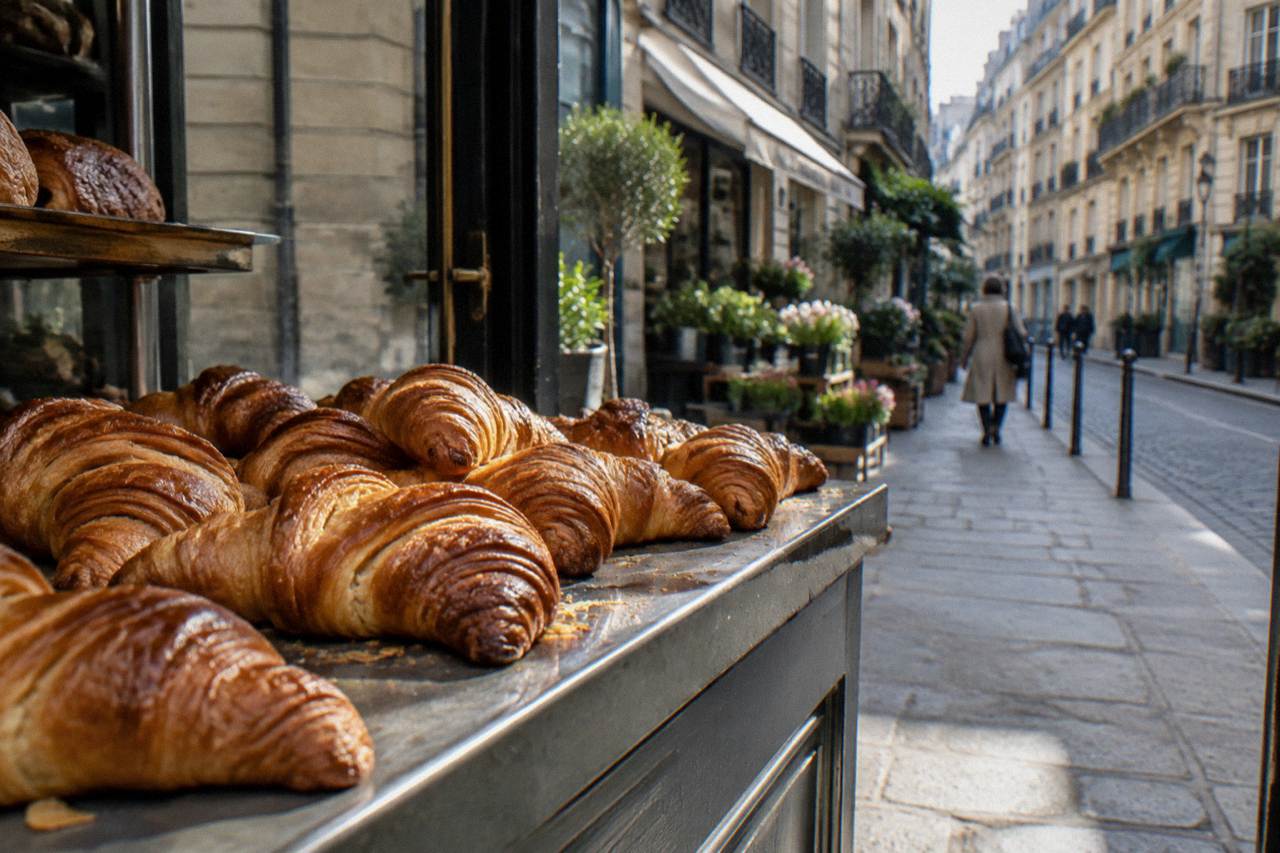
A croissant at a neighbourhood Paris boulangerie runs 1.20 to 1.60 EUR, with one survey of more than 100 addresses putting the average at 1.22 EUR. The best ones are baked in-house daily, so the reliable route is a bakery with a wood-toned counter and fast turnover, or a croissant baking class from $134 per person with Studio Pâtisserie.
Paris bakes croissants by the million every morning, and most of them are fine. The gap between a fine croissant and a great one is the whole reason people cross the city before 8am, and it is a gap you can learn to see, hear and smell in about two minutes. This guide is built from verified price data, official city pages and the site's own tour roster, and it treats the croissant hunt as two separate decisions: which bakery to walk to, and whether a hands-on baking class, from $134 per person for a three-hour session with Studio Pâtisserie, is the better use of a morning.
How To Tell A Good Croissant From A Bad One
A good croissant is straight, not curved, sounds hollow when tapped, weighs almost nothing and leaves visible flakes on the plate within a minute of the first bite. The curve tells you the fat: straight croissants are traditionally all butter, curved ones often signal margarine or a butter blend. If the base is dark and the layers inside open like a honeycomb, the lamination was done properly, and that is the single skill a baking class teaches.
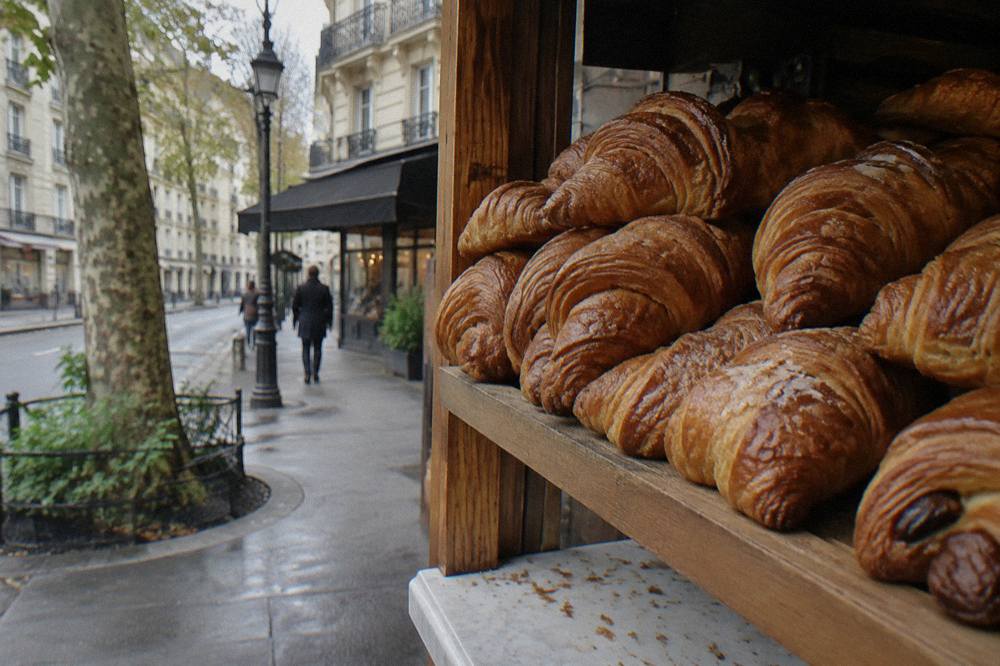
The straight-versus-curved rule is the oldest trick in the French baker's lexicon. It is not a legal standard, and plenty of excellent bakers shape both ways, but it remains the fastest visual filter on a counter you do not know. Straight means the baker is signalling pure butter; the curve historically marked cheaper fats, and many boulangeries still use it that way.
Sound matters more than looks. Tap the top of a day-old croissant and you get a dull thud; tap a fresh one and it should ring slightly, like light cardboard. Weight is the same story: a proper croissant loses water during the long proof and bake, so it feels lighter than its size suggests. A heavy croissant is usually an under-proofed one, dense in the middle where the layers should have opened.
Then break it. The interior of a well-laminated croissant is a honeycomb of irregular cells, ivory to pale yellow, not a smooth bread-like crumb. Butter should be on your fingers but not pooling on the plate. And the base, the part that sat on the tray, should be thin and lightly caramelised, never thick, pale or soggy.
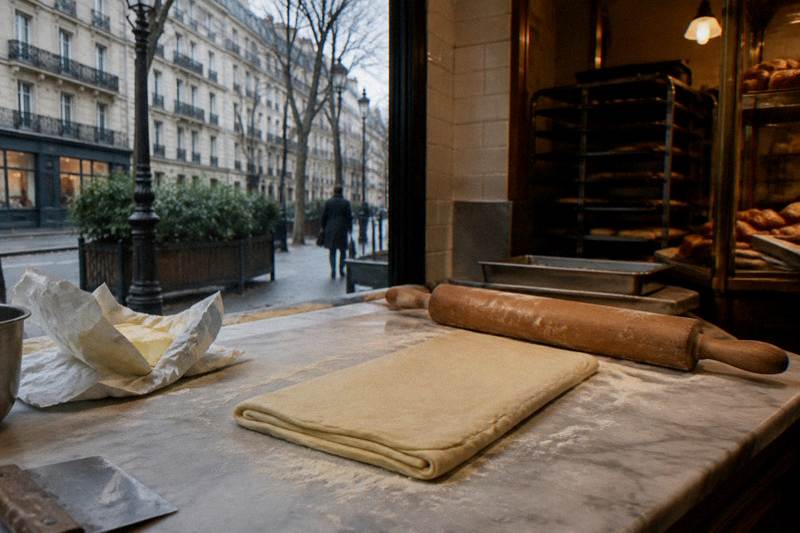
The craft behind all of this is lamination: folding a sheet of butter into dough dozens of times over a cold room and hours of rest. That is exactly what a croissant class teaches, and it is why the site's croissant making class guide treats the skill, not the recipe, as the thing you take home. The Croissant Baking Class with Studio Pâtisserie, from $134 per person for three hours in a group limited to 8, walks through the full process with a chef, and its listing includes everything from ingredients to professional-grade equipment.
| Cue | Good croissant | Warning sign |
|---|---|---|
| Shape | Straight, signalling all butter | Curved, often a butter-margarine blend |
| Sound | Hollow, slight ring when tapped | Dull thud, dense interior |
| Weight | Lighter than it looks | Heavy, under-proofed dough |
| Interior | Open honeycomb of pale layers | Smooth, bready crumb |
| Base | Thin, lightly caramelised | Thick, pale or greasy |
| Aftermath | Flakes on the plate within a minute | Soft, bendable, no shattering |
How Much Should A Croissant Cost In Paris?
A croissant at a Paris neighbourhood boulangerie costs 1.20 to 1.60 EUR, and one survey of more than 100 addresses puts the citywide average at 1.22 EUR. That is barely above the average baguette tradition at 1.32 EUR, which means a croissant is one of the cheapest quality food buys in the city. Anything past about 2 EUR at a standard counter needs a reason, usually a name-brand patisserie.
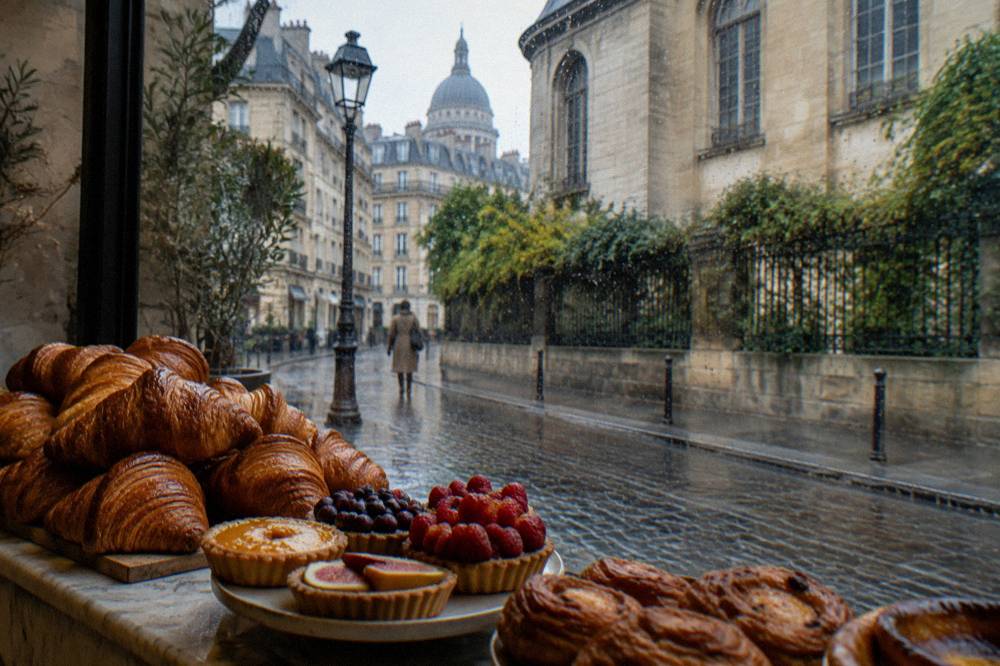
The price data is worth internalising before you buy, because it recalibrates the whole hunt. A survey of more than 100 Paris addresses arrived at an average croissant price of 1.22 EUR, and a separate price tracker puts the neighbourhood boulangerie range at 1.20 to 1.60 EUR. For context, the average baguette tradition in Paris runs 1.32 EUR, with the 3e, 6e, 7e, 8e and 16e arrondissements a few cents higher. The croissant is not a luxury product in Paris; it is a daily staple priced like one.
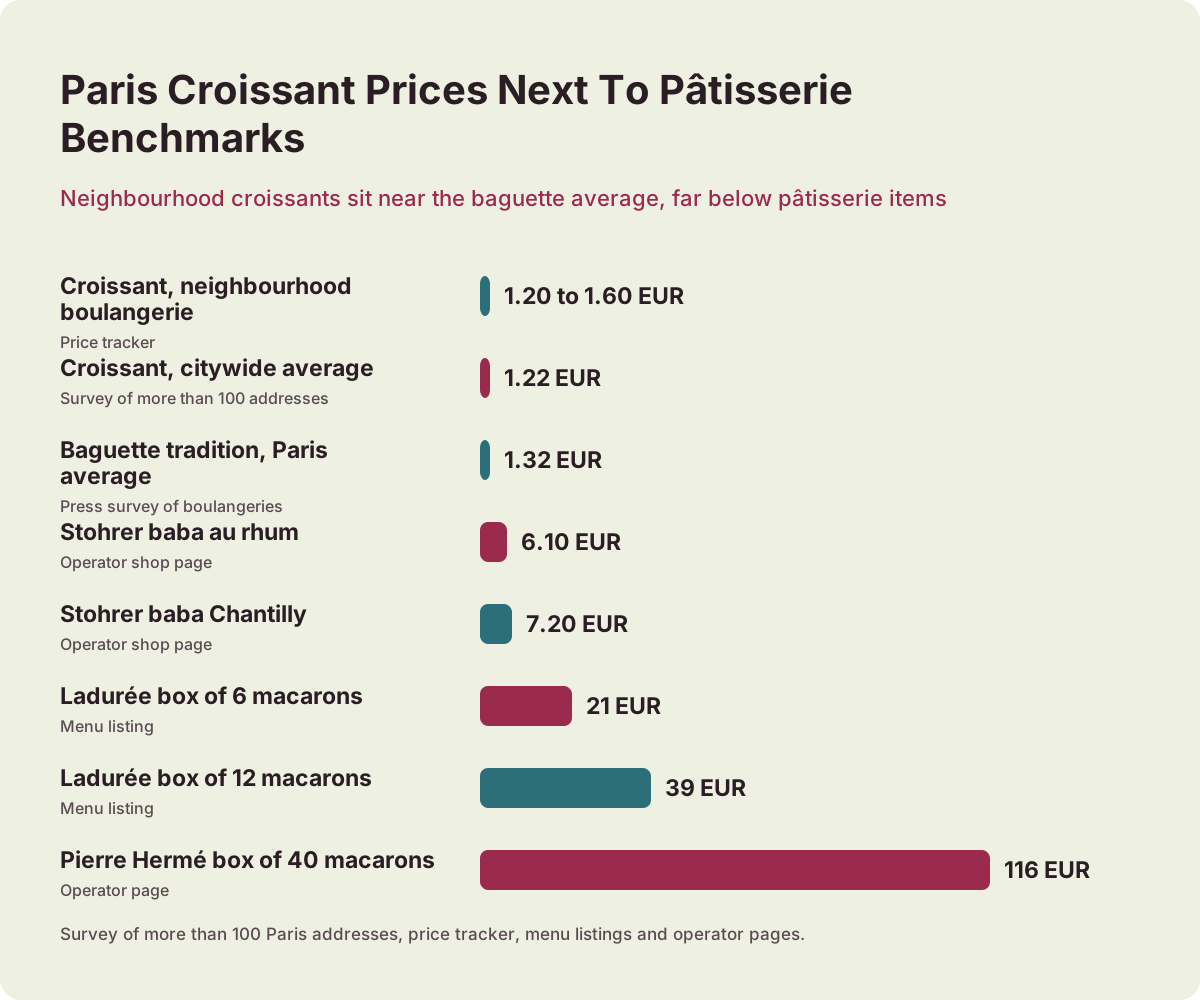
Where prices climb is at the historic houses, and those are worth knowing as benchmarks rather than as daily buys. A box of six macarons at Ladurée is 21 EUR and twelve is 39 EUR; Pierre Hermé's box of forty is 116 EUR; a single Angelina macaron starts at 3.20 EUR. At Stohrer, the oldest pâtisserie in Paris, an individual baba au rhum is 6.10 EUR and the baba Chantilly 7.20 EUR. None of that makes the croissant expensive; it makes the croissant the cheapest serious pastry in the city.
| Item | Price | Source framing |
|---|---|---|
| Croissant, citywide average | 1.22 EUR | Survey of more than 100 addresses |
| Croissant, neighbourhood boulangerie | 1.20 to 1.60 EUR | Price tracker |
| Baguette tradition, Paris average | 1.32 EUR | Press survey of boulangeries |
| Ladurée box of 6 macarons | 21 EUR | Menu listing |
| Ladurée box of 12 macarons | 39 EUR | Menu listing |
| Pierre Hermé box of 40 macarons | 116 EUR | Operator page |
| Stohrer baba au rhum, individual | 6.10 EUR | Operator shop page |
The honest read of this table: the croissant you should be hunting costs about the same as the one you should be avoiding. Price does not separate good from bad in Paris, which is why the visual and audible checks in the first section do the real work. For a deeper look at the pricing logic, the site's piece on how much a croissant should cost breaks down the economics of butter, labour and rent.
Which Paris Bakeries Sell Croissants Worth Crossing The City For?
Only a handful of Paris bakeries have verified facts behind them, and the honest answer is to plan around those rather than around unverifiable lists. Du Pain et des Idées near Canal Saint-Martin is open Monday to Friday 7am to 7:30pm and closed weekends, so it is a weekday-morning target. Stohrer on rue Montorgueil anchors a pedestrian market street of permanent food shops that is open daily, unlike the city's stall markets, which close Mondays. If you're visiting with children, our guide to eating in Paris with kids spells out which markets, picnic spots, and baking classes actually welcome families.
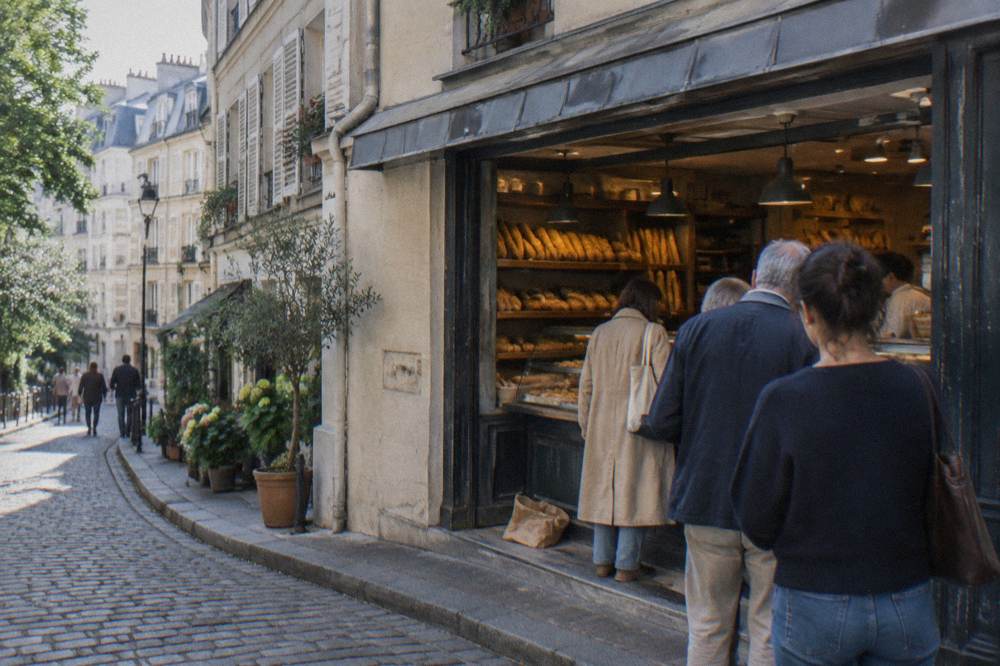
Start with what can actually be verified. Du Pain et des Idées, at 34 Rue Yves Toudic, opens Monday to Friday from 7am to 7:30pm and closes on Saturday and Sunday, which makes it a weekday play and a good excuse to walk the Canal Saint-Martin side of the 10th. Its sit-down offshoot, La Table, runs separate hours with evening service midweek, so check which one you are aiming for. Stohrer, the city's oldest pâtisserie, sits at the bottom of rue Montorgueil, a street the site covers in full in its rue Montorgueil food street guide.
That street distinction matters more than most guides admit. Rue Montorgueil and Rue Cler are streets of permanent shops, open daily, while Paris's 83 food markets, 74 open-air and 9 covered, run on official schedules and close on Mondays. If your croissant plan depends on a market, Monday is the day it fails. The city's own market pages print the hours, and the site's Paris food markets and market tours guide carries them in full.
One more verified anchor: the 2026 Grand Prix de la Baguette, the city's annual bread competition, drew 143 entries and was won by Sithamparappillai Jegatheepan of Fournil Didot at 103 Rue Didot in the 14th, with a 4,000 EUR prize, as announced on the city's official page. That is a baguette prize, not a croissant one, but a bakery that wins the city's bread competition is a reasonable bet for viennoiserie too. France's bread culture is not a tourist invention: the artisanal know-how and culture of the baguette was inscribed by UNESCO in 2022.
| Bakery | Verified fact | Planning note |
|---|---|---|
| Du Pain et des Idées, 34 Rue Yves Toudic | Open Mon-Fri 7am-7:30pm, closed Sat-Sun | Weekday morning only |
| Stohrer, rue Montorgueil | Baba au rhum 6.10 EUR, baba Chantilly 7.20 EUR | Oldest pâtisserie in Paris |
| Fournil Didot, 103 Rue Didot | 2026 baguette Grand Prix winner, 143 entries | 14e, worth the metro ride |
| Ladurée | Box of 6 macarons 21 EUR, box of 12 39 EUR | Brand benchmark, not a croissant stop |
| Pierre Hermé | Box of 40 macarons 116 EUR | Gifting, not breakfast |
Beyond these, the site's best bakeries in Paris guide covers the wider field, and the honest advice is the same in both: a bakery two streets from your hotel that bakes on site and sells out by 11am will beat a famous name with a stale counter. Turnover is the quality signal you cannot photograph.
Is A Croissant Baking Class In Paris Worth It?
A croissant baking class is worth it for anyone whose interest in croissants goes past eating them, because lamination is a process you cannot learn from a recipe. The Croissant Baking Class with Studio Pâtisserie costs from $134 per person, runs 3 hours in a group limited to 8, and holds a 5 rating from 243 reviews. You leave with the technique, the shaping practice and, in this case, the croissants you made.
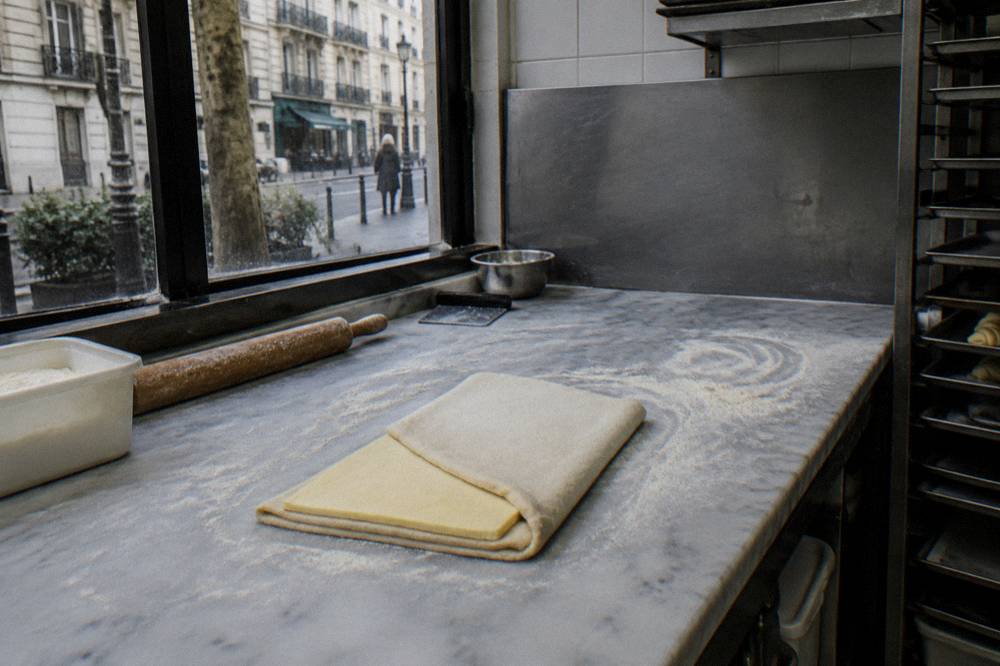
The case for the class is simple: the difference between a 1.22 EUR croissant and a great one is almost entirely process, and process is physical knowledge. Folding butter into dough at the right temperature, resting it long enough, rolling to the right thickness, cutting and shaping without crushing the layers, these are things a chef corrects in real time and a video never can. The listing for the Croissant Baking Class with Chef Léo includes all ingredients, professional-grade kitchen equipment and a bi-colour croissant option, and children under 17 must come with a paying adult. Free cancellation runs up to 24 hours before the start.
The class also answers a question bakeries cannot: why croissants fail. Under-proofed dough, butter that breaks through the layers, an oven a few degrees off, each failure mode is visible once you have caused it yourself. That is why the site's croissant making class guide frames the class as a skill purchase rather than a tasting, and the same logic runs through the wider pastry classes in Paris guide.
If you would rather eat than bake, the eating route is a guided walk. The Pastry and Chocolate Walk with Devour France Food Tours, from $90 per person for two and a half hours in a group capped at 12, moves through the covered passages around Grands Boulevards, including Passage Jouffroy and Passage Verdeau, with more than six tastings and a 5 rating from 368 reviews. It carries no drinks, and the listing notes it adapts for vegetarians and pescatarians but is not recommended for vegans or gluten-free diets. One guest review on the listing calls the guide "fantastic" and praises "walking around discovering unique pastry and chocolate places"; another says the pace was "nice and relaxed."
You can compare both on the tour page directly: the three-hour croissant baking class and the pastry walking tour, with live dates and pricing on each listing.
Croissant Baking Class Or Pastry Walking Tour: Which Fits Your Trip?
Choose the baking class if you have one free morning and want a skill; choose the pastry walk if you want coverage of several bakeries in one outing. The class runs 3 hours from $134 in a group of 8; the walk runs 2.5 hours from $90 in a group of 12. A third option, the two-hour Bread, Croissant or Macaron class from $103 with ExperienceFirst, splits the difference.
The trade-off is depth against breadth. A class gives you one kitchen, one chef and one technique learned properly; a walk gives you six-plus stops, a guide's commentary and the covered passages, which are among the most under-visited food spaces in central Paris. Timing matters too: classes eat a morning, walks fit between lunch and dinner. Neither includes hotel pickup, because no tour on this site's roster does; both meet at fixed central points, the class in Paris and the walk at Grands Boulevards.
The Bread, Croissant or Macaron class with ExperienceFirst is the flexible pick. It runs two hours from $103 per person in a group capped at 8, meets in the Haut-Marais, and lets you choose your format: baguette, croissant or macaron, with tastings of your own creations along the way and personalised macarons to take away on the macaron track. The listing notes children can join accompanied by an adult, and that kids under 5 come free of charge but do not participate. It holds a 4.9 rating from 255 reviews, and one review on the listing describes learning "how to make and shape baguettes, croissants, and small cakes" and calls it "the best part of our visit to Paris"; another, from a parent and daughter, praises the baker who taught them to roll croissants.
For pure pastry coverage, though, the walking tour is the stronger instrument, and it is the one the site features alongside the class in this comparison.
How To Fit A Croissant Day Around Paris Bakery Hours
Build the day around opening times, not distances, because the best croissants are gone by late morning and several top bakeries keep narrow hours. Du Pain et des Idées opens at 7am on weekdays and closes on weekends, Stohrer's street of permanent shops runs daily, and the city's stall markets close on Mondays. A realistic croissant day starts before 9am, pairs one far bakery with one near one, and leaves the afternoon for a class or a guided walk.
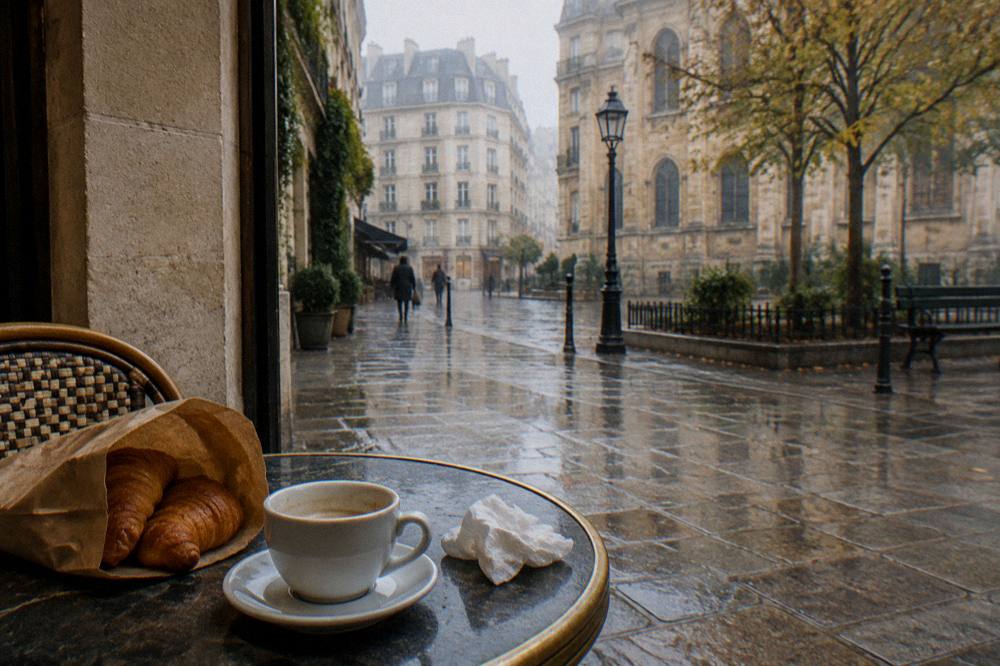
Morning is structural in Paris, not stylistic. Viennoiserie is baked in waves, the first around dawn and a second toward late morning at some houses, and a counter that is full at 11am can be scraped clean by noon. If your target bakery is a weekday-only one like Du Pain et des Idées, the whole plan depends on which day of the week it is. Check the hours against the day before you commit a morning, and treat a bakery that is sold out as a good sign rather than a failure: turnover is the quality signal.
Pairing stops keeps the walking honest. A far anchor, say Fournil Didot in the 14th, pairs naturally with a market morning if the day is right, since the 14e has its own food scene and the metro ride is short from Montparnasse. A near anchor, whatever is walking distance from your hotel, is the fallback when the far one is closed or cleared out. Two bakeries in a morning is the practical maximum; three turns the hunt into a chore and the croissants into cargo.
The afternoon is where the class or the walk slots in. A two-hour baking class starting after lunch, or the two-and-a-half-hour pastry walk through the covered passages, fills the hours when bakeries are at their least interesting without costing you the morning window. If macarons rather than croissants are the second target, the Macaron Baking Class in Central Paris with Studio Pâtisserie runs two and a half hours from $117 in a group limited to 10, with a 5 rating from 278 reviews and a recipe to take home.
The last honest word on planning: the best croissant in Paris is the one baked closest to your morning, sold to you warm, and eaten within ten minutes on a bench. Everything in this guide, the price benchmarks, the bakery hours, the classes from $90 to $134 per person, exists to raise the odds of that one bite. This site, Paris Food Tours, keeps the full roster of croissant classes, pastry walks and market tours updated so the planning part takes minutes, not mornings.
Common Questions About The Best Croissants In Paris
How much should a croissant cost in Paris?
Between 1.20 and 1.60 EUR at a neighbourhood boulangerie, with one survey of more than 100 addresses putting the average at 1.22 EUR. Anything past 2 EUR should come with a famous name attached, and the brand houses charge far more for boxes, like Ladurée's 21 EUR box of six macarons.
How can I tell a good croissant before I buy it?
Look for a straight shape, which traditionally signals all butter, a light weight for its size, a thin caramelised base and a hollow sound when tapped. Once broken, the interior should show an open honeycomb of pale layers rather than a smooth, bready crumb.
Which Paris bakeries have verified hours I can plan around?
Du Pain et des Idées at 34 Rue Yves Toudic opens Monday to Friday 7am to 7:30pm and closes on weekends. Stohrer sits on rue Montorgueil, a street of permanent food shops open daily. Fournil Didot in the 14th won the 2026 city baguette Grand Prix out of 143 entries.
Is a croissant baking class in Paris worth the money?
From $134 per person, the Croissant Baking Class with Studio Pâtisserie runs 3 hours in a group limited to 8 and holds a 5 rating from 243 reviews. It is worth it if you want the technique of lamination, which no recipe can teach, and it includes all ingredients and professional equipment.
What is the cheaper alternative to a croissant class?
The Pastry and Chocolate Walk with Devour France Food Tours runs two and a half hours from $90 per person with more than six tastings through the covered passages, rated 5 from 368 reviews. The two-hour Bread, Croissant or Macaron class from $103 with ExperienceFirst is a middle option at 4.9 from 255 reviews.
Do Paris markets sell croissants?
The city's 83 food markets, 74 open-air and 9 covered, run on official schedules and close on Mondays, so they are unreliable as a croissant source. Streets of permanent shops like rue Montorgueil and Rue Cler are open daily and are the better bet for a bakery-based croissant plan.