How Much Should A Croissant Cost In Paris?
A plain-English price guide to croissants in Paris: the neighbourhood average, what premium houses charge, and when a baking class beats another bakery stop.
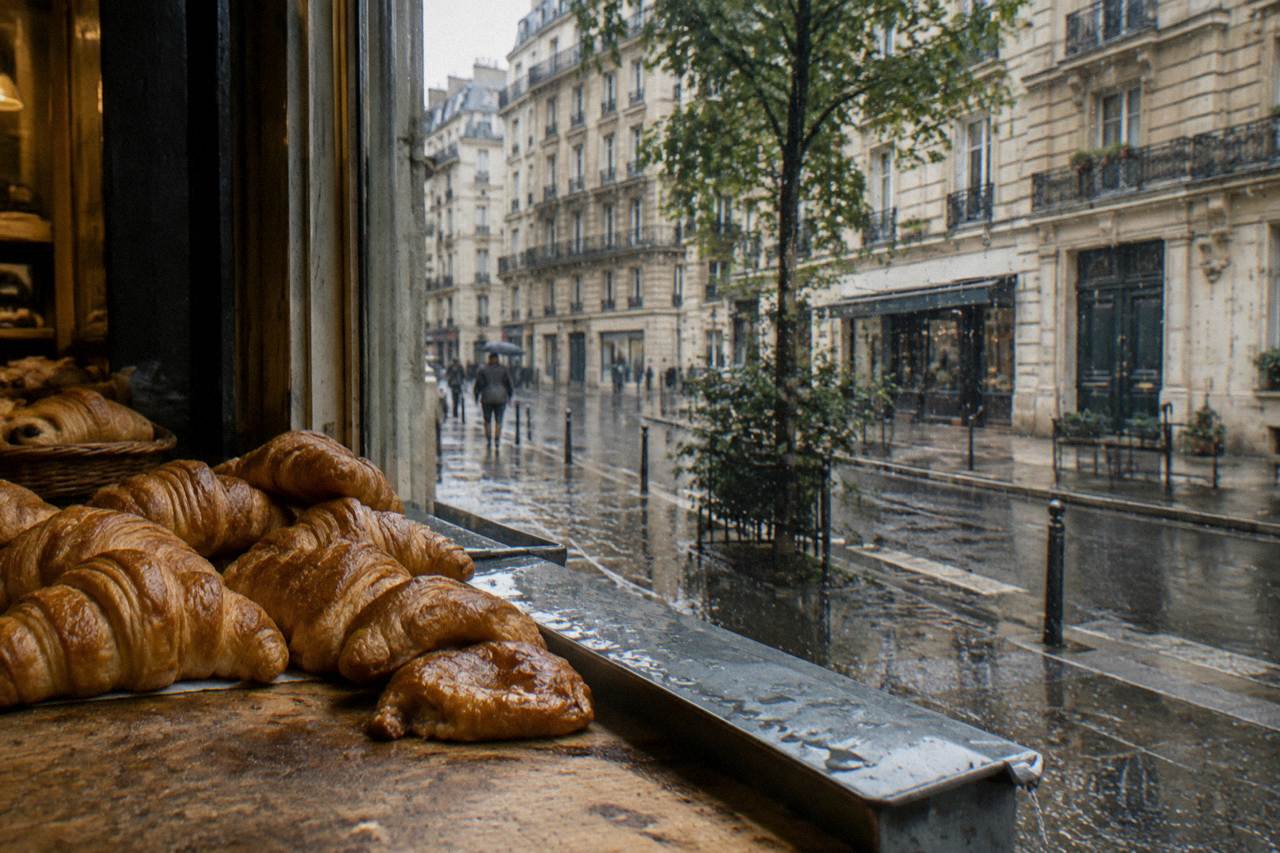
One survey of more than 100 Paris bakeries puts the average croissant at 1.22 euros, and neighbourhood boulangeries generally charge between 1.20 and 1.60 euros. Anything below 1.20 euros is a genuine bargain. Anything above 2 euros needs a reason behind it, such as a named butter, a landmark address, or a filled pastry rather than a plain croissant.
That spread is wider than most visitors expect. The same city sells you a croissant for the price of a metro ticket and, ten minutes' walk away, a nearly identical looking one for the price of a sandwich. The difference is rarely random. It tracks butter, labour, rent and reputation, and once you can read those four signals the price tag stops being a mystery.
The honest answer to the question is that a plain croissant from an ordinary Paris boulangerie should cost you between 1.20 and 1.60 euros. That is the working range reported for neighbourhood bakeries, and it matches what the survey average of 1.22 euros implies about where most of the city bakes. If you are paying meaningfully more, you should be able to name what you are paying for.
This matters because croissant hunting is one of the cheapest pleasures in Paris, and price-checking it wrong cuts both ways. Overpay at a tourist-facing bakery near a monument and you get a dry, mass-produced croissant at a premium. Under-expect at a serious pastry house and you may wrongly dismiss a 2.50 euro croissant that took a chef three days of laminating and fermentation to produce. For a fuller map of where the good ones are baked, the best croissants in Paris guide breaks the city down by bakery.
There is also a point where the question stops being about buying croissants and becomes about making them. A croissant class costs more than a bakery counter ever will, but it answers the price question permanently: you learn exactly how much work sits inside those flaky layers, and you leave with a box of your own. We come back to that route later in this article.
If you would rather taste your way across several bakeries in one afternoon than bake in one of them, these three listings cover the croissant angle from three directions: a hands-on class, a guided pastry walk, and a shorter baking experience.
What Is A Fair Croissant Price At A Neighbourhood Boulangerie?
A fair price for a plain croissant at a neighbourhood boulangerie sits between 1.20 and 1.60 euros, with the citywide survey average at 1.22 euros. A croissant au beurre, made with real butter rather than margarine, sits at the upper end of that range. A pain au chocolat usually costs a few cents more than a plain croissant at the same counter.
The 1.20 to 1.60 euro band is the one to carry in your head. It is the range reported for neighbourhood boulangeries, and it is consistent with the survey average of 1.22 euros drawn from more than 100 addresses. Bakeries in this band are doing the same thing: buying flour, butter and yeast, paying a baker to start before dawn, and selling a product with almost no margin per unit. The croissant is, in economic terms, one of the least profitable things a boulangerie sells, which is exactly why the price stays honest.
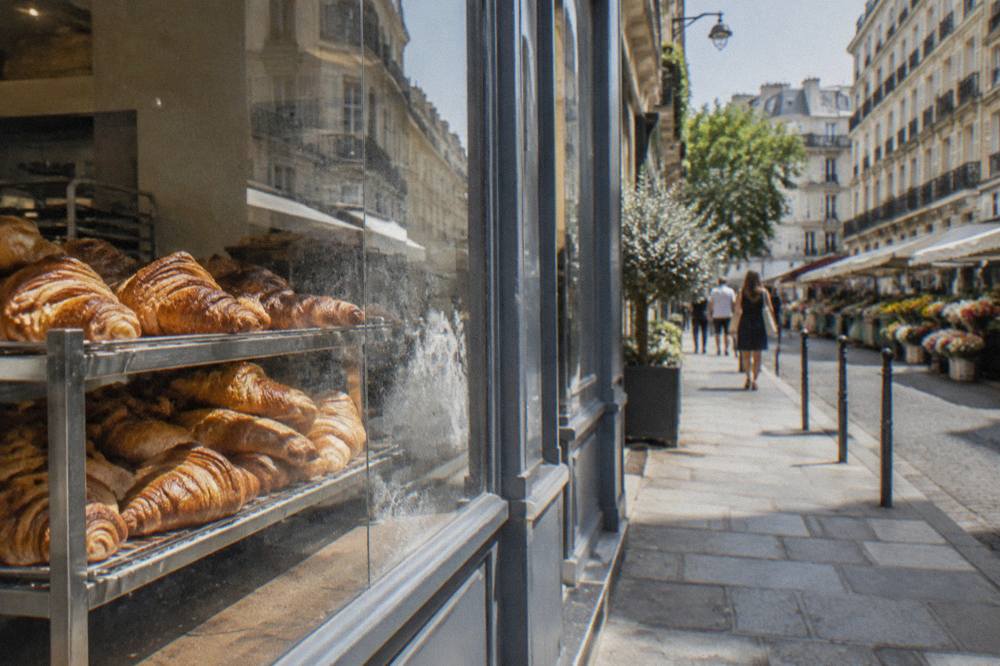
Two labels matter at the counter. A croissant au beurre is made with butter, and a croissant ordinaire is made with margarine or a blend. The ordinaire is cheaper, sometimes noticeably so, and it is the reason two croissants at the same bakery can carry different prices. If the label does not say beurre, ask. A bakery that will not answer that question is telling you something.
The survey figure is worth treating as a floor rather than a ceiling. One survey of more than 100 Paris addresses arrived at the 1.22 euro average, while neighbourhood price tracking reports the 1.20 to 1.60 euro band for ordinary boulangeries. Between those two sources you have a fair picture: below 1.20 you are lucky, above 1.60 you are paying for something extra, and the something extra should be visible.
Why Do Croissant Prices Vary So Much Between Bakeries?
Three inputs drive nearly all of the variation: butter, labour and rent. Butter is the dominant ingredient in a croissant, and a bakery using a named French butter can pay several times the commodity price. Rent does the rest, because a bakery near a monument passes its lease to the counter. The croissant itself changes less than the postcode does.
Butter is the story worth understanding. A croissant au beurre of any quality is mostly butter by cost, and French butter is not a single product. A bakery using standard butter and one using a protected, regionally named butter are buying two different ingredients at two different prices, and the difference lands in the croissant. When a bakery advertises its butter by name on the window, that is usually the reason its croissant costs 1.80 euros instead of 1.30.
Labour is the second driver, and it is invisible on the price tag. A proper croissant is laminated: the baker folds butter into dough in a series of turns, rests it cold between each fold, and lets it ferment slowly before shaping and baking. Done traditionally, that is a two-day process that starts in the middle of the night. Done industrially, frozen pre-shaped croissants arrive on a pallet and get baked in twenty minutes. Both bakeries sell something that looks like a croissant. Only one of them is paying a baker for two days of skilled work, and only one of them is worth the upper end of the price band.
Rent explains the geography of the price tag more than quality does. The bakery beside Sacré-Cœur or on the way to the Eiffel Tower is not necessarily better than the one three streets back; it is simply more expensive to stand there. The practical rule is that price rises with proximity to a monument faster than quality does, so walking two blocks off the main drag usually buys you a better croissant for less money.
There is a final, smaller factor: the Grand Prix de la Baguette effect. When a bakery wins a citywide contest, queues form and prices drift upward on the whole counter, croissants included. The 2026 baguette prize went to Fournil Didot in the 14th arrondissement, with 143 baguettes entered and a 4,000 euro prize for the winner, per the city's own announcement. Winning bakeries earn their queues, but the halo does raise the question of whether you are paying for the croissant or the trophy.
Should You Take A Class Instead Of Buying Another Croissant?
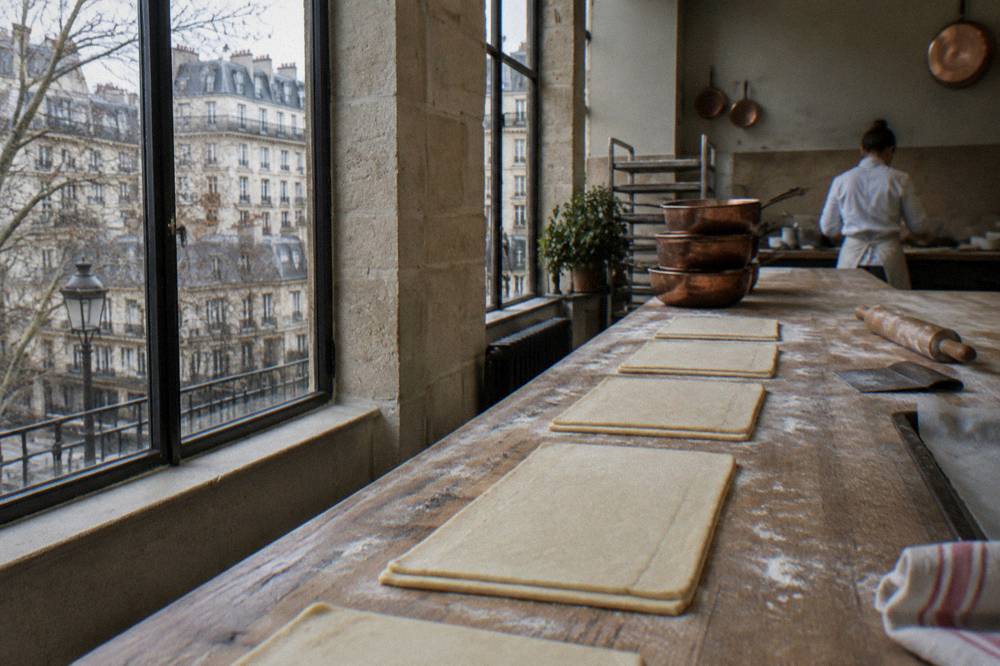
If reading price tags has made you curious about what actually goes into the lamination, a class flips the question entirely. The Croissant Baking Class with a Chef from Studio Pâtisserie runs three hours, is capped at eight bakers, and is rated 5 from 243 reviews. Instead of comparing 1.30 euro croissants, you spend an afternoon with Chef Léo learning the folding, resting and shaping that justify the price, and you leave with your own box. For a longer look at the format, the croissant making class guide compares the city's options.
What Do The Famous Pastry Houses Charge?
At the famous houses you are paying for brand, packaging and address as much as pastry. Benchmarks from the fresh price files include a box of six macarons at Ladurée for 21 euros, an individual macaron at Angelina from 3.20 euros, and a baba au rhum at Stohrer for 6.10 euros. A plain croissant at these addresses sits well above the neighbourhood band.
The premium houses publish their prices, and the numbers are useful precisely because they are not croissant numbers. They show what happens when a pastry becomes a brand product. Ladurée sells a box of six macarons for 21 euros and a box of twelve for 39 euros, which works out to 3.25 to 3.50 euros per macaron. Angelina sells an individual macaron from 3.20 euros and a grand macaron at 6.50 euros. Pierre Hermé sells a box of forty macarons for 116 euros. Stohrer, a historic pâtisserie in Paris, sells an individual baba au rhum for 6.10 euros and a baba Chantilly for 7.20 euros.
| Pastry house | Item | Price | What it tells you |
|---|---|---|---|
| Ladurée | Box of 6 macarons | 21 EUR | About 3.50 EUR per macaron once boxed |
| Ladurée | Box of 12 macarons | 39 EUR | Brand packaging carries the price |
| Angelina | Individual macaron | from 3.20 EUR | A single macaron outcosts a boulangerie croissant |
| Angelina | Grand macaron | 6.50 EUR | Gift-tier pricing |
| Pierre Hermé | Box of 40 macarons | 116 EUR | Nearly 3 EUR per piece at volume |
| Stohrer | Baba au rhum, individual | 6.10 EUR | Historic-house pricing for one pastry |
None of these numbers make the houses a bad deal. Stohrer is a storied old pâtisserie, and a baba there is a piece of Paris food history with a price tag attached. The point is calibration: once you know a single macaron at Angelina costs 3.20 euros, a 1.60 euro croissant at a neighbourhood boulangerie looks like exactly what it is, one of the best value hand-made foods in the city.
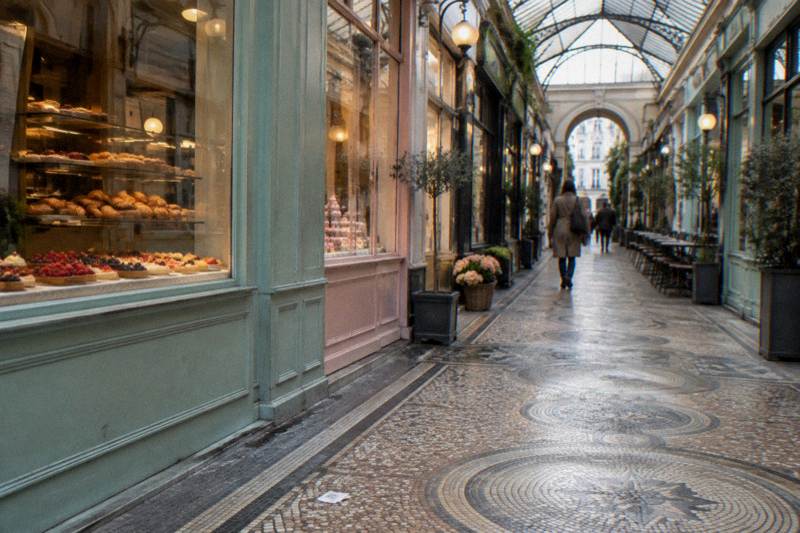
The middle path between a solo bakery crawl and a full class is a guided pastry walk. The Paris Pastry Tour, Croissants, Macarons & Iconic French Desserts from Devour France Food Tours covers six or more tastings across the covered passages near Grands Boulevards, including Passage Jouffroy and Passage Verdeau, in two and a half hours with a maximum of twelve guests. It is rated 5 from 368 reviews and starts from $90 per person. A guest review on the listing describes the guide as "fantastic" and the route as "walking around discovering unique pastry and chocolate places." Another calls the guide "knowledgeable about the history of Paris and the foods we ate" with "a nice and relaxed" pace.
How Can You Tell If A Croissant Is Worth Its Price?
Judge the croissant, not the price alone. A well-made croissant weighs little for its size, smells of butter before you bite, shatters rather than bends, and reveals an open honeycomb interior. A croissant that is heavy, doughy inside, glossy from egg wash alone, or smells of nothing has cost you too much at any price, including 1.20 euros.
The weight test is the fastest one. A croissant is mostly air held in place by thin buttered layers, so a good one feels surprisingly light in the hand. If it feels dense like a bread roll, the lamination failed or was never attempted, and the bakery is selling you dough with a crust. You can usually tell before buying, because a tray of proper croissants looks irregular, slightly burnt at the edges and never identical.
The interior is the proof. Tear it open rather than cutting it. Inside you want an open, irregular honeycomb of holes, pale gold to deep gold, with visible strata where the butter layers separated. A uniform, bready crumb means the butter was blended into the dough instead of folded, which is the industrial shortcut. This is exactly what a baking class teaches you to see from the baker's side of the bench: the folding, the cold rests, and the fermentation windows that produce that honeycomb.
Smell is free. A bakery worth its counter smells of butter and toast when you walk in, because real lamination leaves that in the air. A shop that smells of nothing, or of fryer oil, is telling you the croissants came in frozen. Price cannot tell you any of this, which is the real answer to whether a croissant is worth what it costs: the 1.22 euro average only tells you what the city charges, and the honeycomb tells you what you got.
Is A Croissant Baking Class Worth The Cost Compared To Buying?
A class costs more than a lifetime of bakery croissants at the counter, but it buys a different product: three hours with a chef, the lamination technique, and a box you made yourself. The Croissant Baking Class with a Chef starts from $134 per person, and shorter baking experiences start from $103. The value depends on whether you want croissants or the know-how.
The price comparison is stark and worth stating plainly. At the survey average of 1.22 euros, $134 buys roughly one hundred bakery croissants. Nobody should take a class to save money on croissants. People take one because the technique is genuinely hard to access any other way: the cold rests, the turn sequence, the proofing window and the bake are all things a book describes badly and a chef corrects in real time. Once you have folded the dough yourself, every price tag in the city becomes legible.
| Experience | Operator | Duration | Price | Rating |
|---|---|---|---|---|
| Croissant Baking Class with a Chef | Studio Pâtisserie | 3 hours | from $134 per person | 5 from 243 reviews |
| French Baking Experience, Bread/Croissant or Macaron | ExperienceFirst | 2 hours | from $103 per person | 4.9 from 255 reviews |
| Pastry Tour, Croissants, Macarons & Iconic French Desserts | Devour France Food Tours | 2.5 hours | from $90 per person | 5 from 368 reviews |
The Croissant Baking Class with a Chef is the most focused of the three: three hours, capped at eight bakers, with all ingredients and professional kitchen equipment included, plus guidance from Chef Léo throughout. The listing notes that children under 17 must be accompanied by a paying adult, so it can work for families with teenagers, though it is not a small-child class. You can check dates and current pricing on the tour page or Check availability directly.
The shorter option is the French Baking Experience, Bread, Croissant or Macaron Class from ExperienceFirst, two hours in the Haut-Marais with a maximum of eight participants, from $103 per person and rated 4.9 from 255 reviews. The listing notes that kids under five can join free of charge but will not be able to participate in the baking, which makes it the more family-flexible of the two. A guest review on the listing describes learning "how to make and shape baguettes, croissants, and small cakes" and calls the teacher "excellent." Another review, from a parent and daughter, says "we learned a lot about baguettes and got to make one and bring it with us."
How Does A Croissant Price Compare With Other Paris Food Benchmarks?
The croissant sits at the cheap end of Paris food benchmarks. The average baguette tradition costs 1.32 euros, so a croissant and a baguette cost about the same. A falafel sandwich on rue des Rosiers costs 10 euros, and a macaron at a premium house costs from 3.20 euros. Per euro spent, a well-made croissant delivers more hand work than almost anything else in the city.
The baguette comparison is the one locals actually use, because both come from the same counter and the same dawn shift. The average baguette tradition in Paris costs 1.32 euros, with the pricier central and western arrondissements running 1.34 to 1.37 euros. Against a 1.22 euro croissant average, that means the two pillars of the French breakfast cost essentially the same, which is remarkable given that one of them involves two days of butter lamination. The croissant is arguably the best labour-to-price ratio on the counter. Once you've paid that little, the next question is how to eat it, and how to eat a croissant like the French do settles the hands-versus-fork debate before your first bite.
| Item | Benchmark price | Source framing |
|---|---|---|
| Croissant, citywide average | 1.22 EUR | Survey of more than 100 Paris boulangeries |
| Croissant, neighbourhood range | 1.20 to 1.60 EUR | Neighbourhood boulangerie price tracking |
| Baguette tradition, average | 1.32 EUR | Baguette price index reporting |
| Baguette tradition, central districts | 1.34 to 1.37 EUR | Same index, by arrondissement |
| Macaron, individual at Angelina | from 3.20 EUR | Premium house menu |
| Baba au rhum at Stohrer | 6.10 EUR | Historic pastry house menu |
| Falafel sandwich, rue des Rosiers | 10 EUR | Fresh price file |
Two things fall out of this table. First, the croissant and the baguette are the only items on it produced start to finish in the building where they are sold, at that price. Second, everything above 3 euros is a brand or a restaurant-format product, not a counter pastry. That is the cleanest way to answer the question this article asks: a fair croissant price in Paris is a counter price, and the moment you leave the counter format you are buying something else, whether that is a box, a name or a sit-down service.
For budgeting the rest of the eating day around your bakery stop, the daily food budget guide works through the numbers meal by meal, and Paris Food Tours covers the guided side of the city's food scene, from market walks to wine cellars.
If the croissant question has grown into a broader pastry plan, these three listings are the ones that fit: the full croissant class, the guided pastry walk through the covered passages, and the shorter hands-on baking experience.
Common Questions About Croissant Prices In Paris
How Much Should A Croissant Cost In Paris?
A fair price for a plain croissant at a neighbourhood boulangerie is between 1.20 and 1.60 euros, and the citywide survey average across more than 100 bakeries is 1.22 euros. A croissant au beurre sits at the upper end of that band. Above 2 euros you should be able to name what you are paying for, such as a named butter or a famous address.
Why do some croissants cost more than others?
Butter is the main driver: a bakery using a named French butter pays several times the commodity price. Labour and rent do the rest. A traditionally laminated croissant takes about two days of folding and cold rests, and a bakery near a monument passes its lease costs to the counter.
Is a croissant ordinaire cheaper than a croissant au beurre?
Yes. A croissant ordinaire is made with margarine or a blend rather than butter, which is why it can cost less at the same counter. If the label does not say beurre, ask before you buy.
How can I tell if a croissant is worth the price?
Judge the croissant, not the tag. A good one feels light for its size, smells of butter, shatters rather than bends, and shows an open honeycomb interior when torn. A heavy, doughy croissant with a uniform crumb has cost you too much at any price.
Is a croissant baking class worth it compared to buying croissants?
Not on price alone: at the 1.22 euro average, a $134 class costs about as much as a hundred bakery croissants. The class buys the technique instead, three hours with a chef and a box you laminated yourself. Shorter baking experiences start from $103 per person.
Do premium pastry houses sell croissants?
Some do, but at premium houses you are largely paying for brand, packaging and address. Benchmarks from the same price files include an individual macaron at Angelina from 3.20 euros and a baba au rhum at Stohrer for 6.10 euros, which shows how quickly the format moves past counter pricing.