How Much Should I Budget For Food Per Day In Paris?
A sourced daily food budget for Paris built from verified bakery, bistro and market prices, plus where one paid food tour fits into a realistic day of eating.
How Much Should I Budget For Food Per Day In Paris?
Budget about 25 euros per person for a bare-bones self-catering day of market bread, cheese and a falafel lunch, roughly 60 to 90 euros for a comfortable mid-range day with a bistro lunch formule and a casual dinner, and 150 euros or more for a splurge day built around a fixed-price starred lunch and a full tasting dinner. Every figure comes from a documented price. For travelers weighing a guided eating experience against dining on their own, our comparison of private versus small group food tour prices in Paris lays out when the higher cost pays off.
The honest answer depends on which Paris you are eating. A baguette tradition averages EUR 1.32 across the city according to a 2026 price index, and a neighborhood croissant runs EUR 1.20 to 1.60 at current bakery prices. Those two numbers anchor the cheap end. At the other end, a formule déjeuner at a decent bistro costs 15 to 25 euros for two courses, and one Michelin-starred venue offers a fixed-price lunch around 32 euros for two courses. Between those poles sits the day most visitors actually have: a pastry breakfast, a market or street lunch, one sit-down meal, and a running total that surprises people in both directions. To spend that budget the way residents do, our guide to where Parisians actually eat covers market hours, bakery prices, and the streets locals skip.
Budgeting readers usually want to know one more thing: does a paid food tour fit, and at what cost to the rest of the day. The cheapest guided option on this site's roster is Taste Bastille: Paris Guided Market Tour with Tastings, a 105-minute market walk from $38 per person that includes cheese, charcuterie and oyster tastings. The classic walking tours run higher: the Secret Dish, 10+ Tastings tour from Secret Food Tours starts from $73 per person, and Le Marais, 10 Tastings by Devour Tours starts from $107 per person. A tour can replace a meal rather than add to one, which changes the arithmetic considerably. If you don't eat meat, the vegetarian guide to Paris food tours and meatless food days covers which tastings still work for you.
Bakery averages come from published price surveys, bistro ranges from current lunch pricing reporting, market hours from the city's own market pages, and tour prices from the verified listings on this site. Where a figure is a survey result rather than an official statistic, it is flagged as one. For a wider look at what guided experiences cost, the companion guide on food tour pricing in Paris breaks down every category.
| Daily tier | Breakfast anchor | Lunch anchor | Dinner anchor | Documented total |
|---|---|---|---|---|
| Self-catering | Croissant EUR 1.20 to 1.60 | Falafel sandwich 10 euros | Market picnic, baguette at EUR 1.32 average | About 25 euros per person |
| Mid-range | Bakery pastry and counter coffee | Formule déjeuner 15 to 25 euros for two courses | Casual bistro dinner with a glass of wine, natural wine glasses 5 to 12 euros | Roughly 60 to 90 euros per person |
| Splurge | Pierre Hermé macarons, box of 40 at 116 euros | One-star fixed-price lunch around 32 euros | Full tasting dinner, price open | Past 150 euros per person |
What Does A Basic Food Day Cost In Paris?
Counting a bakery breakfast, a street-food lunch, market cheese and bread for an afternoon snack, and a simple evening meal, a disciplined self-catering day lands near 25 euros per person. The building blocks are documented: a croissant at EUR 1.20 to 1.60, a baguette tradition averaging EUR 1.32, a falafel on Rue des Rosiers at 10 euros, and tap water that restaurants must serve free on request.
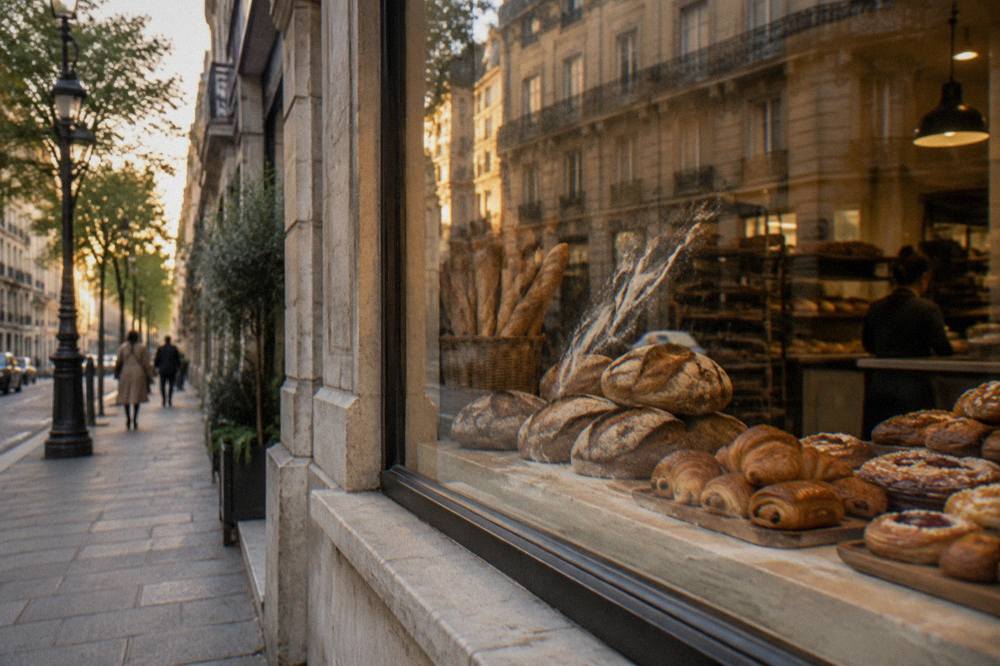
Start with breakfast, because it is the cheapest decision of the day and the easiest to overspend on. A croissant at a neighborhood boulangerie costs EUR 1.20 to 1.60, and a baguette tradition averages EUR 1.32 citywide, with the pricier central arrondissements running EUR 1.34 to 1.37. Add a coffee standing at the counter, typically a euro or two more than the pastry, and breakfast sits under 5 euros. The famous houses cost more: a box of six macarons at Ladurée is 21 euros and an individual macaron at Angelina starts at 3.20 euros, which is why pastry-shop boxes belong to the splurge day, not the base budget.
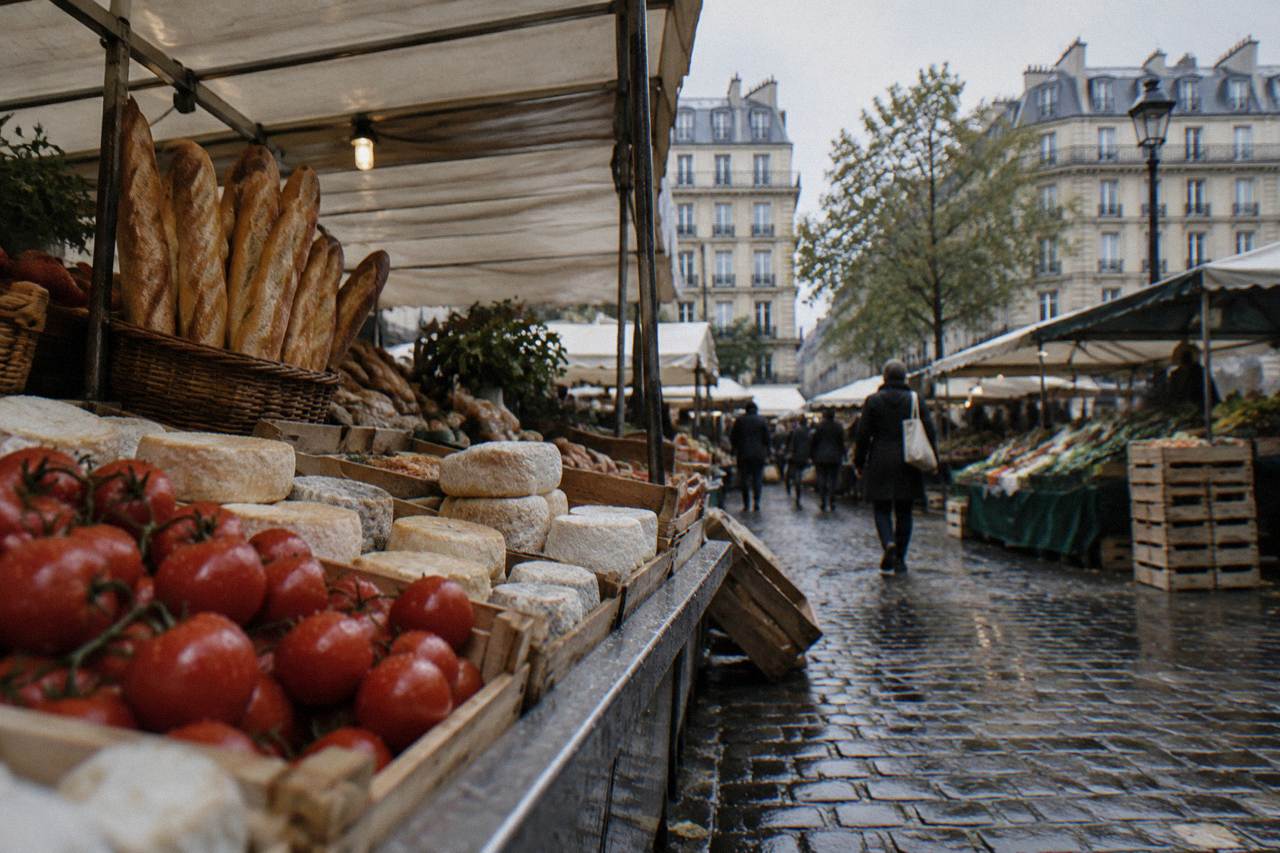
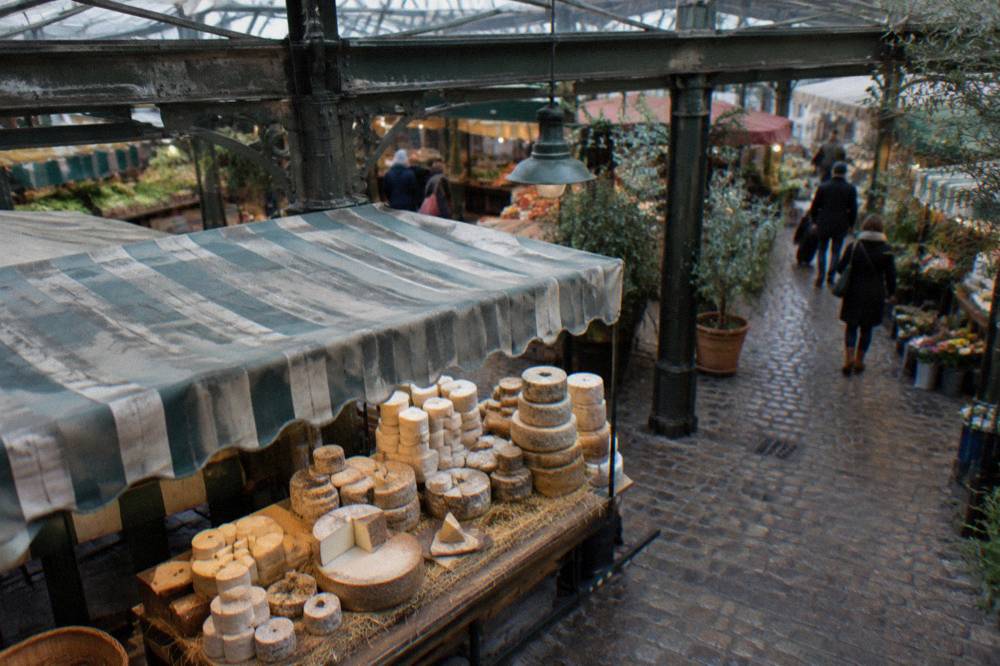
Lunch is where the budget day is won. The classic cheap lunch in the Marais is a falafel sandwich: L'As du Fallafel at 34 Rue des Rosiers charges 10 euros for its falafel sandwich, and King Falafel Palace on the same street also lists a 10-euro pita falafel for takeaway. Note the closure pattern before you plan around it: the fresh reporting has L'As du Fallafel closed on Saturdays. A market alternative is cheese, bread and fruit bought at a food market; Paris runs 83 food markets, 74 open-air and 9 covered, per the city's own count, and the morning markets open 7h to 13h30 on weekdays. All listed Paris markets are closed on Mondays. If you'd rather build a whole day around meatless meals, our vegetarian guide to eating in Paris expands on the falafel stands and market stalls in detail.
Two legal details quietly protect the base budget. French restaurant and café menu prices include a mandatory 15 percent service charge, so the price you see is the price you pay before any optional tip. And restaurants must provide free potable tap water, the carafe d'eau, to customers eating on site; a 1967 arrêté on the couvert covers ordinary water and bread. Asking for "une carafe d'eau" is normal, not cheeky, and it removes the 4 to 6 euros a bottle of water would otherwise add to every sit-down meal. The official guidance on the included service charge is published by the French economy ministry's consumer protection desk, which also confirms that a pourboire is optional and no one may demand it.
What Do Mid-Range And Splurge Days Look Like?
A mid-range day, meaning a bakery breakfast, a bistro lunch formule at 15 to 25 euros for two courses, a market snack, and a casual 25 to 40-euro dinner with a glass of wine, totals roughly 60 to 90 euros per person. A splurge day adds a fixed-price starred lunch near 32 euros and a full tasting dinner, pushing the total past 150 euros before any paid tour is counted.
The mid-range day rests on the formule déjeuner, the set lunch menu that decent bistros run at 15 to 25 euros for two courses in 2026. That single figure is the most useful number in Paris food budgeting, because it converts a sit-down restaurant from an event into a line item. Timing matters: typical Paris lunch service runs noon to 2:30pm with kitchens closing afterward, and dinner service starts 7:00 to 7:30pm with last orders around 10:00 to 10:30pm. Menus and plats du jour must be displayed outside from at least 11:30 for lunch and 18:00 for dinner, so you can price a restaurant from the sidewalk before committing.
The splurge day has a well-known trick worth repeating because it is real: Michelin-starred venues often offer fixed-price lunch menus significantly cheaper than dinner, with one-star two-course lunches around 32 euros. Dinner is where the splurge day earns its name, and the ceiling is genuinely open. For context on the pastry end, a box of 40 macarons at Pierre Hermé lists at 116 euros, and a Baba au rhum at Stohrer, the city's oldest pâtisserie, is 6.10 euros, with the Chantilly version at 7.20 euros. A splurge day does not require starred tables; it requires choosing where the money lands.
One honest note on tipping belongs here because it changes the total: with service already included, an optional pourboire of 1 to 2 euros per person is common for casual meals, and 5 euros reads as generous on a 100-euro mid-range dinner. The companion page on tipping in Paris restaurants and tours covers the full etiquette, including what to do on guided food tours, where the same logic applies.
How Much Do Drinks, Water And Coffee Add To A Food Budget?
Drinks can quietly double a modest food day if every order is a paid one, but the documented costs are manageable: a carafe d'eau is free by law, public fountains number more than 1,200 citywide, natural wine bar glasses run 5 to 12 euros, and a guided wine tasting with cheese starts from $56 to $123 per person depending on format. Coffee at the counter is the cheap habit; bottles and apéritifs are the expensive one.
Water first, because it is the easiest saving in Paris. The carafe d'eau rule means every sit-down meal can include free tap water, and between meals the city maintains more than 1,200 public drinking fountains, including the Wallace fountains, with over 500 remaining open through winter. A refillable bottle is effectively a zero-cost line in the budget. One seasonal caveat: some Wallace fountains are switched off from November to March because of freezing risk. The rest of the planning pages sit on Paris Food Tours.
Wine is the variable people misjudge. Natural wine bars in Paris typically pour glasses at 5 to 12 euros and sell bottles at 20 to 45 euros, per current wine-bar reporting. At the tasting end, the roster on this site includes a sommelier-led cheese and wine lunch at Ô Chateau from $97 per person with five wines and cheeses, and a cheese-cellar pairing workshop by Paroles de Fromagers from $80 per person with seven cheeses and three wines. A budgeting reader treats those as the evening's entire food spend, not an add-on to a dinner. The legal drinking age in France is 18 for all alcohol, which matters for families counting a teenager into a wine tasting.
Coffee deserves its own line because Paris charges for the seat. A counter espresso is cheap; the same coffee at a table on a famous terrace is not. Les Deux Magots in Saint-Germain, open daily 7:30 to 1:00, is the canonical example of paying for the address. The budget rule is simple: drink coffee standing in the morning, sit for it only when the sitting is the point.
Where Can You Eat For Almost Nothing In Paris?
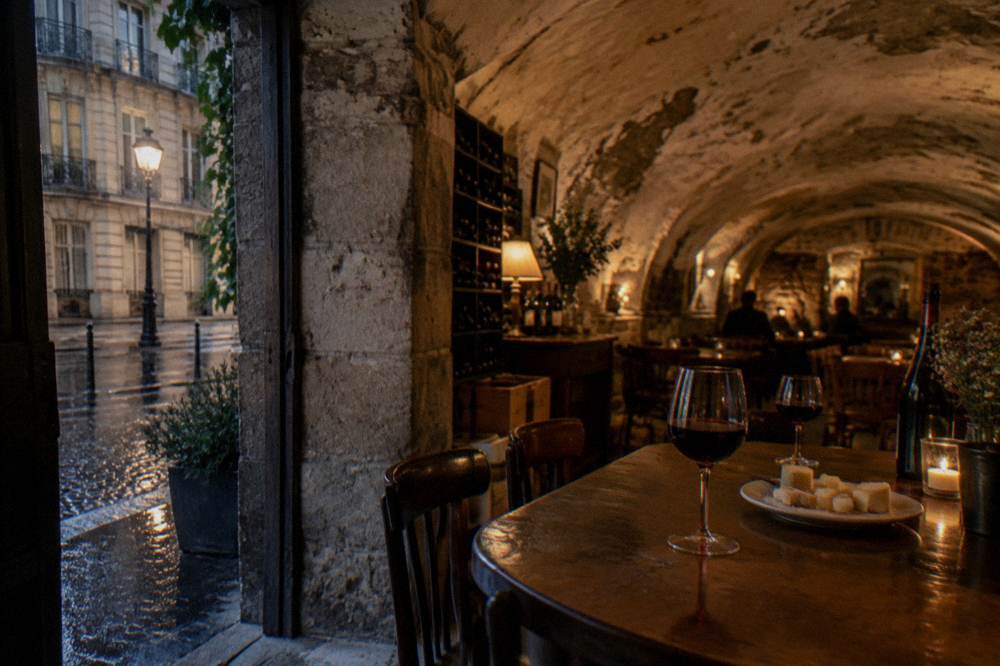
The true floor of Paris eating is close to zero: 1-euro complete meals exist for students through CROUS since May 2026, free drinking water is available at more than 1,200 public fountains, and a picnic built from market cheese, a EUR 1.32 baguette and fruit can feed two people for under 15 euros total. None of this requires luck, only knowing which rules and programs are documented.
The student program is the most striking documented figure. CROUS Paris has offered complete 1-euro meals to all students with an Izly account since May 2026, served in two daily sittings. Visitors cannot access it, but it anchors how cheap prepared food in Paris can be when subsidized, and the university restaurants around the Latin Quarter sit beside some of the cheapest bakeries in the city.
For everyone else, the picnic is the tool. A baguette tradition at EUR 1.32, a market cheese portion, fruit from a food market, and a supermarket or wine-shop bottle assemble a full meal for one at well under 10 euros, and for two at under 15. The city's market pages list the schedules: Marché d'Aligre's covered Halle Beauvau runs Tuesday to Friday 8h to 13h and 16h to 19h30, Saturday 8h to 19h30, Sunday 8h to 13h30, closed Monday, with the outdoor stalls from 7h30. The Marché Raspail organic market runs Sundays 7h to 14h30 with roughly 50 certified stalls. The full budget guide to free and cheap food things to do in Paris expands this into a full day plan, including pay-what-you-want walking tours that cost only the tip.
The free-water infrastructure deserves a second mention because it is the one saving that applies to every single day: more than 1,200 fountains, some fitted with misting in summer. Between a morning pastry, a picnic lunch and fountain water, a disciplined day in Paris can genuinely cost under 20 euros per person, before any restaurant at all.
Does One Paid Food Tour Fit A Daily Food Budget?
Yes, if the tour replaces a meal rather than stacking on top of one. The Secret Dish, 10+ Tastings tour runs 2 to 3.5 hours, covers more than 10 tastings plus wine and cheese, and starts from $73 per person; Le Marais, 10 Tastings starts from $107 per person with 10-plus tastings and two half glasses of wine. Either one is a walking dinner, so the honest budget line is the tour price plus a pastry breakfast.
The arithmetic is the whole argument. Take the mid-range day described above, with its 15 to 25-euro formule lunch and its casual dinner, and replace both meals with a $73 tasting walk that includes wine, cheeses, breads, a Brittany crêpe, macarons and chocolate. What remains of the day's food spending is a bakery breakfast and a coffee, and the daily total often lands below three separate restaurant meals. That is a food-rich day for less money than many visitors spend on unstructured eating. The Secret Dish tour carries a 4.8 rating from 5,387 reviews, and the listing states free cancellation up to 24 hours before the start, which matters when a budget is planned around a single big line item.
Reviews on the listing support the meal-replacement framing. One guest, Catherine_A, wrote: "Lots of local history mixed with incredible bites. Walking was a nice pace, crowd management was good, Matthew took time to speak to each person and was very personable. Each bite left an impression!" Another, Lindsay_G, described a guide who "took the time really explain all of what we ate." The pattern in the reviews is consistent: guests report the tour as an eating event with history attached, not a snack between meals.
The Marais option prices higher but covers a different neighborhood. Le Marais, 10 Tastings starts from $107 per person, runs 3 hours in groups of 12, and includes 10-plus tastings and two half glasses of wine, with the listing noting it is adaptable for vegetarians and pescatarians, though the listing adds that you may get slightly less. Its 4.8 rating comes from 809 reviews. For budget purposes it belongs to the splurge day: pair it with a cheap morning and count it as the day's main meal. Check availability on the operator's live listing if the numbers work for your plan.
The cheapest way to buy a guided tasting at all is the market walk this page features. Taste Bastille: Paris Guided Market Tour with Tastings, run by the operator Lazio, costs from $38 per person for 105 minutes at the Bastille Market with cheese, charcuterie and oyster tastings. Its rating is 5 from just 4 reviews, a small pool reported plainly, so the case for it is the price and the format, not review volume. More detail sits on the Bastille market tasting tour page, and the wider market tours guide covers the market itself.
A note on cancellation, because budget planners care: most listings on the roster print free cancellation up to 24 hours before the start, but terms vary by listing, so confirm the cutoff on the specific tour's page before treating it as flexible. The evening cooking class by Le Foodist, for instance, prints a different policy, free cancellation up to 6 full days before the start with a 50 percent refund 2 to 6 days before. Never assume a blanket rule.
Common Questions About Budgeting For Food In Paris
How Much Should I Budget For Food Per Day In Paris?
A disciplined self-catering day runs about 25 euros per person; a comfortable mid-range day with a bistro lunch formule and a casual dinner runs 60 to 90 euros; a splurge day with a starred fixed-price lunch and a full dinner can pass 150 euros. Build your number from the documented anchors: a EUR 1.32 average baguette, a 15 to 25-euro formule, and a 10-euro falafel lunch.
Is food in Paris expensive compared to other capitals?
The base layer is cheaper than its reputation suggests: a croissant costs EUR 1.20 to 1.60, tap water is free by law at any table, and a falafel lunch is 10 euros on Rue des Rosiers. What drives Paris totals up is sit-down dinner service and terrace seating, where you pay for the room and the address. Budget for the meals you actually plan, not the city's stereotype.
How much is a typical lunch at a Paris bistro?
A formule déjeuner, the set two-course lunch menu, runs 15 to 25 euros at decent bistros in 2026. Michelin-starred venues often offer fixed-price lunch menus significantly cheaper than dinner, with one-star two-course lunches around 32 euros. Lunch service runs noon to 2:30pm, and menus must be displayed outside from 11:30, so you can check prices from the sidewalk.
Do I need to tip on top of my food budget in Paris?
No, not in the American sense. A mandatory 15 percent service charge is included in all displayed restaurant and café menu prices, and the official consumer guidance confirms a pourboire is optional and cannot be demanded. An optional 1 to 2 euros per person is common at casual meals, and 5 euros reads as generous on a 100-euro dinner. Budget a small rounding amount, not a percentage.
Can a food tour replace a meal in the daily budget?
Yes, and that is the cheapest way to justify one. The Secret Dish, 10+ Tastings tour starts from $73 per person and includes more than 10 tastings plus wine; Le Marais, 10 Tastings starts from $107 per person. Count the tour as lunch or dinner, add a 5-euro bakery breakfast, and the day's total often lands below three separate restaurant meals.
What is the absolute cheapest way to eat in Paris?
A picnic from a food market: a EUR 1.32 baguette, a portion of cheese, market fruit, and free tap water from any of the more than 1,200 public fountains. Students with an Izly account can access 1-euro complete CROUS meals. For everyone else, the market picnic plus a morning pastry keeps a full eating day under 20 euros per person.
The final planning habit is to decide your tier before the trip, not during it. Paris rewards the visitor who fixes one anchor meal a day and lets the rest float: a formule lunch and a picnic dinner, or a tasting walk and a bakery breakfast. Every price on this page came from a survey, an official rule or a verified listing, and the numbers move slowly enough that a budget built on them will still hold when you land. If a tasting walk is your anchor meal, this price comparison of private and small-group food tours in Paris helps you decide when the upgrade pays off.