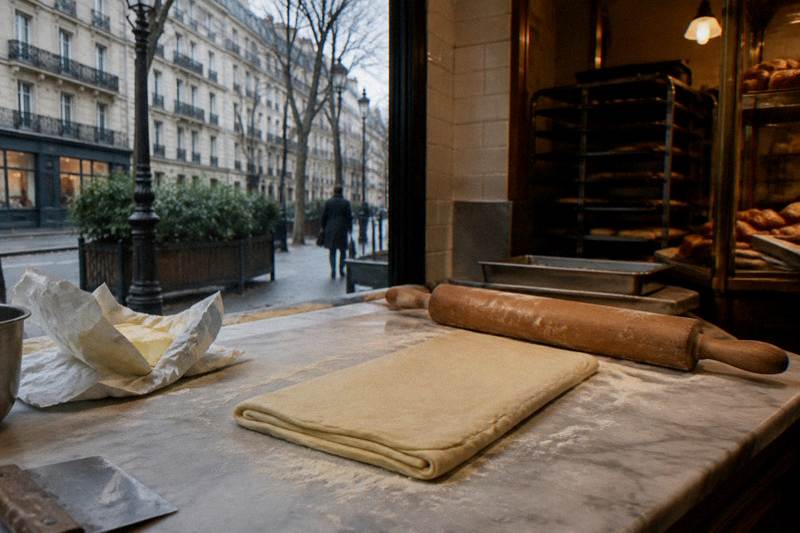
What To Wear To A Cooking Class In Paris
Practical clothing and shoe advice for a Paris cooking class, built from what the class listings actually state: aprons, closed shoes, kitchen heat and hair.
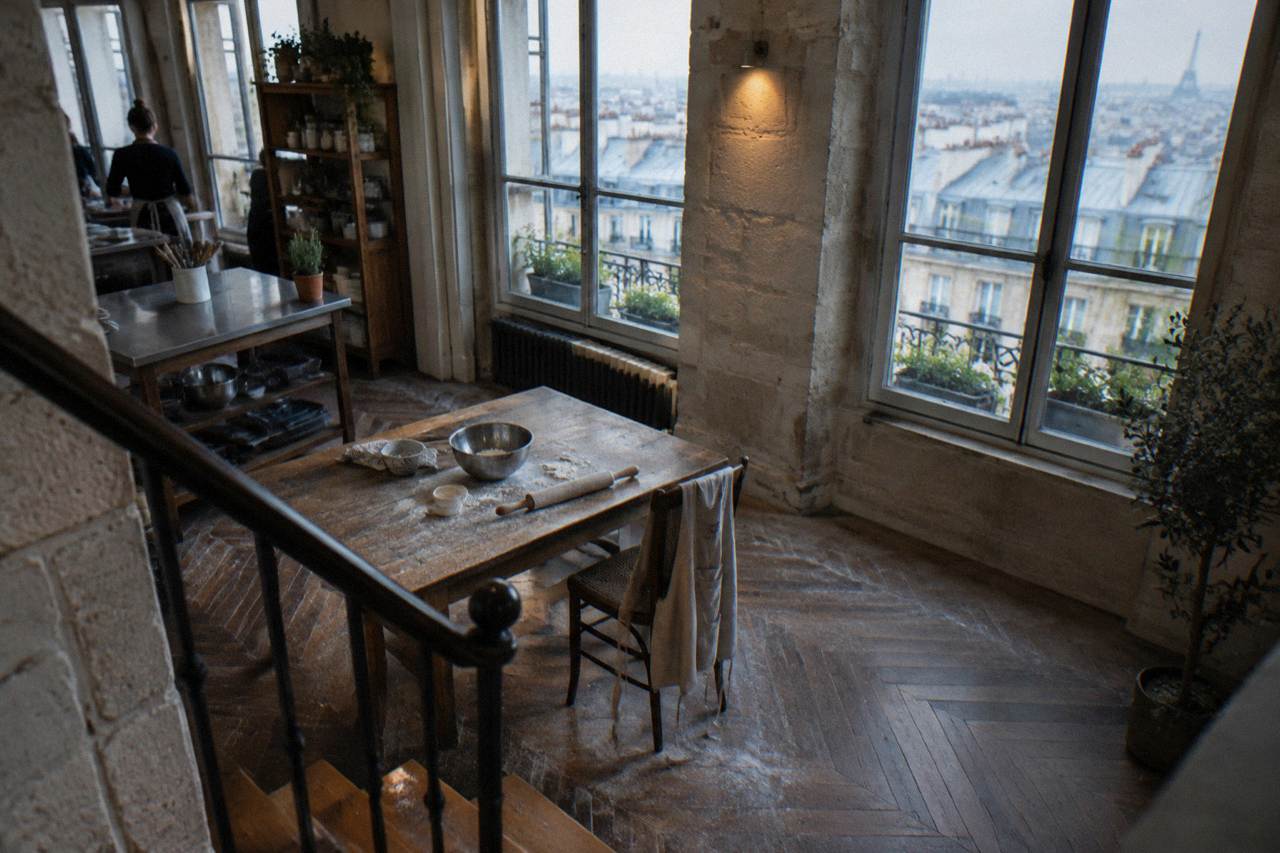
A cooking class in Paris is one of the few travel activities where the dress code genuinely matters and is also genuinely simple. You will stand for two to six hours, work close to a hot oven, handle flour and butter with your hands, and possibly walk through a market first. The listings on this site's roster, and the cooking schools whose schedules we checked, give a handful of concrete signals: aprons are usually provided, closed shoes are the norm in professional kitchens, and long hair needs tying back. Beyond that, comfort beats style, and nothing you wear should be precious.
The Paris: Croissant Baking Class with a Chef, from $134 per person and rated 5 from 243 reviews, is a good example of what the day looks like: 3 hours in a working studio limited to 8 participants, with all ingredients, professional-grade equipment and access to tools included. The studio states expert guidance from Chef Léo throughout, and the class includes all necessary ingredients for crafting your own croissants. What you wear into that room matters far less than what you do in it, but a few choices make the whole session smoother, and this article works through them one by one.
What To Wear To A Cooking Class In Paris
The short answer for almost every Paris cooking class is this: closed, flat, comfortable shoes; long trousers you do not mind dusting flour off; a top with sleeves you can push above the elbow; hair tied back; and minimal loose jewellery. Most classes supply an apron, so you do not need to bring one. Skip perfume, skip dangling bracelets, and leave the nice silk at the hotel because butter and sugar get everywhere in a busy kitchen.
That answer comes from three sources. First, the class listings themselves: the full-day market tour and cooking class from Le Foodist explicitly includes use of all cooking equipment and attire, meaning an apron, and the evening class from the same school includes use of required equipment and attire as well. Second, the cooking schools whose own pages we checked: Le Cordon Bleu's short pastry workshops state the price includes an apron, cooler bag and certificate, confirming that the apron is the school's job, not yours. Third, plain kitchen logic: ovens run hot, floors are hard, and flour drifts.
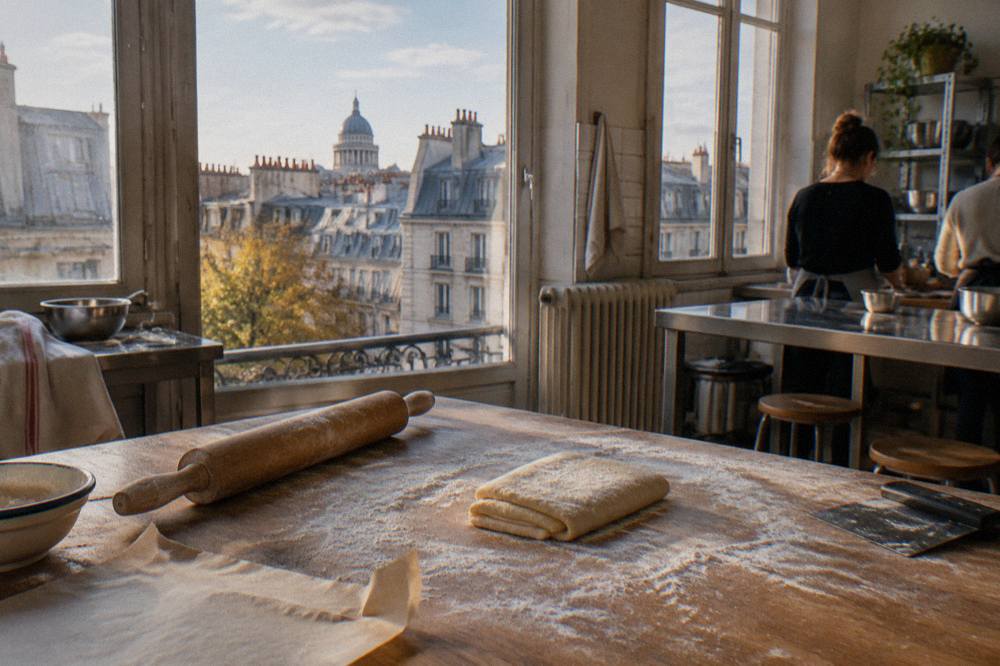
A practical way to think about it is layers. Kitchens swing between cool market streets and oven-warm workstations. A t-shirt under a light cardigan or flannel shirt you can remove and hang on a hook covers both ends of that range, and gives you a clean layer to wear to the meal that often follows. Several of the longer classes end with food you eat on site: the Le Foodist full-day class finishes with a 4-course meal including cheeses and red and white wines, and you will be glad of not sitting down to eat in a shirt you sweated through over a stove.
If you are still choosing a class rather than packing for one, the three below cover the main formats, a short hands-on baking workshop, a full evening class with dinner, and a mid-length macaron session, and every one of them takes beginners.
Each is small-group: the croissant class limits 8 participants, the evening class caps at 12, and the macaron class limits 10. Their prices run from $117 per person for the macaron session to $239 per person for the full evening with dinner, so the wardrobe rules below apply across a wide budget range. Sizing up your outfit for any of them follows the same rules.
Do Cooking Classes In Paris Provide Aprons Or Do You Bring Your Own?
You almost never need to bring an apron to a Paris cooking class. The listings on the roster that mention attire at all say it is provided: Le Foodist's full-day class includes use of all cooking equipment and attire, its evening class the same, and Le Cordon Bleu's pastry workshops list an apron among the inclusions on the school's own page. Where a listing is silent, assume an apron is supplied but confirm on the operator's page before booking. If you're booking food experiences for the whole family, the guide to whether a Montmartre food tour works for kids spells out what the listings say about age limits, walking time, and what the price actually covers.
The full-day class in question, Paris: Full-Day Cooking Class, Market Tour and Lunch from Le Foodist, runs 6 hours from the Latin Quarter, is limited to 12 participants, is rated 4.9 from 142 reviews and costs from $246 per person. Its inclusions list names a hard copy and an electronic copy of all recipes in English, a 4-course meal with cheeses and both red and white wines, and use of all cooking equipment and an apron. That last item is the whole answer to the apron question for that school.
The same logic extends to the shorter, cheaper workshops. The Paris: Croissant Baking Class with a Chef lists access to professional-grade kitchen equipment and tools among its inclusions, and at 8 participants maximum the studio is set up so that every student walks in and starts working, not measuring themselves for kit. A review of the class experience on the related ExperienceFirst baking class, which is a different but similar format, describes sampling items and taking home finished baguettes, which tells you the classes end with edible output and sticky hands, the two things aprons exist for.
| Class | Length | Group cap | From (per person) | Apron stated? |
|---|---|---|---|---|
| Paris: Croissant Baking Class with a Chef | 3 hours | 8 | $134 | Equipment and tools listed |
| Paris: Full-Day Cooking Class, Market Tour and Lunch | 6 hours | 12 | $246 | Yes, attire included |
| Paris Evening Cooking Class French Dinner and Market Visit Option | 6 hours | 12 | $239 | Yes, attire included |
| Paris: Macaron Baking Class in Central Paris | 2.5 hours | 10 | $117 | Listing does not state |
Where the listing does not state it, a one-line message to the operator settles the question. Booking pages usually have a contact route, and operators answer wardrobe questions quickly because they get them constantly. What you should not do is buy or pack an apron on spec: it is dead weight in a suitcase for the overwhelming majority of Paris classes.
One related item operators do sometimes ask you to bring is a container. Some baking classes let you take your creations home, and the ExperienceFirst class listing mentions tastings of your creations along the way or to take away. A folded tote or a small rigid box in your day bag is more useful than any clothing item beyond the basics.
Which Shoes Are Best For A Cooking Class In Paris?
Closed, flat shoes with grippy soles are the right call, and this is the one wardrobe item worth taking seriously. You will stand for most of a 2.5 to 6 hour session on hard floors, around spills, hot trays and other students' feet. Sandals, flip-flops, heels and unworn shoes are poor choices, and open toes are generally unwelcome in professional kitchens.
The reasoning is partly safety convention and partly arithmetic. A 3-hour croissant class at Studio Pâtisserie means hours standing at a workbench rolling dough; the 6-hour Le Foodist evening class stretches that across an afternoon market visit and a dinner service. Paris itself adds distance: the walk from a metro stop to the studio, and in the Latin Quarter or Saint-Germain that last stretch is often on cobbles.
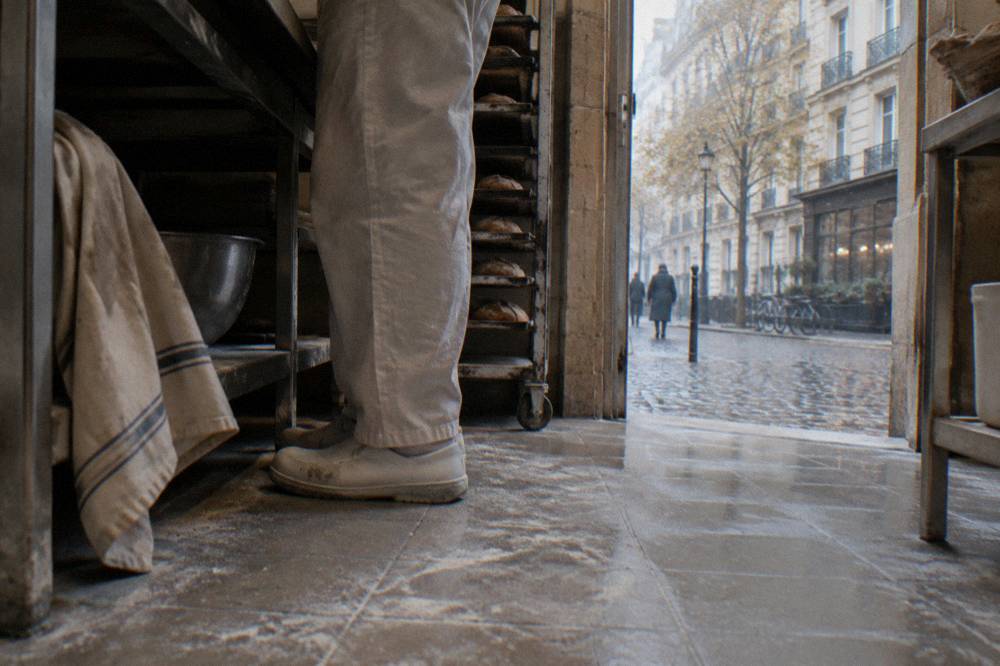
The listings set no shoe rule, but they do tell you duration and format, and duration drives the shoe decision. Look at the spread: the macaron class at Studio Pâtisserie's Saint-Lazare location runs 2.5 hours, the croissant class 3 hours, the full-day Le Foodist class 6 hours with a market tour. Anything past the two-hour mark in a kitchen means real time on your feet.
A short reference table helps match shoe choice to class length:
| Class format | Time on feet | Shoe priority |
|---|---|---|
| Short baking class (2 to 2.5 hours) | 2 hours standing | Any broken-in closed flat |
| Standard class (3 hours) | 3 hours, plus commute | Cushioned sneaker or similar |
| Full-day class with market tour (6 hours) | 5 to 6 hours incl. walking | Your best walking shoe, no exceptions |
If you own one pair of comfortable sneakers you would wear for a long museum day, that is your cooking-class shoe. Ballet flats work if they have real soles. Trail runners and hiking boots are overkill and bulky in a crowded kitchen. And if your class includes a market visit option, as the Le Foodist evening class does, remember you will be walking Paris streets for an hour before the cooking even starts.
What Should You Not Wear To A Cooking Class?
Leave at home anything loose, flowing, fragrant or fragile: dangling sleeves, scarves, long necklaces, bracelets, rings you cannot remove, perfume, and any clothing a butter stain would ruin. Loose fabric near an open flame or a stand mixer is a genuine hazard, perfume interferes with tasting wine and food, and jewellery traps dough. A cooking class is the wrong occasion for your best outfit, and every experienced instructor will quietly agree.
The perfume point deserves emphasis because several Paris classes are also tastings. The wine and cheese sessions on the roster make scent central to the experience, and cooking classes that include wine with the meal, like the Le Foodist full-day class with its red and white wines, work the same way. Scented products on your skin compete with what is in the glass. Guests on the sommelier-led tastings report learning a lot about the wines of France; strong fragrance at a tasting table undercuts exactly that.
Hair is the other practical item. If it is long enough to swing forward when you lean over a workbench, bring a tie. Croissant lamination has you bending over dough repeatedly, and loose hair plus flour is a combination every kitchen wants to avoid. The same goes for beards long enough to dip: a simple tie-back solves it.
Nails matter more than visitors expect. Dough gets under long nails, and acrylics or elaborate manicures make fine handwork like piping macaron shells, macaronage and shaping croissants genuinely harder. The Paris: French Macaron Culinary Class with a Chef from Ateliers Parisiens, rated 4.9 from 715 reviews and from $112 per person, spends its 2.5 hours on precisely that kind of precision work, and a box of macarons to take home is the reward for clean hands.
There is also a small laundry argument. Butter laminates into fabric, chocolate melts onto sleeves, and flour finds every weave. A dark t-shirt hides more than cream linen. You are not being graded on appearance; the studios care that you can work safely and comfortably.
Does A Cooking Class Outfit Change With The Season?
Yes, but less than you would think, because kitchens run their own climate. In summer, wear something light under whatever the studio expects, since oven heat stacks on a Paris heatwave; in winter, layers matter because you may walk a cold market and then stand in a warm kitchen. The constants year-round are closed shoes, tied-back hair and fabrics that tolerate flour. Check whether your class includes an outdoor market visit before deciding.
The winter case is the more common trap. A visitor packs for December streets, arrives in a heavy sweater, then spends three hours beside a hot oven in a class of eight or ten people and overheats. The fix is a mid-weight layer plus a warm coat you can leave on a hook. Classes that start with a market walk, like the Le Foodist formats whose own schedule shows morning market visits beginning at 9:00, mean you need the coat for the walk and freedom to shed it for the kitchen.
Summer inverts the problem but keeps the layering logic. A light top works, but bring a thin overshirt for the walk between metro and studio, and remember that closed shoes still apply even in July. The listings never relax the practical realities for the season.
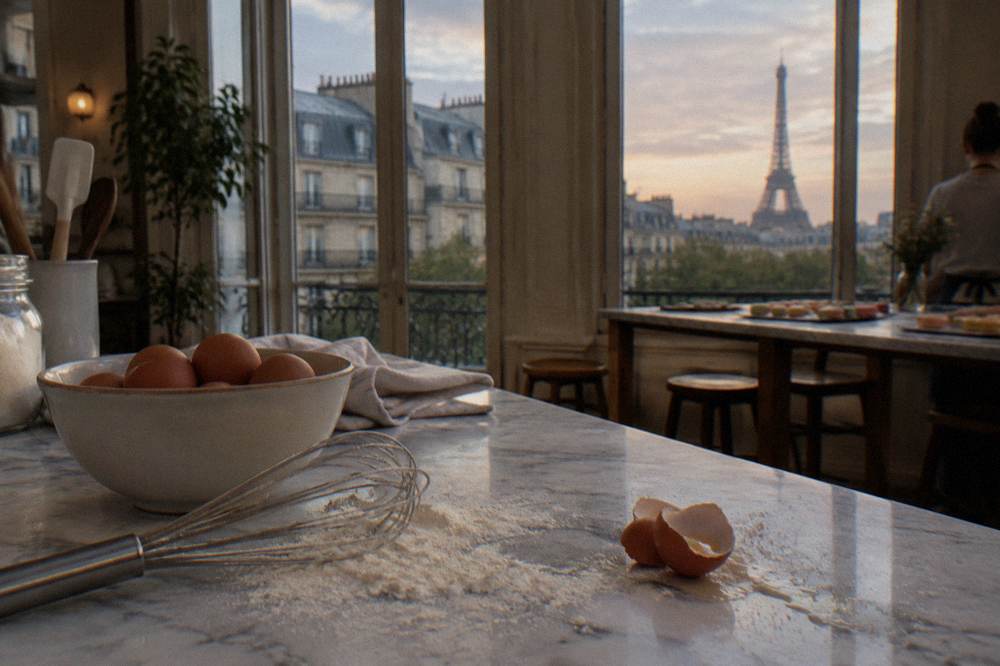
Rain is a Paris constant, so the umbrella question is worth a sentence: compact umbrellas are fine, but studio floors get slippery when ten people track water in, so wipe your shoes at the door and keep the umbrella away from the workstation. This is ordinary courtesy, not a rule from any listing.
For travelers turning the class into a full day, the smarter move is to plan the outfit around the whole itinerary, not the kitchen. A class in the Latin Quarter, like the Le Foodist full-day program, puts you steps from bakeries and bookshops; a macaron class at Saint-Lazare sits above a rail hub with shopping nearby. One comfortable outfit serves all of it if it was chosen for the kitchen first.
Should Kids Dress Differently For A Family Baking Class?
Children follow the same rules as adults, simplified: closed shoes, hair tied back, mess-tolerant clothes, nothing precious. The listings that mention children say only that they must be accompanied by an adult, with minimum ages varying by class, from 12 on the Le Foodist evening class to under-17s needing a paying adult on the croissant class. No listing imposes a separate child dress code, so dress them like small versions of you.
The roster gives the age signals directly. The croissant class listing notes children under 17 must be accompanied by a paying adult. The evening cooking class states minimum age is 12 and no unaccompanied children are accepted. The ExperienceFirst baking experience goes further and allows children with an adult, with kids under 5 joining free of charge but not fully participating in the baking. Each of those formats hands a child the same flour, the same butter and the same apron string as the adults get.
For a family booking, the practical extras are a hair tie for long-haired children, a spare shirt for the under-8s who treat flour as a toy, and a bag for whatever they bake. The macaron classes produce neat boxes; croissant classes produce trays of pastry that travel less well, so ask the studio about packing.
If you are comparing formats, this site's family cooking classes comparison breaks down which Paris studios welcome children at which ages, and the cooking classes in Paris overview covers the full range of formats from 2-hour bakes to full-day programs with meals.
How Early Should You Arrive And What Else Should You Bring?
Arrive 10 to 15 minutes before the stated start time, dressed and ready, with hair already tied and jewellery already off, because most classes begin with a briefing and a wash-up and latecomers compress everyone's hands-on time. Beyond your person, bring only the essentials: the booking confirmation, a bottle of water if allowed, a small bag for leftovers, and reading glasses if you use them for recipes. Everything else the studio provides.
Start times are fixed and printed on the listings. The croissant class is 3 hours; the macaron class at Studio Pâtisserie 2.5 hours; the Le Foodist full-day class 6 hours with a morning start. Paris metro delays are real, so build in a buffer, especially for studios in the Haut-Marais or Latin Quarter where the last two blocks are on foot. The meeting areas on the roster, Latin Quarter, Saint-Germain-des-Prés, Saint-Lazare, are all central and metro-served.
What not to bring matters as much. Big rolling suitcases are a nuisance in a kitchen of eight workstations; the studios have limited storage. Valuables are better left at the hotel. And cameras are fine, but a phone in a back pocket near a flour station is a floury phone; most instructors will point you to a shelf for it.
The eating schedule is the last planning item. Classes that end with a full meal, like the Le Foodist evening class with its 3-course dinner, mean you should arrive hungry rather than full; a review of that class calls it one of the best meals the writer had in Paris. Eating a small snack an hour before a tasting-only class is fine; before a class with dinner, skip it.
A final note on hands: wash them on arrival and expect to wash them several times during the session. Cut any bandaged fingers, remove rings before kneading, and if you have a fresh cut on a hand, tell the instructor at the start, because food safety rules in a professional kitchen are strict about covering wounds properly.
For more on the logistics around booking, what tours include and what they cost, Paris Food Tours maintains a cost guide and category hubs; the site's piece on whether a cooking class in Paris is worth it is a good companion read if you are still deciding, and its rundown of how long a cooking class runs covers timing in depth.
The evening class deserves its solo spotlight here because it is the format where wardrobe planning pays off most: a 6-hour arc that moves from Paris streets through a market to a kitchen and finally to a seated dinner. One outfit has to work for all four settings. The one above does, and at from $239 per person, rated 4.9 from 500 reviews, with a 3-course dinner included, it is the roster's most complete cooking day.
The macaron class, from $117 per person and rated 5 from 278 reviews, is the lighter-commitment option: 2.5 hours, 10 participants, in the Saint-Lazare district, ending with a tasting, a recipe to take home and, per the listing, a chance to impress your family and friends with your new skills. Precision piping is the whole game, so nails short, sleeves back, hair up.
Common Questions About What To Wear To A Cooking Class In Paris
What To Wear To A Cooking Class In Paris?
Wear closed flat shoes, trousers you do not mind flouring, a top with sleeves you can push up, and hair tied back. Most classes supply an apron, so leave yours at home. Skip perfume, loose jewellery and anything delicate, because butter, chocolate and flour reach every sleeve in the room.
Do I Need To Bring My Own Apron?
Almost certainly not. The Le Foodist classes on the roster list attire among their inclusions, and Le Cordon Bleu's own workshop pages include an apron in the price. Where a listing is silent on attire, send the operator a quick question on the booking page before your date.
Are Sneakers Acceptable In A Cooking Studio?
Yes, and they are usually the best choice. You will stand for the full class, from 2 to 6 hours depending on the format, on hard floors. Broken-in, flat, closed sneakers handle that better than anything else, and they double as your walking shoes for the rest of the day in Paris.
Can Children Join, And What Should They Wear?
Children dress the same way adults do: closed shoes, hair tied back, mess-tolerant clothes. Ages vary by class, the croissant class requires a paying adult for under-17s and the Le Foodist evening class sets a minimum age of 12, so check the listing's age note and confirm anything unclear with the operator before booking.
What If My Class Includes A Market Visit?
Layer for the walk. The Le Foodist classes with a market option start with an outdoor market stroll before the kitchen, so you need a coat or overshirt for the street that you can shed and hang up once the cooking starts. Wear your best walking shoes, since the market adds an hour or more on your feet.