Is A Cooking Class In Paris Worth It?
A value verdict on Paris cooking classes: cost per hour across the roster, what you eat and take home from each listing, and who a class actually suits.
Is A Cooking Class In Paris Worth It?
For most visitors who enjoy cooking at home, yes: a Paris cooking class is worth the money. The roster's classes run from $103 to $246 per person for two to six hours, roughly $40 to $47 per hour, about the same per hour as a guided food tour. The difference is what you leave with: a full meal in the longer classes, a box of macarons or your own croissants in the shorter ones, and recipes you keep. If you're still weighing how much of your day to set aside, our guide to class lengths and what each one covers helps you match a session to your itinerary.
The case against a class is usually price. Six hours and $246 sounds like a lot of money for an afternoon, and compared with a two-hour wine tasting at $80 it is. But the comparison is misleading, because the long classes replace a meal you would buy anyway, and the short ones teach a technique you cannot pick up by eating.
The case for a class is specificity. A food tour shows you Paris. A class shows you how a piece of Paris gets made, whether that is a baguette, a macaron shell or a three-course dinner, and the roster's listings are unusually consistent on quality: every cooking class on the site is rated between 4.9 and 5.0, with review counts from 142 to 715. That consistency is rare across a category, and it is the strongest signal in this whole debate.
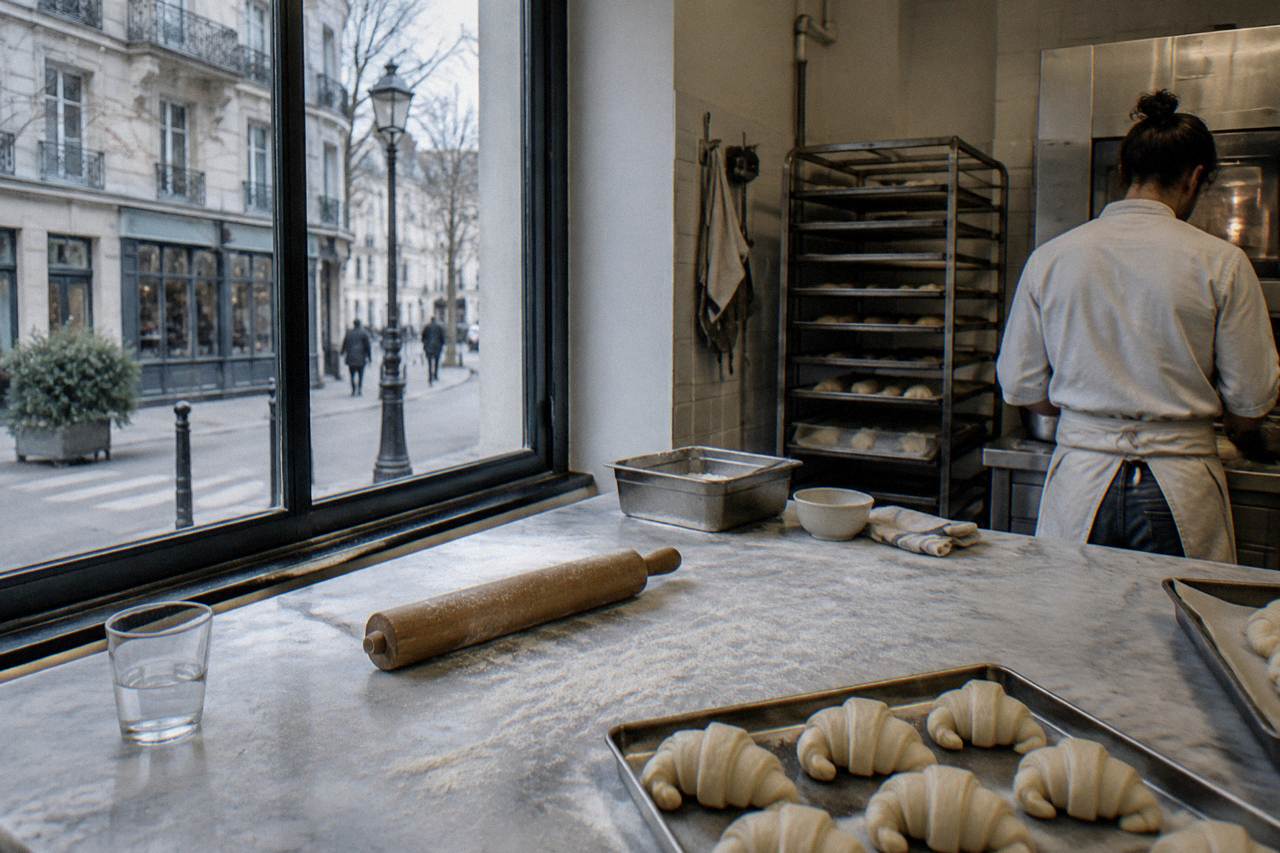
There is also a practical reason classes hold their value: group sizes are small. The full-day Le Foodist class caps at 12, the croissant class at Studio Pâtisserie caps at 8, and the ExperienceFirst baking session caps at 8. You are not watching a demonstration from the back of a room, you are at a worktop with a chef who can correct your lamination before it goes wrong.
There is one more angle worth naming before the numbers: a class is the only food experience on the roster that changes how you cook after the trip. A tasting fades, a walking tour becomes a photo album, but a recipe file and a learned technique compound. If that framing appeals to you at all, the rest of this article is mostly confirmation. If it does not, no price will make a class worth it, and a food tour will serve you better.
If you are weighing this against other food experiences, our full comparison of cooking classes in Paris breaks down every listing on the roster, and this article runs the value verdict on the numbers.
What Does A Paris Cooking Class Actually Cost Per Hour?
Across the six cooking and baking classes on the roster, expect to pay $40 to $47 per hour in a Paris kitchen. The six-hour Le Foodist classes land at roughly $40 to $41 per hour, the 2.5-hour macaron classes at about $45 to $47, and the two-hour ExperienceFirst baking session costs the most per hour of the six, so longer classes are actually the cheapest hours you can buy. If you're traveling with children, our guide to eating out in Paris with kids points you to markets, bakeries, and picnic spots, plus the baking classes that happily welcome younger cooks.
This is the number most people never calculate, and it changes the decision. A $246 full-day class sounds expensive next to a $112 macaron class until you divide by time: the full-day class is the better per-hour deal on the roster, and it includes a market tour, a four-course meal with cheeses and red and white wines, and recipes in English to take home.
| Class | Operator | Price | Duration | Hours cost |
|---|---|---|---|---|
| Full-Day Class and Lunch | Le Foodist | from $246 | 6 hours | about $41 |
| Evening Class, Dinner Included | Le Foodist | from $239 | 6 hours | about $40 |
| Macaron Class, 2.5 Hours | Ateliers Parisiens | from $112 | 2.5 hours | about $45 |
| Central Paris Macaron Baking | Studio Pâtisserie | from $117 | 2.5 hours | about $47 |
| Croissant Baking Class | Studio Pâtisserie | from $134 | 3 hours | about $45 |
| Bread, Croissant or Macaron | ExperienceFirst | from $103 | 2 hours | the highest of the six |
Two caveats belong next to that table. First, every roster price is a "from" figure: the price varies by date and by options, so the evening class with the market visit option sits at the higher end of its range. Second, the two Le Foodist listings are meal-inclusive, so a fair comparison subtracts what you would otherwise spend on dinner that night.
The independent market tells the same story. Le Foodist's own schedule lists its evening market visit and cooking class at €239, and its morning equivalent at €229, which lines up with the roster's dollar figures. La Cuisine Paris, another well-established school, lists a three-hour technical macaron class at €129, and Le Cordon Bleu's freshly baked pastries workshop runs 5 hours 30 minutes at €295, which is the premium end of the market and includes an apron, a cooler bag and a certificate. Paris has a real ladder of cooking schools, and the roster's listings sit in the accessible middle of it.
It also helps to know what the premium schools are selling before you decide the roster prices are high. Le Cordon Bleu caps its short courses at 16 participants per practical room, taught in French with consecutive English translation, which is a different product from a 12-person English-language class where the chef watches your hands. Cook'n With Class teaches an express two-hour croissant class at €110 per person in English, which sits almost exactly on the roster's per-hour band. In other words, whether you book through this site's listings or direct with a school, the market has settled on a fairly consistent price for a taught hour in a Paris kitchen, and the differences between listings are about group size, language and what is included, not about one operator charging double. Once you've settled on a class that fits your budget, our guide to what you should actually wear in a Paris teaching kitchen covers the aprons, closed shoes and heat that the listings expect you to plan around.
What Do You Eat And Take Away From Each Class?
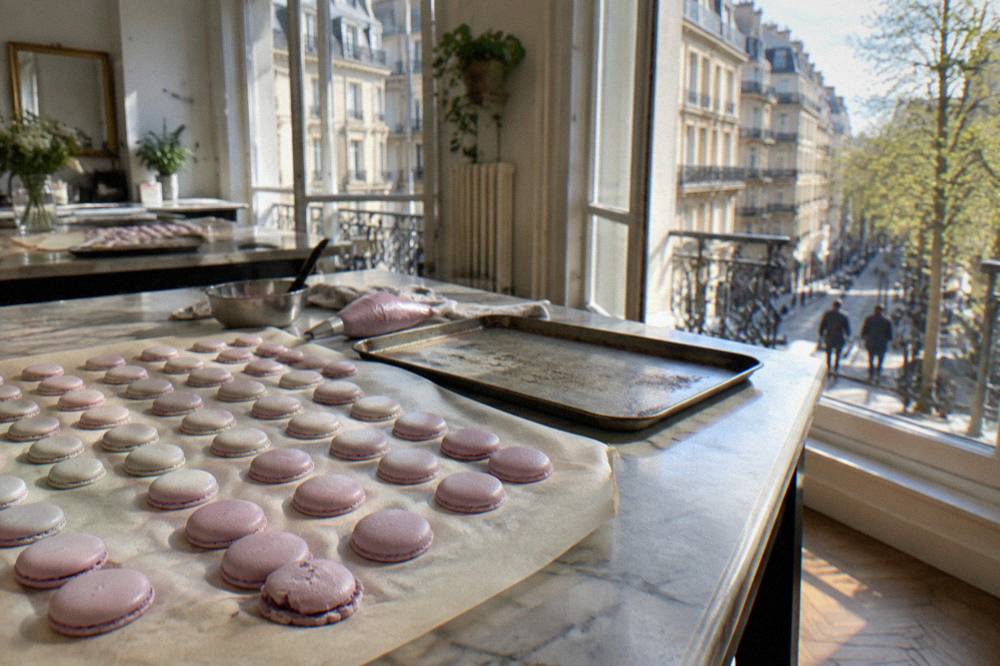
The short classes send you home with what you made: a box of macarons from the Ateliers Parisiens class, your own croissants from the Studio Pâtisserie class, a recipe to keep from the central Paris macaron class. The long Le Foodist classes feed you on site with a four-course meal and wines, or a three-course dinner, and hand over the recipes in English. What you take home is the part a restaurant cannot match.
This is where the value verdict tips clearly toward booking. Eating in Paris is easy; leaving Paris with a repeatable skill is not. The macaron class by Ateliers Parisiens includes a chef instructor and a box of macarons, so the souvenir is the thing you produced yourself. The croissant class goes further: Chef Léo guides the full process, all ingredients are included, and you work on professional-grade equipment most home cooks never touch.
| Class | You eat on site | You take away |
|---|---|---|
| Full-Day Class and Lunch | 4-course meal with cheeses and wines | Recipes in English, hard copy and electronic |
| Evening Class, Dinner Included | 3-course dinner | Professional instruction, market visit if option selected |
| Macaron Class, 2.5 Hours | Tastings during class | Box of macarons |
| Central Paris Macaron Baking | Tasting | Recipe to take home |
| Croissant Baking Class | Tastings of your creations | Your own croissants, bi-colour option available |
| Bread, Croissant or Macaron | Tastings along the way | Personalised macarons, macaron class only |
The guest reviews on the long classes are striking on exactly this point. A review of the evening class by Le Foodist reads: "This was a wonderful evening and the highlight of our stay in Paris! Luc is an amazing chef and teacher. We learned a lot and the food was absolutely delicious! I highly recommend this experience." Another guest on the same listing wrote: "We had the best time, learned a lot and had one of our best meals in Paris. Frédéric was amazing. So knowledgeable and hilarious."
The baking reviews repeat the pattern. One guest on the ExperienceFirst class reported making and shaping baguettes, croissants and small cakes, sampling as they went and carrying the finished baguettes home, calling it the best part of the visit. A parent on the same listing described making a baguette with a daughter, bringing it home, and learning croissant rolling besides. The consistent thread is that the product of the class travels: it goes home in a box or in your head.
Notice what none of the reviews praise, which is the food being restaurant-quality. They praise the teaching, the learning and the meal being one of the best of the trip, which is a subtly different claim. A cooking class meal is cooked by amateurs under supervision, and it still ranks among guests' best meals in Paris because they made it. That is the honest value proposition: you are not buying a dinner, you are buying the memory of having produced it, and the reviews suggest guests consistently rate that memory above food they merely ordered (see Private Tours Value).
Who Is A Paris Cooking Class Right For?
A class suits you if you actually cook at home, if you want a sit-down experience rather than a walk, or if you are traveling with teenagers who can work a worktop. It does not suit you if you want to cover ground and see neighbourhoods, if you have life-threatening food allergies, or if you are booking for children under 12, since the Le Foodist classes do not admit them.
The age rules are the most common booking trap, and the roster is explicit about them. The full-day Le Foodist class states that children under 12 are not permitted, and asks family groups with multiple children to advise in advance. The evening class sets a minimum age of 12 and accepts no unaccompanied children. The croissant class requires anyone under 17 to be accompanied by a paying adult. The ExperienceFirst baking session is the flexible one: children are allowed with an adult, and kids under 5 can join free of charge, though the listing notes they will not be able to participate in the baking itself.
Allergies need a direct conversation with the operator before booking, not an assumption. The evening Le Foodist listing states that vegan and dairy-free diets cannot be accommodated, which is a firm boundary worth knowing before you spend $239. For anything short of that, the standard advice holds: confirm with the operator, in writing, before you book.
The other honest filter is energy. A six-hour class that starts with a market visit and ends with a four-course lunch is a half-day commitment, and the listing itself notes that nobody will rush you out the door, so plan nothing ambitious for the evening after the full-day version. If your Paris days are already packed with museum slots, a 2.5-hour macaron class is the right-sized version of the same pleasure, and our macaron class in Paris guide compares every macaron option on the roster.
Think about pace honestly, too. A class is a stationary experience: you stand at a worktop, you sit for the meal, you talk to the same handful of people for the whole session. Travelers who need to be moving, who get restless after an hour in one room, or who measure a day in kilometres walked will not get their money out of six hours in a kitchen, and there is no shame in that. The reverse traveller, the one who has walked the Marais twice and wants one afternoon off their feet, is exactly who the long classes were built for. Across the cooking listings compared for Paris Food Tours, the format never changes: small room, one chef, one table, so the decision is purely about whether that sounds like a good afternoon to you.
Cooking Class Or Food Tour: Which Delivers More Value?
Per hour they cost the same, so the choice is about what you want the hours to do. A food tour covers a neighbourhood and feeds you in ten small stops; a class covers one technique deeply and feeds you one meal you cooked. Travelers who book both usually take the tour early in the trip and the class at the end, when the legs are tired.
Put the numbers side by side and the parity is hard to argue with. The Secret Food Tours Montmartre walk with ten-plus tastings is from $73 for 2 to 3.5 hours, roughly $21 to $36 per hour, and the Le Foodist full-day class is about $41 per hour with a full meal and wine included. The tour is cheaper per hour, but it is also mostly standing and walking, while the class is seated, fed and air-conditioned for the middle of the day.
| Experience | Price | Duration | What it replaces |
|---|---|---|---|
| Walking food tour, 10+ tastings | from $73 | 2 to 3.5 hours | Lunch or heavy snacking |
| Full-Day Class and Lunch | from $246 | 6 hours | Market visit, lunch, cooking lesson |
| Evening Class, Dinner Included | from $239 | 6 hours | Dinner and drinks |
| Macaron Class, 2.5 Hours | from $112 | 2.5 hours | A pastry-shop purchase |
The cancellation terms are the one place the two formats genuinely diverge, and it matters for a class. Most listings on the roster, including the food tours and the shorter baking classes, offer free cancellation up to 24 hours before the start. The evening Le Foodist class is the exception: it requires cancellation 6 full days before the start for a full refund, with a 50% refund 2 to 6 days before. If your itinerary is still moving, that is a real reason to book the class last, once your plans are firm.
There is also a weather argument nobody makes. A walking tour in November rain is a different product from the same tour in June. A class is weatherproof: the market visit on the Le Foodist listings is the only exposed segment, and the rest happens in a kitchen. For a shoulder-season trip, that reliability has value the per-hour table does not show.
One difference the table cannot capture is the guide's role. On a food tour the guide is a narrator: their job is context, history and vendor relationships, and the best ones are storytellers. In a class the chef is a teacher: their job is to watch your hands, correct your technique and answer why questions, and the best ones are instructors. If what you want from an afternoon in Paris is stories, book the tour. If what you want is competence, book the class. The two experiences are not really competing on price at all, they are competing on what kind of attention you want for three or six hours.
How To Pick The Right Class For Your Trip
Pick by meal slot, not by price. Book the full-day class if you want the complete arc from market to table, the evening class if you want dinner covered, and a 2.5-hour macaron or croissant class if you want the experience without giving up half a day. Every roster class is small-group, so none of them will feel like a lecture hall.
The full-day Le Foodist class, the Full-Day Cooking Class, Market Tour and Lunch, is the anchor listing for a reason: it is the only roster class that combines a market tour, hands-on cooking and a four-course meal with wines in a single six-hour block, capped at 12 people in the Latin Quarter. It is rated 4.9 from 142 reviews, and it includes both a hard copy and an electronic copy of the recipes, which is the detail that keeps paying after the flight home.
For a shorter commitment, the decision is between sweet and savoury. The macaron route, either the Ateliers Parisiens class in the Latin Quarter or the Studio Pâtisserie class near Saint-Lazare, teaches a genuinely hard technique: the shell. The croissant route teaches lamination, which is the harder skill and the more impressive one to bring home, in a class limited to 8 people. The ExperienceFirst session in the Haut-Marais is the flexible pick, since it lets you choose bread, croissant or macaron and allows children with an adult.
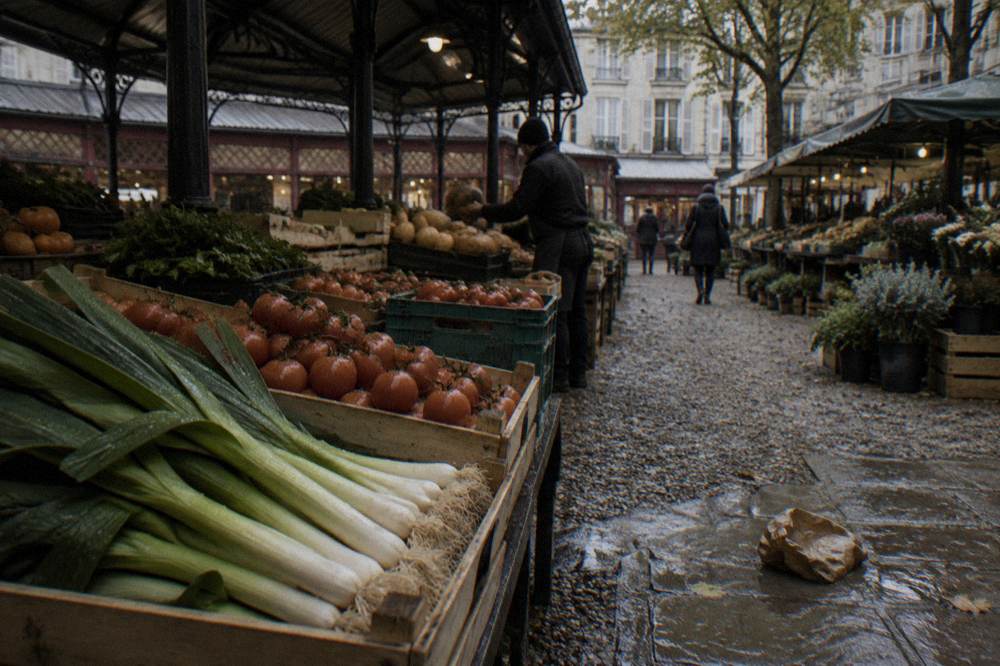
One planning note worth keeping: the market visit options on both Le Foodist listings are worth the upgrade if you have never shopped a Paris market, because the guide explains how the vendors are organized and what to look for, and that knowledge transfers to every market day for the rest of the trip. Paris runs 83 food markets, 74 open-air and 9 covered, and they are closed citywide on Mondays, so a Monday class date means the market segment shifts or drops, something to confirm with the operator when you book.
Timing the booking matters more than most people expect, for two reasons. The strict cancellation window on the evening class means it should be one of the last things you confirm, after flights and hotels are locked, while the 24-hour-cancellation classes can be booked early without risk. And the small caps cut both ways: a class limited to 8 people fills on fewer bookings than a 26-seat wine tasting, so the popular morning slots on the full-day listing tend to go first, and travelers who wait until they arrive in Paris often find the date they wanted has gone. Booking the class before the tour, and the tour before the tasting, is a reasonable order of operations for a food-focused trip.
Common Questions About Paris Cooking Classes
Is A Cooking Class In Paris Worth It?
For most home cooks, yes. Roster classes cost about $40 to $47 per hour, include a meal or a take-home product, and every cooking listing on the roster is rated 4.9 to 5.0 from 142 to 715 reviews. If you never cook at home, a food tour is the better spend.
How long is a cooking class in Paris?
The roster's baking classes run 2 to 3 hours, and the two Le Foodist cooking classes run 6 hours each. The full-day class finishes around 15:00, and the listing notes nobody is rushed out the door.
Can children join a Paris cooking class?
It depends on the listing. The Le Foodist full-day class does not admit children under 12, the evening class sets a minimum age of 12, the croissant class requires under-17s to be with a paying adult, and the ExperienceFirst baking session allows children with an adult, with kids under 5 joining free but not participating.
Do you eat the food you make in a Paris cooking class?
Yes, in every roster class. The long Le Foodist classes end with a four-course meal or a three-course dinner with wine, and the baking classes include tastings of your creations plus a box or recipe to take home.
What is the cancellation policy on Paris cooking classes?
Most roster classes offer free cancellation up to 24 hours before the start. The Le Foodist evening class is the exception: it requires 6 full days' notice for a full refund, with a 50% refund 2 to 6 days before.
Is a cooking class better than a food tour in Paris?
They cost about the same per hour. A food tour shows you a neighbourhood through many small stops; a class teaches one technique deeply and replaces a full meal. Many travelers book a tour early in the trip and a class near the end.