How Long Is A Cooking Class In Paris?
Cooking classes in Paris run from 2 hours to a full 6-hour day. This guide breaks down every duration on the market, what each length actually covers, and how to fit one into an itinerary.
How Long Is A Cooking Class In Paris?
A cooking class in Paris lasts anywhere from 2 hours to 6 hours. Express baking classes run 2 hours, most pastry classes run 2.5 to 3 hours, and the full-day and evening classes that combine a market visit with a sit-down meal run 6 hours. The roster of verified Paris classes clusters tightly around those three lengths, so the real decision is not whether to book, but which block of your day the class will occupy. If you'd rather taste before you bake, our guide to the best macarons in Paris points you to both the shops worth queuing for and the shorter classes that teach you to make them yourself.
The spread is narrower than most visitors expect. Across the cooking and baking classes verified for this site, the shortest option is a 2-hour hands-on baking lesson in the Haut-Marais, and the longest is a 6-hour full-day class that starts with a market tour, moves to the kitchen, and ends over a four-course lunch with wine. Everything else sits between those poles. Whatever duration you settle on, the same practical wardrobe rules apply, and our guide to what to wear at a Paris cooking class covers the aprons, closed shoes, and kitchen heat you should plan for.
That range maps neatly onto the kind of trip you are building. A two-hour class slots into a morning before museum reservations. A three-hour croissant class can anchor an entire afternoon. A six-hour class is effectively a day plan in itself, and that is exactly how the operators price and schedule it.
There is also a scheduling logic hiding inside these numbers that first-time visitors often miss. Paris kitchens are compact, class groups are small by design, and schools run multiple sessions per day in the same room. That means a school can offer a 9:00 am croissant class and a 2:00 pm macaron class in the same space, and it also means the published duration is a hard block: a 3-hour class really does use three hours of the room, so late arrivals are squeezed rather than extended. Operators are explicit about start times for exactly this reason.
Before choosing, it helps to see the whole menu of lengths side by side, which is what the rest of this article does: the express tier, the standard pastry tier, the full-day tier, and how to schedule around each one. The cooking classes in Paris guide covers the full landscape of options; this page answers the single question of duration.
What Determines How Long A Class Takes?
Three things set the clock: the number of recipes, whether dough has to rest, and whether a market visit or a shared meal is bundled in. A single pastry with no resting dough fits two hours. Croissants, whose dough is laminated in stages, need three. A market shopping trip plus cooking plus sitting down to eat what you made pushes the day to six hours.
The single biggest driver is dough. Macarons can be piped, rested briefly and baked inside a 2.5-hour window, which is why so many macaron classes land exactly there. Croissant dough, by contrast, is folded with butter in multiple passes, and each pass needs chilling time. A proper croissant class therefore runs about 3 hours, and even then some steps are demonstrated rather than fully performed by the student.
The second driver is the market. Several Paris schools sell a combined format: you walk to a local market with the chef, buy the ingredients, then return to the kitchen and cook them. The walk and the shopping alone add roughly two hours, which is why market-plus-cooking formats consistently land in the 4-to-6-hour band rather than the 3-hour one. The market itself imposes timing too: Paris food markets open around 7h in the morning and wind down by early afternoon, and all listed Paris markets are closed on Mondays, per the city's official market pages. A class that needs fresh market produce must therefore start in the morning, which is why the 6-hour formats almost always do. If you'd rather browse the stalls the way residents do, our guide to where Parisians actually shop and eat covers market hours, bakery prices, and the weekday lunch habits behind those morning starts.
The third driver is the meal. A class that ends with everyone sitting down to eat a three- or four-course result is not just a class, it is a lunch. Operators schedule that eating time deliberately, and the published durations include it. Le Foodist's full-day class, for instance, includes a four-course meal with cheeses and both red and white wines, and its evening class includes a three-course dinner; both are listed at 6 hours, meal and all. A French restaurant lunch itself runs a relaxed course, so the meal component alone can account for ninety minutes of a published duration.
Group size plays a quieter role. Classes capped at eight or ten move faster because the chef can correct technique one-on-one in a single pass. The Le Foodist formats allow up to twelve, and the meal-time discussion stretches accordingly. None of this is wasted time; it is simply time the duration figure already contains.
Here is how the verified roster lengths compare at a glance:
| Class (roster decision name) | Operator | Duration | Format |
|---|---|---|---|
| Bread, Croissant or Macaron | ExperienceFirst | 2 hours | Small group, max 8 |
| Macaron Class, 2.5 Hours | Ateliers Parisiens | 2.5 hours | Small group |
| Central Paris Macaron Baking | Studio Pâtisserie | 2.5 hours | Small group, limited to 10 |
| Croissant Baking Class | Studio Pâtisserie | 3 hours | Small group, limited to 8 |
| Full-Day Class and Lunch | Le Foodist | 6 hours | Small group, limited to 12 |
| Evening Class, Dinner Included | Le Foodist | 6 hours | Small group, max 12 |
Is a longer class in the cards for your trip, or would a short one fit better between two sightseeing blocks?
How Long Is A Two-Hour Express Class?
A two-hour express class in Paris covers one baked item from start to finish, with no market visit and no sit-down meal. On the verified roster, the Paris French Baking Experience by ExperienceFirst runs exactly 2 hours in the Haut-Marais, from $103 per person, in groups capped at eight. Off-roster schools offer the same length for croissants and macarons. If macarons are what you're after, our guide to the best macarons in Paris lists where to buy them and where to learn to make them yourself.
Two hours sounds short for baking, but it works because the format is ruthlessly focused. The ExperienceFirst class, rated 4.9 from 255 reviews, splits into a bread, croissant or macaron option, and the listing notes that guests taste their creations along the way or take them home. Reviews on the listing describe making and shaping baguettes, croissants and small cakes, and sampling what they made.
One review reads: "We thoroughly enjoyed our baking experience. My husband said it was the best part of our visit to Paris. We learned how to make and shape baguettes, croissants, and small cakes." Another mentions making a baguette to bring home, plus financiers, and finishing with a cappuccino: "What a wonderful experience my daughter and I had with Pierre at his bakery. We learned a lot about baguettes and got to make one and bring it with us…so good!"
The two-hour tier also exists beyond the roster. Cook'n With Class, a Paris school, lists an express croissant baking class at 2 hours priced at €110 per person, taught in English, and an express macaron class at 2 hours priced at €115.75 per person for ages 12 and up. Those are the school's own published figures, not this site's listings, but they confirm the pattern: two hours is the standard express length across the city.
The trade-off is simple. You get one recipe, one technique, and a box to take away. You do not get the market walk, the meal, or the slower pace where a chef tells stories between steps. For a traveler with a packed itinerary, that trade is often exactly right. It is also the friendliest length for mixed groups: the ExperienceFirst listing notes that children are allowed when accompanied by an adult, and that kids under 5 can join free of charge, though they cannot fully participate in the baking.
One practical note on timing: because the class is short, the start is punctual and the hands-on portion begins within minutes of arrival. There is no long welcome briefing as there might be in a six-hour format. Plan to arrive ten to fifteen minutes early, in comfortable closed shoes, with hair tied back if you will be working over dough. For more on dressing for a hot kitchen, our guide to clothing and shoes for a Paris cooking class covers what the class listings themselves ask you to wear.
How Long Are Macaron And Croissant Classes?
Macaron classes in Paris run 2.5 hours, and croissant classes run 3 hours. The Paris: French Macaron Culinary Class with a Chef by Ateliers Parisiens is a 2.5-hour small-group class in the Latin Quarter, from $112 per person. The Paris: Croissant Baking Class with a Chef by Studio Pâtisserie runs 3 hours, from $134 per person, limited to eight students.
The macaron class, rated 4.9 from 715 reviews, includes a chef instructor and a box of macarons to take home. It is the featured class on this page because it sits at the sweet spot of the duration curve: long enough to learn the meringue, the macaronage fold and the piping technique, short enough to leave the rest of the day free. You can see the full listing on the macaron class in Paris guide, or check the Paris: French Macaron Culinary Class with a Chef tour page directly.
Studio Pâtisserie offers a second macaron format, the Central Paris Macaron Baking class, also 2.5 hours, from $117 per person, limited to ten students near Saint-Lazare. Its croissant class is the longer one: 3 hours, from $134 per person, rated 5 from 243 reviews, with guidance from Chef Léo throughout, professional-grade equipment, and a bi-colour croissant option. Children under 17 must be accompanied by a paying adult on that class, per the listing.
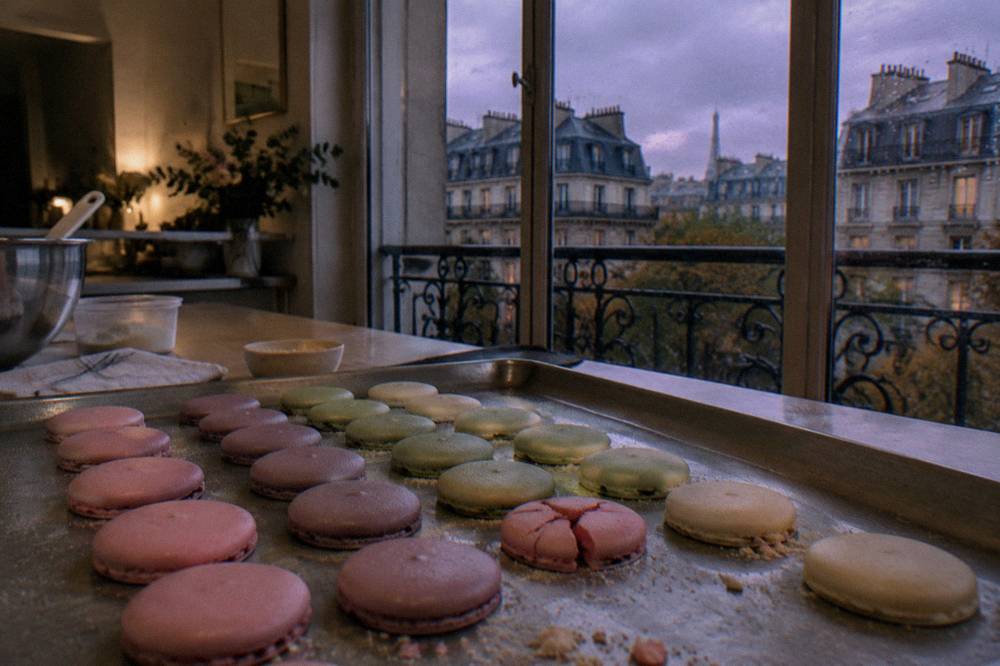
The extra half hour in a croissant class is not idle time. Laminated dough demands it. The butter has to be enclosed, folded, chilled and folded again, and a class that tried to compress that into two hours would end up handing students pre-made dough, which defeats the purpose. Macaron classes need their half hour too, in a different place: the shells must rest until a skin forms before they go into the oven, and the filling is made while they bake.
Other Paris schools publish the same split. La Cuisine Paris, for example, lists a 3-hour technical macaron class at €129 including two shell types and four fillings, and a croissant and breakfast pastries class at 3 hours priced at €129. Those are the school's own schedule figures. Le Cordon Bleu Paris runs longer workshop formats, 5 hours 30 minutes at €295 for a freshly baked pastries workshop and 6 hours at €270 for a macaron collection workshop, both limited to a maximum of 16 participants per practical room. Those are professional-school durations, a different tier from the visitor classes on this site's roster, and taught in French with consecutive English translation.
A half-hour difference sounds trivial until you plan around it. A 2.5-hour class that starts at 10:00 ends at 12:30, close to the typical Paris lunch window that begins around noon. A 3-hour class starting at the same time ends at 13:00, when many bistro kitchens are already busy. Neither is a problem, but knowing the boundary helps you book a lunch table that respects it.
How Long Is A Full-Day Cooking Class?
A full-day cooking class in Paris runs 6 hours, typically from morning to mid-afternoon. The Paris: Full-Day Cooking Class, Market Tour and Lunch by Le Foodist is the roster's benchmark: 6 hours in the Latin Quarter, from $246 per person, limited to 12 participants, including a market tour, a four-course meal with cheeses and both red and white wines, and recipe copies to take home. Once you've shopped the market with your chef, our guide to where locals actually eat in Paris points you toward the bakeries, weekday lunch spots, and streets Parisians keep to themselves.
Six hours is a commitment, and the operators structure it like a day rather than a lesson. The Le Foodist full-day format, rated 4.9 from 142 reviews, bundles everything: the market shopping, the cooking, and the long lunch at the end. The listing notes that the class usually finishes around 15:00, and that nobody is rushed out the door. Children under 12 are not permitted on this class, per the listing.
The evening version runs the same clock. The Paris Evening Cooking Class French Dinner and Market Visit Option, also by Le Foodist, is 6 hours, from $239 per person, rated 4.9 from 500 reviews, starting in Saint-Germain-des-Prés and ending over a three-course dinner. Its cancellation terms differ from most of the roster: free cancellation up to 6 full days before the start, with a 50 percent refund 2 to 6 days before. That is worth checking before booking, because a six-hour evening commitment is the kind of plan that can get bumped by a late dinner invitation. Most other classes on the roster offer free cancellation up to 24 hours before the start, so the difference is real money if plans shift.
Reviews of the evening class describe the full arc: "This was a wonderful evening and the highlight of our stay in Paris! Luc is an amazing chef and teacher. We learned a lot and the food was absolutely delicious!" Another reads: "We had the best time, learned a lot and had one of our best meals in Paris."
The school's own schedule pages confirm the pattern for the market-plus-cooking format. Le Foodist lists a morning market visit and cooking class starting at 9:00 am priced at €229, and an evening market visit and cooking class at €239, both running into the same multi-hour band. La Cuisine Paris lists a market tour and cooking class running 9:00 to 13:00 at €199, a 4-hour combined format that shows where the market add-on lands when the meal is shorter.
The internal shape of a six-hour day, as the listings describe it, runs roughly like this: an hour to an hour and a half at the market, three hours of cooking with instruction and stories between steps, and ninety minutes or more at the table. Some schools, Le Foodist included, teach in English only, which the school's own pages state plainly, so language is not a barrier at this tier.
Which Class Length Fits Your Itinerary?
Match the class length to the gap in your day, not the other way round. A free morning fits a 2 or 2.5-hour class. A free afternoon fits a 3-hour croissant class. A day with nothing else planned fits the 6-hour market-and-meal formats. Booking a 6-hour class into a museum day is the most common scheduling mistake visitors make with Paris cooking classes.
A practical way to think about it: the short classes end by lunch, the pastry classes end by mid-afternoon, and the full-day classes end around 15:00 or later. The Le Foodist full-day listing says it usually finishes around 15:00. The evening class runs the reverse, starting in the late afternoon and ending after dinner.
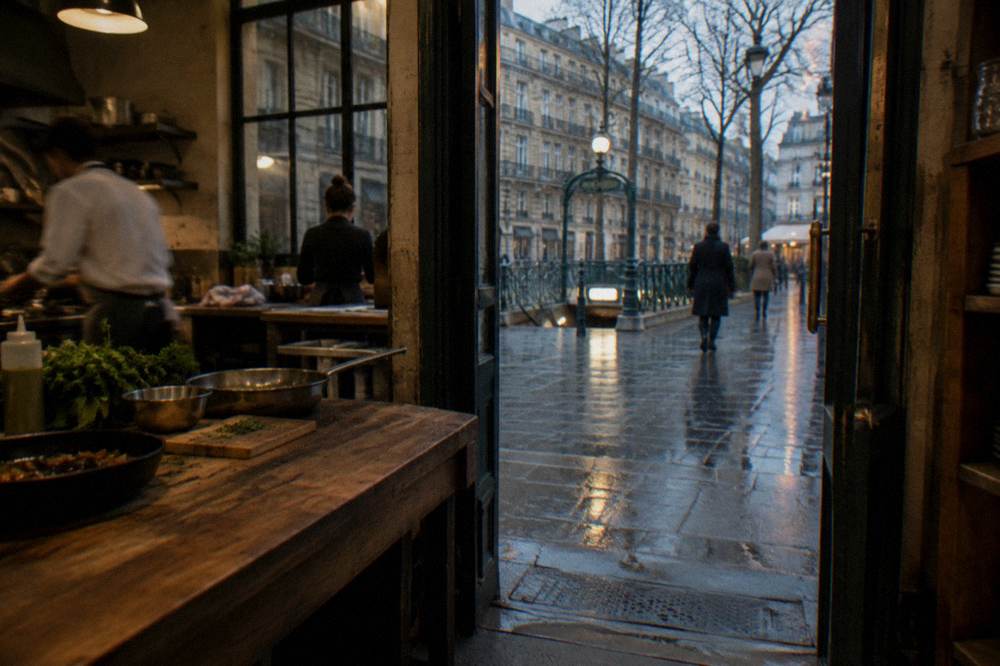
Here is the same duration data cut by itinerary fit:
| Class length | What it includes | Best itinerary fit | Typical start time |
|---|---|---|---|
| 2 hours | One baked item, tastings, take-home box | Free morning or late afternoon | Morning or afternoon slots |
| 2.5 hours | One pastry from scratch, box to take home | Morning before lunch, or afternoon before dinner | Morning slots common |
| 3 hours | Laminated dough work, full croissant process | A clear half-day with nothing after | Mornings |
| 6 hours | Market tour, cooking, multi-course meal with wine | A full day with no other plans | 9:00 am or late afternoon |
Two scheduling notes are worth adding. First, most of the roster's classes meet at a stated central location rather than offering pickup; no class on this roster includes hotel pickup, so factor in metro time to the Latin Quarter, the Haut-Marais or Saint-Germain-des-Prés. Second, class sizes are small, eight to twelve people in most cases, which means popular slots sell out days ahead in high season. The La Cuisine Paris schedule pages show individual classes with single spots left, which is typical of the demand pattern.
Season matters too. The weeks around Easter and the summer holidays fill Paris classes fastest, and a six-hour Le Foodist day with twelve seats is a scarce commodity on a rainy October Saturday. Booking the long formats first and filling the rest of the trip around them is the more reliable order of operations, precisely because their length makes them hard to rebook at short notice.
For readers weighing a class against a guided walk, the is a cooking class in Paris worth it post covers the value question in depth. And if the length is what worries you, the honest answer is that the 2.5-hour macaron format is the most itinerary-friendly class on the roster, as this site's comparison of Paris Food Tours and class options repeatedly finds.
The final choice, at a glance:
| If you have... | Book this length | Roster example | From (per person) |
|---|---|---|---|
| One free morning | 2 to 2.5 hours | Bread, Croissant or Macaron, ExperienceFirst | $103 |
| One free afternoon | 2.5 to 3 hours | Croissant Baking Class, Studio Pâtisserie | $134 |
| A whole free day | 6 hours | Full-Day Class and Lunch, Le Foodist | $246 |
| A free evening | 6 hours | Evening Class, Dinner Included, Le Foodist | $239 |
Common Questions About Cooking Class Length In Paris
How Long Is A Cooking Class In Paris?
Between 2 and 6 hours. Express baking classes run 2 hours, macaron classes run 2.5 hours, croissant classes run 3 hours, and the full-day and evening formats that include a market visit and a multi-course meal run 6 hours.
Can You Do A Cooking Class In Paris In Half A Day?
Yes. Every class on the roster except the two 6-hour Le Foodist formats fits inside half a day. A 2.5-hour macaron class or a 3-hour croissant class leaves the rest of the afternoon or evening entirely free.
What Is The Shortest Cooking Class In Paris?
On this roster, the shortest is the Paris French Baking Experience by ExperienceFirst at 2 hours, from $103 per person, limited to eight participants. Paris schools off the roster also run 2-hour express croissant and macaron classes.
Why Do Croissant Classes Take Longer Than Macaron Classes?
Croissant dough is laminated: butter is folded in through several chilled passes, and each pass takes time. Macarons need only a brief rest before baking, so they fit a 2.5-hour window while croissants need about 3 hours.
Do Paris Cooking Classes Include The Meal Time In Their Duration?
Yes, where a meal is part of the class. The 6-hour Le Foodist formats include a four-course lunch or three-course dinner in that time, and the listing notes the full-day class usually finishes around 15:00.
How Early Do Paris Cooking Classes Start?
Market-plus-cooking formats start in the morning, often around 9:00 am, because the market visit comes first. Pastry-only classes run in both morning and afternoon slots. Check the operator's live listing for exact start times before booking.