What To Wear To A Wine And Cheese Tasting In Paris
Dress guidance for Paris wine and cheese tastings: cellar temperatures, stairs, smart casual norms, seasonal layers and what to leave at the hotel.
What To Wear To A Wine And Cheese Tasting In Paris
Wear smart casual layers: dark jeans or trousers, a shirt or blouse, closed shoes with grip, and a light jacket you can shed. Cellar tastings in Paris sit below street level, so they run noticeably cooler than the street, and most are reached by stairs. Skip perfume and cologne entirely, since scent is part of the tasting. Nobody dresses up beyond a tidy smart casual look. Once you've settled on an outfit, a beginner's guide to tasting wine in Paris explains the basic tasting routine and which guided sessions suit first-timers.
Most people book a tasting and then, a day or two before, wonder what the room will actually be like. The honest answer depends on the format. Paris wine and cheese tastings split into three settings: dedicated tasting rooms such as the Ô Chateau space near Les Halles, intimate shop-front sessions like the Secret Wine Door in the 15th, and genuine underground cellars, including the cheese cellar on Île Saint-Louis used by the pairing session run by Paroles de Fromagers. Each setting asks slightly different things of your clothes, and none of them asks for a suit. If the tasting leaves you wanting to bring cheese home, our guide to judging a real Parisian cheese shop explains what separates a great counter from a forgettable one.
The venue matters more than you might expect. A cellar tasting in Paris is a two-venue problem in one evening: you walk there on Paris streets, then descend into a space that holds its temperature year-round. The walk can be warm in July or wet in February. The cellar underneath is not. Layers solve both halves of that equation, and this article walks through exactly which ones, plus shoes, scent, colors, bags and the small practical items that make a 90-minute or two-hour session comfortable.
If you are still choosing a session, the three formats below span the range you will meet on this site's wine and cheese tasting hub, from a seated cellar pairing to a sommelier-led lunch format.
Do Paris Wine And Cheese Tastings Have A Dress Code?
No listed tasting on the Paris roster prints a formal dress code, so smart casual is the working answer. French dining culture leans tidy rather than formal at this level: clean trousers or dark jeans, a shirt or a nice top, and closed shoes fit every venue listed. What locals avoid at sit-down tables is sportswear, flip-flops, caps and ripped jeans, a norm French dining guides state plainly.
Tasting sessions are not restaurant dinners, and the bar sits a notch below a bistro reservation. The two-hour Wine and Cheese Lunch at Ô Chateau near Les Halles is hosted in a dedicated tasting room with a professional sommelier, and guests on that listing report a relaxed but put-together crowd. The 90-minute pairing session in the Paroles de Fromagers cellar on Île Saint-Louis is more intimate still, twelve people maximum around boards of seven cheeses and three wines. Neither expects cocktail attire.
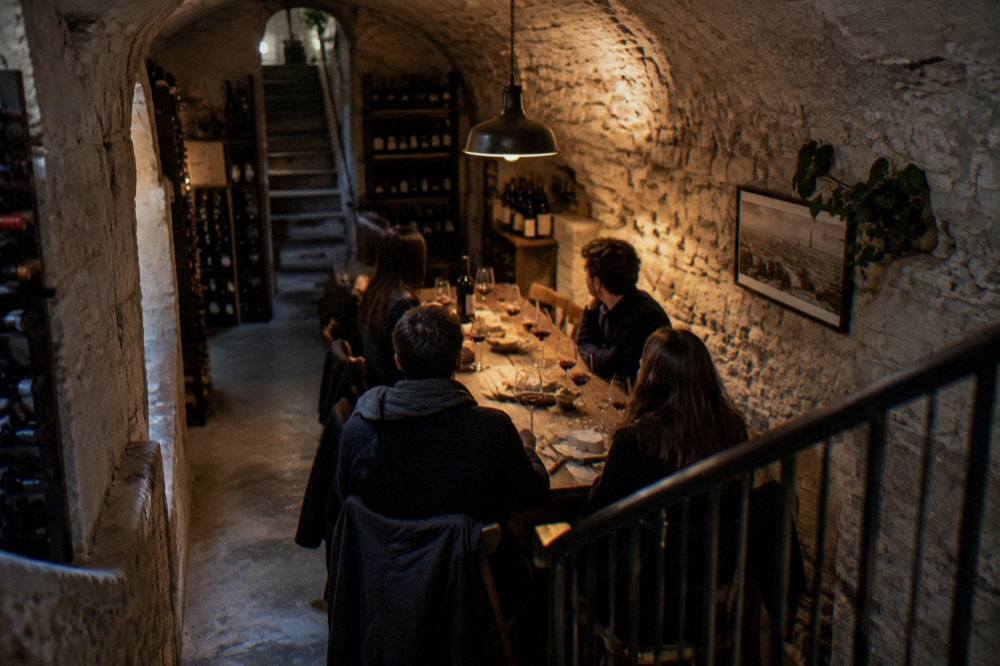
The strongest signal on dress comes from French dining etiquette itself. Guides to French fine dining note that smart casual is the baseline expectation at sit-down restaurants, with shorts, sportswear and flip-flops called out as things to avoid. A tasting is a seated food event with wine service, so it inherits that baseline rather than the streetwear norms of a market walk. If you have a market tour or a walking food tour on the same day, the dress gap between them is real: one wants walking shoes and weather protection, the other wants you looking like you meant to be there.
One practical note on the sommelier lunch format: the Sommelier Cheese Lunch hosted by Ô Chateau sits up to 26 people around tables in a private tasting room, closer to a light restaurant meal than a standing tasting. Dress for that one the way you would dress for a good bistro lunch. A review from Jake_L on the listing calls it "One of the highlights of our trip!", and highlights deserve a shirt with a collar or the equivalent effort.
How Cold Is A Wine Cellar Tasting, Really?
Expect cellar tastings to feel cool, roughly the temperature of a heavily air-conditioned room, and dress with a layer you can keep on the whole session. The listings for underground venues do not print exact temperatures, so treat this as a physical reality of French cellars rather than an operator promise: stone-walled basements below street level stay cool in summer and never truly warm in winter. A light jacket, cardigan or overshirt is the standard fix.
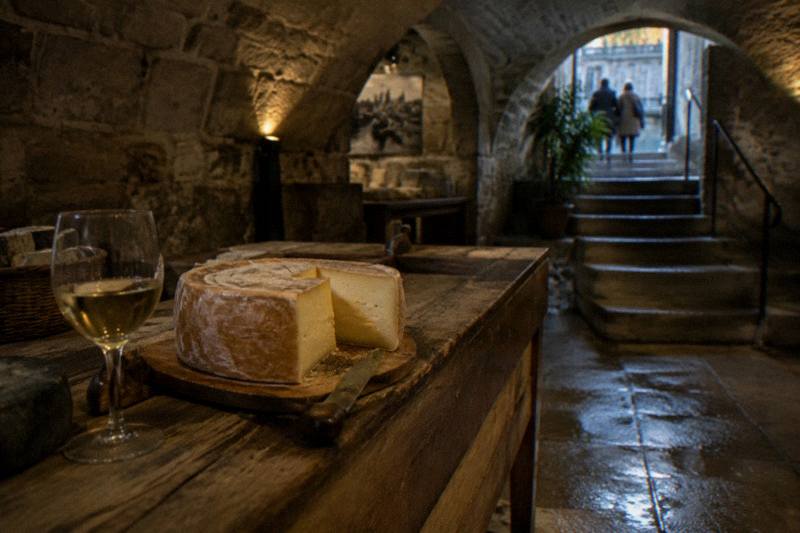
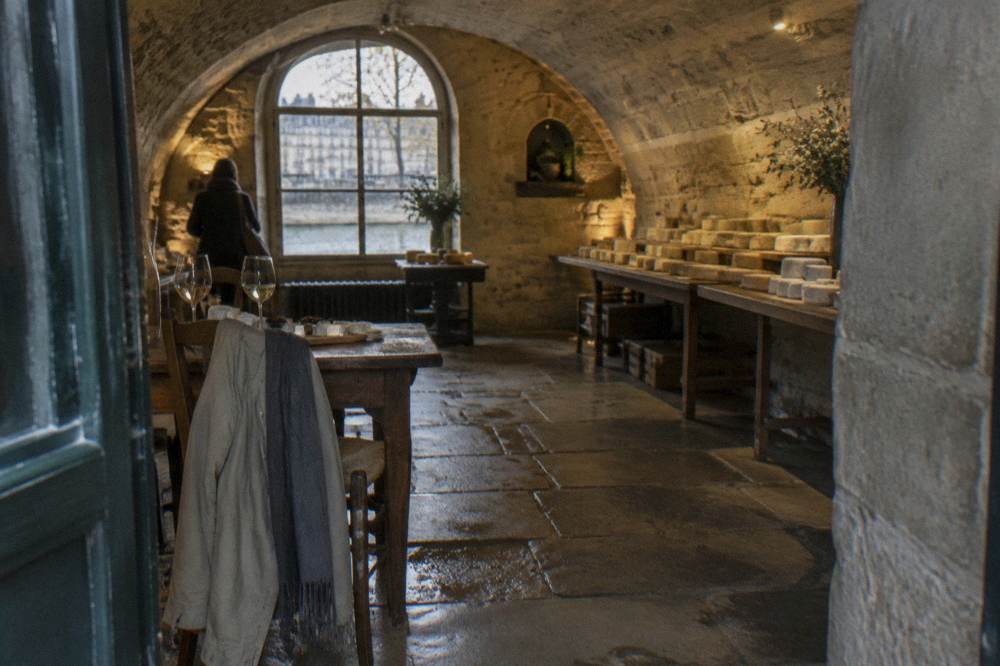
The venue list on this site's roster includes two genuinely underground settings. The pairing session by Paroles de Fromagers takes place in a cheese cellar on Île Saint-Louis, and Les Caves du Louvre runs its Ten Wines and Ten Cheeses tasting in a royal cellar near the Louvre. Both are below street level by design, because that is where cheese and wine keep well. A guest review of the cellar pairing from Marisa_A notes "the cheese cellar is charming" and that "1 1/2 hours just flew by", which is the experience you are dressing for: seated, absorbed, and cooler than the sidewalk above.
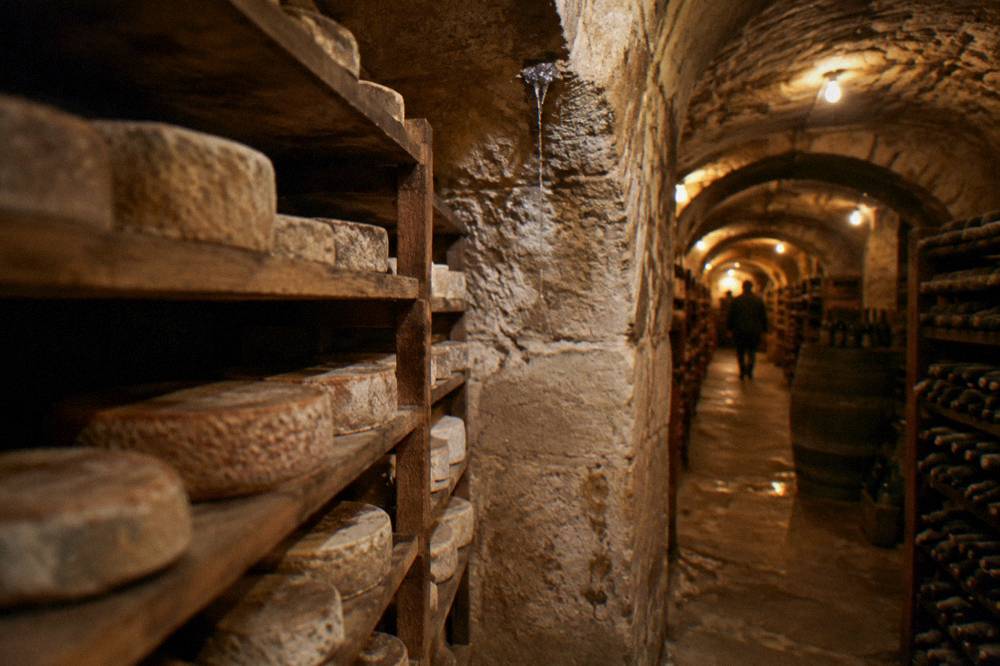
Stairs are the other cellar reality. Underground venues in Haussmann-era buildings usually reach their cellars by a narrow staircase, sometimes spiral, and the listings do not all flag this in advance. This is the single strongest argument for closed, flat shoes at a cellar tasting, stronger even than the temperature. Heels on old stone spiral stairs are a genuine hazard, and the descent and climb happen twice, at arrival and departure. If mobility or stairs are a concern for anyone in your group, check with the operator before booking, since accessibility details vary by venue and are not printed uniformly on the listings.
The layering math changes with the season outside, not the season in the cellar. The table below gives honest planning ranges rather than operator claims, built around how the three venue types on the Paris roster actually feel.
| Venue type | Example on this roster | How it feels | What to wear over your top |
|---|---|---|---|
| Underground cellar | Pairing in a Cheese Cellar, Île Saint-Louis; Ten Wines, Ten Cheeses at Les Caves du Louvre | Cool year-round, stone walls, stairs to enter | Light jacket, overshirt or knit you keep on |
| Dedicated tasting room | Ô Chateau rooms near Les Halles | Temperate, seated, restaurant-like | One removable layer for sensitive runs |
| Shop-front intimate session | Secret Wine Door, 15th arrondissement | Small room, body heat from up to 12 guests | Layer you can tie or drape when warm |
The Secret Wine Door session deserves its own word: six wines and six cheeses in an intimate space with up to twelve people means the room warms itself. A review from Jennifer_S calls it "the most amazing experience" and "My most favorite experience in Paris so far!", and guests who arrive in heavy sweaters for that one usually end up holding them. A removable layer works in both directions, which is the whole point.
Which Shoes Work Best For A Tasting In Paris?
Closed, flat shoes with decent grip are the right call for any Paris tasting, because you will walk to the venue on cobbles and possibly descend a cellar staircase once there. Cobblestones, metro stairs and old stone cellars all punish heels and slippery soles. Clean leather trainers, loafers, ankle boots or flats handle every venue on the Paris tasting roster without looking out of place at a smart casual table.
Distance is part of the shoe decision. Every tasting on the roster lists a central meeting area rather than hotel pickup: the cellar pairing meets on Île Saint-Louis, the sommelier formats near Les Halles, the Secret Wine Door session at Ségur in the 15th, and the Montmartre cheesemonger tasting on Rue Marcadet. None of these is a door-to-door experience. You will walk a stretch of Paris to get there, and Paris rewards shoes that have already been broken in.
The Montmartre cheesemonger session hosted by EATCHEESEWITHMAX is worth singling out, because Montmartre is a hill. Reaching the tasting room on Rue Marcadet can involve real slopes depending on your starting point, and the same advice applies to anyone pairing a tasting with a Montmartre food tour earlier in the day. Flat shoes with grip are not a stylistic preference on that hill, they are basic equipment.
Condition beats formality. A scuffed dress shoe slips on stone; a clean white sneaker looks deliberate and grips. If your Paris trip includes both a walking tour and a tasting on consecutive days, the same pair of broken-in leather trainers can honestly serve both, provided they are tidy enough for a seated table. The one category to leave at the hotel is brand-new shoes of any kind: two hours seated in an unbroken shoe, followed by a walk home, is a reliable way to sour an evening.
Should You Skip Perfume And Cologne At A Tasting?
Yes, skip fragrance entirely on tasting day. Scent is the mechanism of the experience: you smell the cheese, the wine and the glass, and a neighbor's perfume or cologne sits inside that same air. Wine professionals treat fragrance at tastings as a courtesy violation for exactly this reason. Unscented deodorant is fine and encouraged; perfume, cologne, scented hand cream and strongly fragranced hair products are not.
This is the one dressing decision that affects other people. A tasting room holds twelve people at many of the sessions on this roster, seated close enough to share boards and compare notes. Your fragrance becomes part of their tasting, and theirs becomes part of yours. The practical version of the rule: shower, use unscented products, and let the wine do the smelling. If you wear fragrance daily out of habit, move it to the morning after rather than the tasting itself. More of these guides are collected on Paris Food Tours.
The same logic extends to a few adjacent items. Strongly scented sunscreen belongs to the walk, not the room, so apply it early enough to settle or wipe hands before entry. Cigarette smoke on a jacket carries the same distance indoors. None of this is written on the listings, and no host will say anything, but it is the understood etiquette of shared tasting spaces everywhere in France, and following it marks you as someone who has done this before.
There is a companion rule on the drinking side worth knowing while you plan: the legal drinking age in France is 18 for all alcohol, and hosts are within their rights to check ID for anyone who looks younger, as French consumer guidance on alcohol rules states. Dress for the room, bring a passport copy if anyone in your group could plausibly be asked, and the evening runs itself.
What Should You Wear To A Tasting In Summer Versus Winter?
In summer, wear breathable smart casual layers you can remove, because the walk to the venue is warm and the cellar underneath is not. In winter, wear your normal warm outerwear plus one indoor layer, because the room you sit in is cooler than a heated restaurant. Spring and autumn split the difference. In every season, the constant is a removable mid-layer, since the temperature gap between Paris streets and a tasting room or cellar is the real variable.
Paris summers push sidewalks into the thirties some days, and walking twenty minutes to a tasting in direct sun argues for linen or cotton. The mistake is dressing only for the walk: you arrive perspiring, then sit for two hours in a stone cellar that ignores the season above. The fix is a light layer carried rather than worn, a shirt-jacket or a fine knit that goes on when you go down. Winter inverts the problem only partly, since the cellar stays cool rather than cold, but your coat, scarf and gloves come off at the door and go somewhere, which raises the bag question.
| Season | On the street | In the tasting room or cellar | The layer that solves both |
|---|---|---|---|
| Summer (June to August) | Hot, sunny walks | Cool cellar, up to 12 bodies warming small rooms | Cotton overshirt or thin knit, carried |
| Autumn (September to November) | Mild turning cool, rain risk | Cool and steady | Light jacket plus a scarf you can pocket |
| Winter (December to February) | Cold, wet pavements | Cool, never warm | Sweater under your coat, coat checked or on chair |
| Spring (March to May) | Changeable, showers | Cool and steady | Water-resistant light jacket over a long-sleeve top |
Rain belongs in every season's plan except high summer. Paris showers arrive without much ceremony, and a tasting ticket is not a reason to absorb one. A compact umbrella or a water-resistant layer keeps the smart casual look intact from hotel door to venue door, which matters if you are heading somewhere after. If your trip includes a market component, such as the full-day class with market tour format, weather protection matters even more, since those mornings start outdoors among the stalls.
Winter guests consistently over-dress for the room itself. The cellar does not get colder because it is January; it stays in the same cool band all year, which is the entire reason cheese ages well down there. One warm layer over your top is plenty once the coat is off, and two leaves you carrying one for two hours. Summer guests make the opposite error, and the review trail shows it: rooms that seat twelve people for six wines, like the Secret Wine Door session, warm up on their own.
What Should You Leave At The Hotel?
Leave heavy fragrance, heels, valuables you would fret over, and bulky bags you cannot keep at your feet. Tasting rooms are small: tables fill with glasses, boards and bread, and there is rarely a cloakroom in a cellar. Bring a compact crossbody or a small backpack that sits on the chair back, keep hands free for glasses, and save the statement jewelry for a dinner where it cannot knock against a carafe.
The space constraint is real and underrated. An intimate session like the Montmartre cheesemonger tasting, eight cheeses and five wines hosted by Max or a member of his team, runs in a working shop space. The royal-cellar format near the Louvre seats you among ten cheeses paired against ten wines, five white and five red. Both formats give every guest a full table setting and no spare real estate. A large shopping bag, a laptop case or a rigid weekender turns your seat into a logistics problem, for you and the person beside you.
Rings and bracelets deserve a specific mention that has nothing to do with style. Anyone who has worn a wide bracelet while handling stemware knows the clink hazard: a ring band against a tasting glass changes how you lift it, and a dangling sleeve dips into cheese. Close-fitting accessories and sleeves that stay up are the functional choice. This is also why a hair tie earns a place in your pocket; leaning over boards and glasses is half the session.
The short list comes down to this:
| Item | Verdict | Why |
|---|---|---|
| Wide-brim hat | Leave | Cellar ceilings and close seating make it a nuisance |
| Heels, slippery soles | Leave | Cobblestones outside, stone stairs inside |
| Perfume or cologne | Leave | Competes with the wine and cheese aromas |
| Big shoulder bag or weekender | Leave | No cloakroom in most cellars and small rooms |
| Compact crossbody bag | Bring | Holds ID, phone and the cardigan |
| Hair tie | Bring | Boards and glasses sit at leaning distance |
| Tasting journal or notes app | Bring | Seven to ten cheeses defeat unaided memory |
That last row is a quiet recommendation. Between the pairing session's seven cheeses, the Montmartre format's eight and the royal cellar's ten, most guests lose track somewhere around the fifth, and the ones taking a one-word note per cheese are the ones still talking about the trip months later.
Can You Wear The Same Outfit To A Tasting And Dinner After?
Yes, if the base outfit is smart casual trousers or dark jeans with a shirt or blouse, it passes at both a two-hour tasting and a mid-range bistro dinner afterward. The adjustment is one layer and one accessory, not a change of clothes. Add a jacket or a smarter shoe for dinner if you want a visible step up. Book the bistro in advance, though, since Paris reservations are expected even at casual spots, especially Friday and Saturday.
The two-hour evening formats time well for this. The sommelier tasting at Ô Chateau runs at set hours with an English-speaking host, and the operator's own ateliers page shows evening sessions starting around 17:00 and 20:00 for its formats, which leaves a natural dinner slot either side. A tasting that ends at 19:00 puts you at a restaurant door at 19:30, squarely at the start of Paris dinner service, when kitchens open for the evening. Dressing once, in one outfit that clears both bars, is simply efficient trip design.
What "clears both bars" means in clothes: the same dark jeans and shirt that felt right in the tasting room read as perfectly normal at a bistro, per the smart casual norm that French dining guides describe, while the shorts-and-trainers combination that survives a market walk does not. The middle path is to dress the tasting outfit slightly up rather than down, then let dinner be the outfit's second outing. A blazer or a scarf does the step-up work in a coat pocket or bag.
If dinner is the destination rather than an add-on, the reservation habit matters as much as the clothes. Paris dining guidance is blunt that reservations are strongly recommended even at casual bistros, particularly on weekend nights, and that lunch formule menus at decent bistros run 15 to 25 EUR for two courses, a figure one city guide prints for 2026. A tasting followed by a reserved bistro table, in one smart casual outfit, is the version of the evening that works on rails.
For readers who want the seated cellar experience as the anchor of the evening, the pairing session in the cheese cellar fits the format well: 90 minutes, seven cheeses, three wines, from $80 per person, holding 4.9 from 416 reviews. A review from Cynthia_V calls it "One of the best I've had in Paris" and adds "I learned more about wine and wine/cheese pairings then I thought I would", which is the tone of an evening worth dressing for.
If you are comparing the seated cellar format against a standing, shop-front session or a full sommelier lunch, the choice drives the outfit more than the calendar does: cellars want the layer and the flat shoe, lunch formats want the bistro standard. The three formats below cover that spread, and every one of them runs with free cancellation up to 24 hours before the start, so a wardrobe second thought never costs you the booking.
A closing thought on perspective: this whole question sits inside a larger one, whether a food tour experience in Paris justifies its ticket at all, which is examined in detail in is a food tour in Paris worth it. Dress is the smallest part of that answer, but it is the part you control on the day, and getting it right removes the last friction between you and the first glass. Paris Food Tours keeps this roster checked so the prices and formats above reflect the live listings.
Common Questions About What To Wear To A Wine And Cheese Tasting In Paris
What To Wear To A Wine And Cheese Tasting In Paris?
Smart casual layers: dark jeans or trousers, a shirt or blouse, closed flat shoes, and a removable light jacket for cellar venues that run cool and are reached by stairs. Skip perfume and cologne, since fragrance competes with the wine and cheese aromas in rooms of up to twelve guests. No listed tasting prints a formal dress code.
Are wine and cheese tastings in Paris cold?
Cellar tastings feel cool year-round, similar to a heavily air-conditioned room, because stone basements below street level hold their temperature. The listings do not print exact temperatures, so plan a layer rather than a wardrobe. Small shop-front rooms with up to twelve guests warm themselves, which is why a removable layer beats a heavy sweater.
Can I wear jeans to a wine tasting in Paris?
Yes, clean dark jeans fit every venue on the Paris tasting roster. French dining norms call for smart casual at sit-down tables, and jeans with a tidy top and closed shoes meet that bar. What to avoid is the other end of the drawer: shorts, sportswear, flip-flops and ripped jeans are the items French dining guides specifically flag.
Should I wear heels to a cellar tasting?
No. Cellar venues are reached by stairs, sometimes narrow or spiral ones in Haussmann-era buildings, and heels on old stone are a genuine hazard. Clean leather trainers, loafers, flats or ankle boots handle the walk to the venue, the descent and the seated session, and none of them looks out of place at a smart casual table.
Can I go straight from a walking tour to a tasting?
Yes, if the walking outfit was chosen with both in mind. Flat broken-in shoes and dark trousers work for a market walk and a seated tasting alike, while the market layer of sunscreen or rain gear should stay in the bag indoors. If the walking tour ends on a hill, as Montmartre tours do, budget ten minutes and a brisk walk to cool down before sitting among the glasses.