Why Do The French Eat Cheese With Wine?
The logic behind the French habit of serving cheese with wine: regional tradition, salt against tannin, and how to learn pairing on a guided tasting in Paris.
Why Do The French Eat Cheese With Wine?
The French eat cheese with wine because the two evolved together in the same regions, on the same farms, and because the combination works on the palate: the salt and fat in cheese soften the tannic dryness of red wine, while the wine's acidity cuts the richness of the cheese. It is terroir logic rather than an invented rule, and it is why the cheese course and the wine glass arrive together at a French table.
The short answer most French hosts would give is that cheese and wine come from the same places. A region that raises cows for Comté also grows grapes for the local vin jaune; a village that makes goat cheese along the Loire also produces crisp white wines from the same river valley. Over generations, the pairing that felt natural became the pairing that felt correct, and eventually it became part of the meal itself.
There is real science underneath the tradition. Tannin, the astringent compound in red wine, binds to proteins. Cheese is mostly fat and protein. Put the two together and the tannin has something to grip besides the inside of your mouth, which is why a tannic red that tastes harsh alone can taste smoother beside a slice of aged cheese. Meanwhile the wine's acidity refreshes the palate between bites, which is one reason the cheese course sits near the end of a French dinner rather than the start.
The pairing habit is also codified in how France protects its foods. France counts 51 AOP and 12 IGP dairy products, figures published by the Institut National de l'Origine et de la Qualité, the body that governs protected designations. Those cheeses are tied to named regions, and so are the wines beside them, as the INAO's own key figures show. The geography is not decoration; it is the whole system.
UNESCO recognised the larger frame in 2010 when it inscribed the gastronomic meal of the French on its intangible heritage list, citing the structured social ritual of the French table, a ritual in which cheese and wine hold fixed seats. None of this means the French sip and nibble with solemn faces. Most of it is simply lunch.
For visitors who want to understand the habit rather than just observe it, a guided tasting in Paris turns the folklore into something you can taste. These three formats are the ones we compared for pairing value:
What Makes Cheese And Wine Work Together On The Palate?
Three mechanisms carry almost every classic pairing: fat against tannin, salt against sweetness, and acidity against richness. A creamy, salty cheese softens a drying red; a sweet wine balances a pungent blue; a crisp white scrubs the palate after a fatty rind. When a pairing tastes right, it is almost always one of these levers doing the work, and a good tasting guide names the lever out loud.
Start with fat and tannin. Red wines, especially younger ones, contain tannins that draw moisture from the mouth and leave a dry, puckering finish. Aged cheeses such as Comté or an aged Tomme carry enough fat to coat the palate and blunt that effect. This is the mechanism behind the old advice that hard cheese goes with red wine, and it is also why a very tannic young red with a fresh goat cheese can taste like two arguments.
Salt is the second lever. Salt amplifies the perception of sweetness and mutes bitterness, which is why salty cheeses pair well with off-dry and sweet wines. The classic case is a blue cheese, Roquefort most famously, against a sweet white: the salt in the cheese makes the wine taste sweeter, and the sweetness makes the blue taste less aggressive. Neither ingredient changes; the palate's reading of both does.
Acidity is the third. Fresh, lactic cheeses, chèvre above all, sit heavy with fat and a slight tang. A high-acid white wine, a Sancerre for instance, mirrors the tang and rinses the fat, which is why the Loire pairing of goat cheese and Sauvignon Blanc is repeated so often it borders on cliché. It survives repetition because the mechanism is honest.
There is a fourth, quieter lever worth naming: texture. A triple-crème brie needs a wine with enough body not to be flattened by all that fat, which is why Champagne works so well beside it, the bubbles and the weight together. A dry, crumbly aged cheese wants a wine with some extract behind it. Texture mismatches are usually what makes a theoretically sound pairing fall flat in the glass, and they are the hardest thing to diagnose alone because nothing in the flavour description tells you.
One practical caution from the tasting room: the most durable myth is that white wine cannot stand up to cheese. In practice whites often pair more cleanly than reds, because their acidity handles fat better than tannin does. Professional tastings in Paris teach this early; the Paris Art of Pairing Cheese and Wine Tasting in a Cheese Cellar, run by Paroles de Fromagers on Île Saint-Louis, builds its 90-minute session around exactly this kind of matched-and-explained pairing, from $80 per person, and you can check current availability. A guest review from that listing describes it plainly: "Highly recommend! Knowledgeable and friendly guide told us a wealth of information; the cheese and wine were delicious and the cheese cellar is charming. 1 1/2 hours just flew by." (Marisa_A, 5 stars)
If you would rather build up from the basics first, our beginner's guide to wine tasting in Paris walks through glassware, tasting order and vocabulary before you commit to a pairing session.
Which French Regions Pair Which Cheese With Which Wine?
Regional pairing follows a simple principle: what grows together goes together. The Loire pairs goat cheese with Sancerre, the Jura pairs Comté with vin jaune, Bordeaux pairs its cabernet-leaning reds with local sheep cheeses, and Burgundy pairs Époisses with its own powerful whites and reds. Each match works because the cheese and the wine share a climate, a soil and several centuries of shared tables.
The Loire Valley is the easiest case to learn first. Its chalky soils grow both Sauvignon Blanc and the goats that become Sainte-Maure and Valençay. The wine's cut and the cheese's tang are near mirror images, so the pairing works every time, even for beginners who have never thought about pairing at all. Pairing logic works for sweets too, and our guide to the best macarons in Paris shows where the city's pastry shops get it just as right.
The Jura works the opposite way, with intensity. Comté, a cooked, pressed cheese aged in mountain cellars, meets vin jaune, an oxidative wine aged under a veil of yeast for years. Both taste of walnut and toasted nut, and the echo between them is the kind of thing that makes people start caring about pairing.
Burgundy offers the bold case: Époisses, a washed-rind cheese so pungent it is said to be banned on some public transport, against the region's structured Chardonnays and Pinot Noirs. The wine needs a cheese with enough personality to answer back, and Époisses answers. Normandy, cider country, is the reminder that the partner is not always wine at all, though Camembert also holds its own beside a fruity red.
The southwest rounds out the map. The Basque country produces Ossau-Iraty, a dense sheep-milk cheese, and Madiran, a tannic red built from Tannat vines; the cheese's fat and the wine's grip are made for each other, and both are protected products of the same corner of France. It is a useful pairing to know because it shows the fat-against-tannin lever at its most obvious, with no subtlety to misread.
| Region | Classic cheese | Classic partner | Why it works |
|---|---|---|---|
| Loire Valley | Goat cheese (chèvre) | Sancerre, Sauvignon Blanc | Matching acidity, fat rinsed clean |
| Jura | Comté | Vin jaune | Shared walnut, oxidative echo |
| Burgundy | Époisses | White or red Burgundy | Bold cheese needs structured wine |
| Bordeaux area | Ossau-Iraty style sheep cheese (Basque) | Madiran | Tannin softened by dense sheep-milk fat |
| Normandy | Camembert | Cider, or fruity red | Local tradition, fat meets fruit |
These pairings are general knowledge, not rules enforced by law, and variations exist in every region. What the table gives you is a starting grid. A tasting room in Paris condenses the whole map into one evening, and several formats do it well; our broader guide to wine and cheese tours in Paris compares them side by side.
The Ten Wines and Ten Cheeses Tasting at Les Caves du Louvre takes the regional idea to its widest scale, pouring five white and five red wines with ten paired cheeses in a historic cellar near the Louvre, from $125 per person. A guest review on the listing captures the appeal: "Wow! An amazing experience at an historic Paris landmark. Smart sommelier, enjoyed sharing information and answering our questions. The artisanal wine-cheese pairings were superb. Such an excellent choice and value. Cheers!" (Dina_W, 5 stars)
How Do You Learn Pairing Without Years Of Trial And Error?
The fastest way to learn pairing is a guided tasting where someone explains each match as you taste it, because self-taught pairing wastes bottles on mistakes. Alternatives exist: cheese shop counter advice, regional menus eaten slowly, and structured courses. But a 90-minute or two-hour session with a professional compresses years of accidental learning into a single evening, and Paris offers more of these than anywhere else.
Cheese shops are the free classroom. A proper fromager will ask what you plan to drink and cut accordingly, and the serious Paris shops keep evening hours for exactly this kind of visit. Fromagerie Nicole Barthélémy on rue de Grenelle, for instance, is open Tuesday to Friday 8:30 to 13:00 and 15:30 to 19:15, Saturday 8:30 to 13:30 and 15:00 to 19:00. Quatrehomme even launched a private cellar visit of over two hours with 8 cheeses and 4 wines for groups of up to 12, a sign that shops themselves are moving into teaching. Everything else covered here is indexed on Paris Food Tours.
Guided tastings add structure the counter cannot. A sommelier or cheese master sets a sequence, light to strong, fresh to aged, and explains the mechanism at each step. You leave not with a list of approved pairs but with the three levers, fat against tannin, salt against sweetness, acidity against richness, which you can apply to anything you meet later.
The sequence itself is a hidden part of the value. Palate order, mild before strong, white before red, dry before sweet, is what keeps each pairing legible; at home, most people taste in whatever order the fridge allows, then wonder why the fourth cheese tasted of nothing. A host also corrects the single most common beginner error, which is judging the wine by the pairing that preceded it rather than the pairing in front of it.
Paris Food Tours readers planning a first session should weigh format carefully. A sit-down lunch format, like the Wine and Cheese Lunch at Ô Chateau near Les Halles, pairs 5 artisanal cheeses with 5 French wines including one Champagne over two hours, from $95 per person. A cellar format like the Paroles de Fromagers session on Île Saint-Louis is shorter and more instructional. A large-scale format like Les Caves du Louvre is broader but less personal. There is no single right answer, only the one matching your appetite and schedule. Whatever format you pick, the guide to dressing for a Paris wine and cheese tasting explains why cellar temperatures, stairs, and smart casual norms should shape your outfit.
Is A Guided Tasting Worth It For Pairing Beginners?
For beginners, a guided tasting is usually worth it because it removes the two biggest costs of learning alone: wasted bottles and misplaced confidence. A session from $80 to $125 per person teaches the pairing levers, the regional map and the vocabulary in one to two hours, with every example poured and cut for you. Beginners who skip it tend to repeat a few safe pairs for years.
Consider what the alternative looks like. Buying five cheeses and five half-bottles to experiment at home in Paris, or worse, shipping that experiment home from a trip, costs more than most tastings and teaches less, because there is no one to say why the third pair failed. The guided session also handles sequence, which matters more than beginners expect: after a washed-rind cheese, almost any light wine tastes thin, and an unguided taster will blame the wine.
| Guided tasting (roster) | Format | Price from | Duration | Group size |
|---|---|---|---|---|
| Paris Art of Pairing Cheese and Wine Tasting in a Cheese Cellar | 7 cheeses, 3 wines, cheese cellar | $80 | 1 hour 30 minutes | Max 12 |
| Paris Ten Wines and Ten Cheeses Tasting in a Royal Cellar | 5 white, 5 red, 10 cheeses | $125 | 2 hours | Max 12 |
| Paris: Wine and Cheese Lunch | 5 wines, 5 cheeses, sit-down lunch | $95 | 2 hours | Not stated |
| Paris Wine Tasting plus Cheese Lunch with an Expert Sommelier | 5 wines incl. Champagne, sommelier | $97 | 2 hours | Max 26 |
| Cheese & Wine Tasting in Montmartre with Local Cheesemonger | 8 cheeses, 5 wines | $77 | 2 hours | Small group |
Every figure above comes from the operators' listings, which print free cancellation up to 24 hours before the start on all five, and prices vary by date. Review pools differ in size, so treat ratings as signal, not promise; the Paroles de Fromagers session carries 4.9 from 416 reviews, the Montmartre cheesemonger tasting 5 from 793.
The Wine and Cheese Lunch format suits beginners who want lunch and lesson in one sitting, and it earns repeat praise on its listing. One guest review of the sommelier-led Ô Chateau formats sums up the guided advantage: "One of the highlights of our trip! Bastian was so friendly and incredibly informative. We learned so much about the wines of France. And they were also delicious! The cheeses were also amazing. I couldn't recommend this more!" (Jake_L, 5 stars)
What Should You Know Before Booking A Cheese And Wine Tasting?
Check four things before booking: the cancellation window, the group size, the number of pours versus the price, and any dietary limits. Most Paris tastings print free cancellation up to 24 hours before the start, group caps run from 6 to 26, and pours range from 3 wines to 10. Dietary accommodations are limited on cheese tastings by nature, so confirm with the operator before booking if it matters.
Group size shapes the experience more than most buyers expect. A max 12 cellar session lets you ask questions of the host; a 26-person sit-down format delivers polished commentary but less conversation. Neither is wrong, and the price gap between them is often small, so choose by temperament.
Dietary limits deserve a specific warning. A cheese tasting is, definitionally, dairy. Listings on the roster state their own limits, and vegan or severe dairy allergies are generally outside what these sessions can accommodate. Alcohol-free options appear on some food tours but rarely as the headline of a wine tasting, so confirm directly with the operator before booking rather than assuming. The legal drinking age in France is 18 for all alcohol, which matters for families weighing whether a tasting fits.
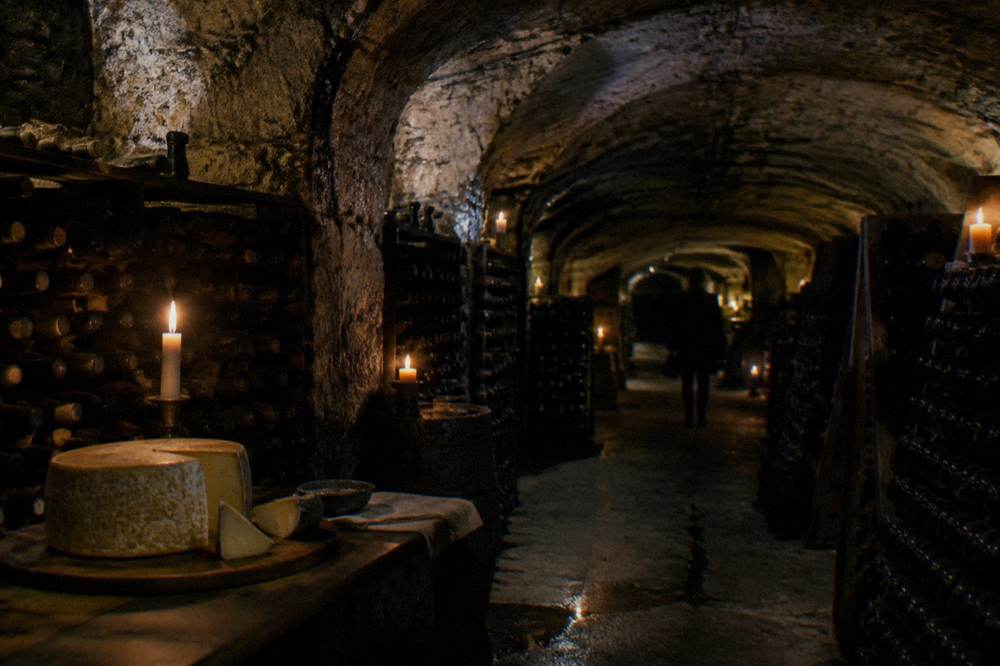
Timing matters too. Two hours is the norm, long enough for five to ten pairings without palate fatigue, and 90-minute formats suit a stop between sightseeing and dinner. Most sessions sit in central Paris, Île Saint-Louis, Les Halles, the Louvre, Montmartre, so the walk from a day's plans is short. Book the late-afternoon slot if you want the tasting to double as dinner prep; book earlier if you plan a restaurant after, keeping in mind a cheese tasting takes the place of the cheese course, not the meal.
Season is a smaller factor than timing but worth a thought. Cellar sessions run year-round and are unaffected by weather, which is why they are a reliable rainy-day plan in Paris, while a tasting that includes any walking element depends on the forecast. Winter visitors should also know that some of the cheeses on a French board are seasonal themselves, and a host will usually say which ones are at their best now and which are resting.
That background is worth knowing before a tasting, because hosts in cheese cellars are discussing it now: what protected cheese means when the climate shifts underneath the rules. If you would rather buy than taste, our guide to the best cheese shop in Paris covers where to go.
Common Questions About Cheese And Wine
Why Do The French Eat Cheese With Wine?
Because the two products share regions, history and a place in the structured French meal, and because the combination works chemically: cheese fat softens wine tannin, salt flatters sweetness, and wine acidity cuts richness. It is tradition confirmed by the palate, not a marketing invention.
Do The French Only Drink Red Wine With Cheese?
No. White wines often pair better with cheese than reds because their acidity handles fat more cleanly than tannin does. Sweet whites against blue cheese and crisp Loire whites against goat cheese are standard French pairings, and professional tastings teach them alongside the reds.
Which Cheese Should A Beginner Pair First?
Start with a mild, fatty cheese such as Comté or a young Tomme against a medium-bodied red, or a fresh goat cheese against a crisp white. These pairings work reliably and demonstrate the fat-tannin and acidity levers clearly, which builds the instinct for harder pairs later.
How Many Cheeses And Wines Do Paris Tastings Include?
Across the sessions on our roster, from 3 wines and 7 cheeses in the Île Saint-Louis cellar to 10 wines and 10 cheeses at Les Caves du Louvre. Sessions run 90 minutes to 2 hours, with prices from $77 to $125 per person depending on format and scale.
Can You Do A Cheese And Wine Tasting If You Do Not Drink Alcohol?
Rarely as a headline format. Wine tastings centre on alcohol, and cheese-only alternatives usually mean a cheesemonger counter visit instead. Confirm with the operator before booking, since accommodations vary by listing and are not guaranteed.