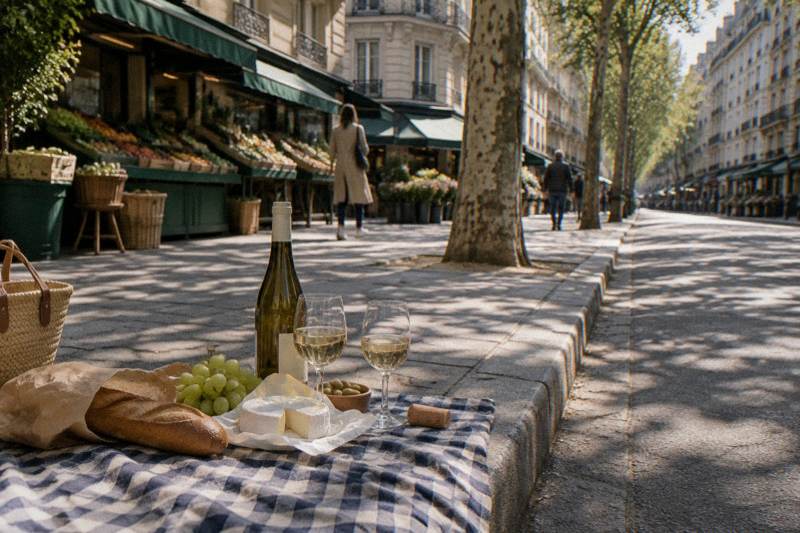
Is A Self-Guided Food Tour In Paris Worth Trying?
A DIY food walk through Paris can cost under 20 EUR in food, but market hours and Monday closures shape the whole plan. Here is how self-guided compares with a guided market tour.
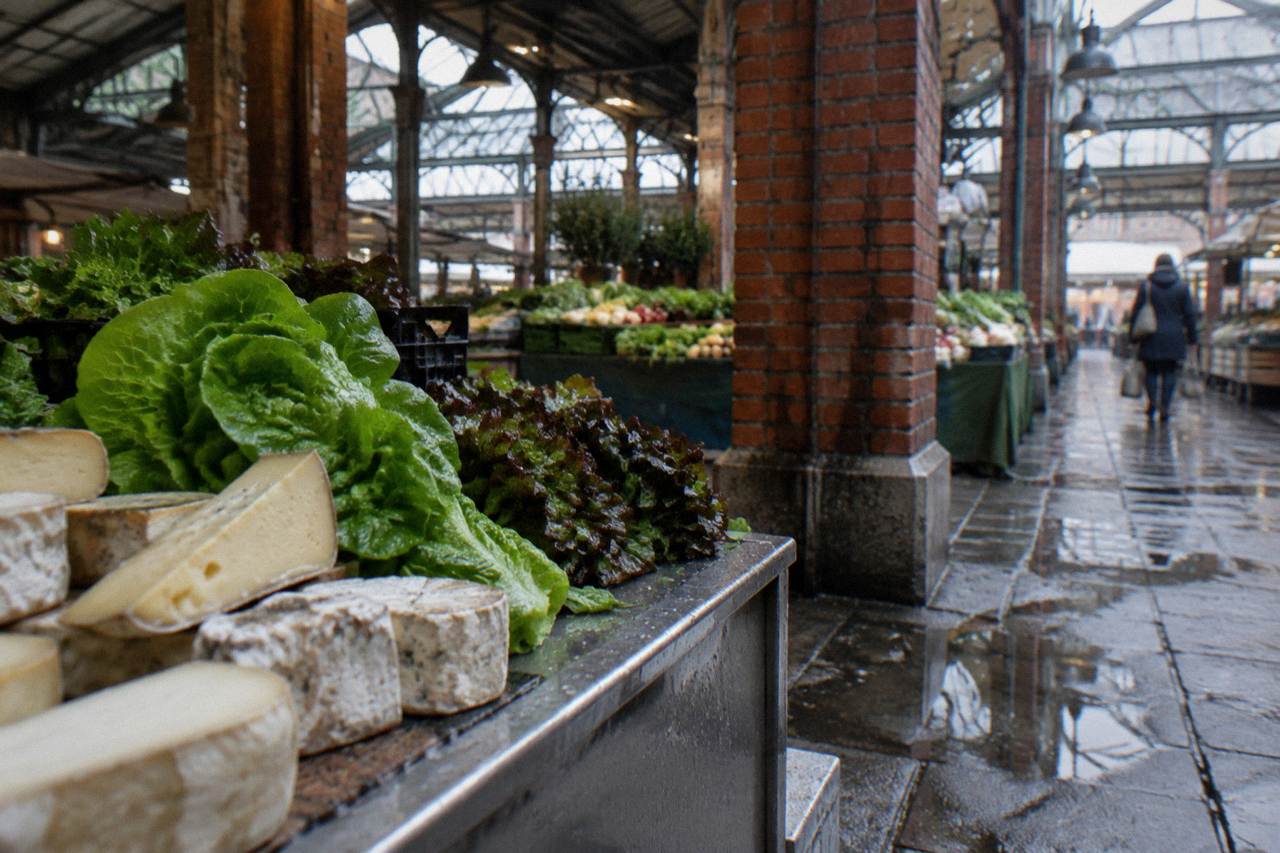
Paris runs 83 food markets, 74 open-air and 9 covered, and every one of them closes on Monday. That single schedule fact shapes almost every self-guided food plan in the city: the stalls you were counting on for a Tuesday cheese-and-bread afternoon may be packing up by 1:30 PM, and on a Monday the entire open-air system goes quiet. A DIY food tour in Paris is absolutely worth trying, but only if you build it around the official market calendar rather than around a list of pretty streets. If you don't eat meat, our vegetarian eating guide for Paris shows which markets, stalls, and tours still work for a meatless day.
Is A Self-Guided Food Tour In Paris Worth Trying?
Yes, if you enjoy a little planning and can work around Paris market schedules: the city's 83 food markets all close on Mondays, and covered halls keep their own separate hours. A DIY route built on a morning market, a fromagerie and a boulangerie can cost under 20 EUR per person in food. A guided market walk suits travelers who want the introductions, the pairings and the history without handling the logistics themselves. If you want your route to reflect how the city actually eats, the guide to where Parisians really shop and eat lays out market hours, bakery prices and weekday lunch habits.
The honest answer depends on what you want from the word "tour." A self-guided food day is not a cheaper clone of a guided walk. It is a different activity that happens to share the same raw material: markets, bakeries, cheese counters and the benches where you eat what you bought. You gain freedom. You choose the neighborhood, the pace, the budget and the detour when a shop window looks better than the plan. You lose the person who says "this cheesemaker ages this wheel for eighteen months, and here is why it matters."
Paris rewards both approaches because the raw material is unusually public. The markets are municipal, listed on the city's own pages, and the covered halls post hours at the door. A traveler with a modest budget and a free morning can assemble a genuinely good food experience from a market stall, a baguette at the average Paris price of 1.32 EUR and a slice of cheese bought by weight (see Kids On Montmartre). What a DIY plan cannot manufacture is access: the baker who explains lamination, the fromager who picks a pairing, the history of the street you are standing on.
The Paris Food Tours roster exists precisely because that gap is real. The guided market walks on this site, from a 105-minute Bastille market tasting to a full picnic stroll, sit between pure DIY and a full neighborhood food tour, and they are worth understanding before you commit to going alone.
Before choosing, it helps to see the two models side by side on the same axes: cost per person, what is included, and how much of the day you spend planning rather than eating. The comparison below uses this site's verified listing data for the guided side and the city's official market pages for the DIY side.
What Do You Give Up Without A Guide?
Without a guide, you give up context: who bakes the bread, which region the cheese comes from, and why one producer is worth the queue. Guides also handle pacing and language, and they open doors a walk-in visitor cannot. On the guided side, a two-hour Aligre market walk from $126 pairs wine and food tastings with a local guide in a group capped at 10, and reviews repeatedly name the guide as the reason the day worked.
The pattern shows up across every review on this site's listings. Guests do not only praise the food; they praise the person who explained it. One review of the Montmartre gourmet tasting walk says the guide "gave us not only the food and wine experience but very much French history." Another, from the Saint-Germain very small group tour, describes guessing jam samples and olive oil tastings between stops, the kind of structured mini-activity a guide improvises and a solo traveler cannot. The food is the prop. The narration is the product.
There is a practical layer too. A guide knows which stall to hit before the lunch rush, which fromager will cut a half-portion for one person, and how to order a cheese board without a phrasebook panic. None of this is impossible alone. All of it costs you time and a little social courage, and on a short trip that trade can be poor.
The bridge option is a short guided market walk that leaves the rest of the day free. The two-hour Aligre market walk from Original Food Tours runs from $126 per person in a group capped at 10, includes wine and food tastings, and carries a 4.4 rating from 24 reviews, a small pool that reflects a newer listing rather than a weak one. It starts at Bastille and works the Marché d'Aligre, so it doubles as a scouting trip: after two guided hours you know the market well enough to return alone the next morning. Check availability
Which Markets Work Best For A DIY Route?
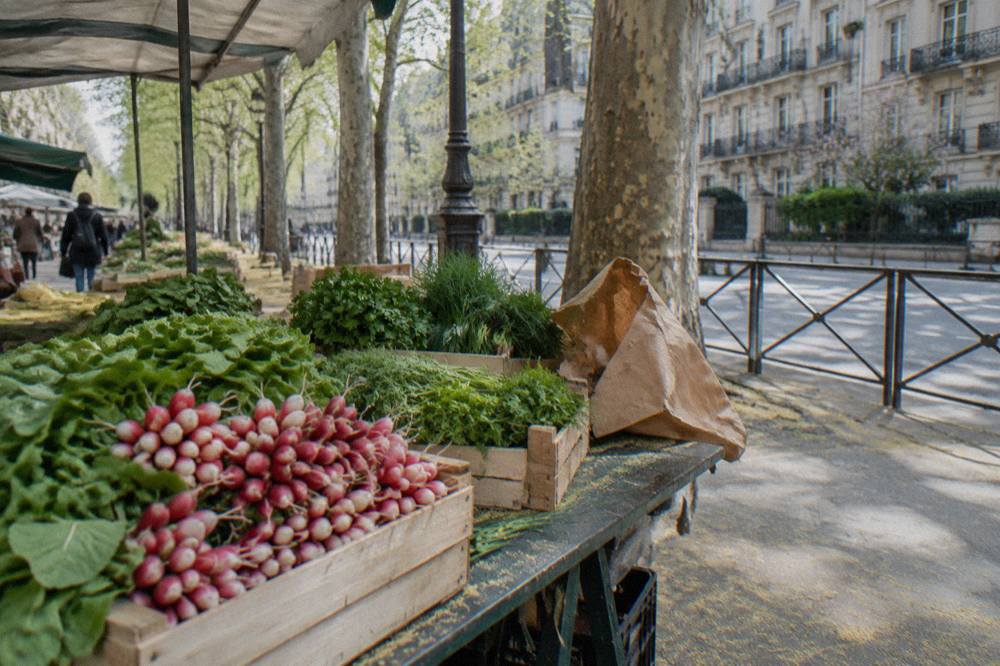
The best DIY anchors are Aligre for a full local market morning, the Marché des Enfants Rouges for ready-to-eat world cuisines in the Marais, and Bastille or the Raspail organic market for weekends. All of them close on Monday. Covered halls keep their own hours, and outdoor stalls finish by early afternoon, so a route built for 4 PM will find empty streets and shuttered awnings.
The city's official market list is the single most useful planning document for a self-guided food day, and it confirms the Monday closure rule across every listed market. The covered halls are separate: they trade on their own schedules, and two of the best known, Aligre's Halle Beauvau and the Marais's Enfants Rouges, keep long days that survive an afternoon plan.
| Market | Arrondissement | Days | Hours | Best for |
|---|---|---|---|---|
| Marché d'Aligre (outdoor) | 12e | Tue to Sun | 7:30 AM to 1:30 PM (to 2:30 PM weekends) | Full local market morning |
| Halle Beauvau (covered) | 12e | Tue to Sun | Tue-Fri 8 AM to 1 PM and 4 PM to 7:30 PM, Sat 8 AM to 7:30 PM, Sun 8 AM to 1:30 PM | Cheese, charcuterie, late-day shopping |
| Marché des Enfants Rouges | 3e | Tue to Sun | 8:30 AM to 8:30 PM, Thu to 9:30 PM, Sun to 5 PM | Ready-to-eat world cuisines |
| Marché Bastille | 11e | Thu and Sun | 7 AM to 1:30 PM (to 2:30 PM Sun) | Weekend produce under the Column of July |
| Marché Raspail (organic) | 6e | Sun | 7 AM to 2:30 PM | Certified organic produce and cheeses |
| Marché Saint-Germain (covered) | 6e | Tue to Sun | 8 AM to 8 PM, Sun to 1:30 PM | Central covered option near shops |
The Enfants Rouges deserves its place on any DIY list. It is the oldest covered market in Paris, founded in 1615, and the city's own page for it notes a producer stand on Wednesday and Saturday mornings. Its food stalls take no reservations, so a solo traveler just walks in and orders, which makes it the lowest-friction lunch stop in this whole comparison. It is busiest between noon and 2:30 PM, so arriving early buys you a table and a calmer room.
One warning worth printing plainly: Rue Mouffetard and Rue Cler, two streets that appear on countless DIY food itineraries, are street markets of permanent shops, not listed markets, and no official market hours exist for them. They are open daily and pleasant, but a plan that treats them like a Tuesday market with a closing bell will be confused about why nothing shuts at 1:30 PM. For dependable opening hours and a sense of which streets Parisians actually use, the guide to where locals really eat in Paris is the better reference.
How Much Does A Self-Guided Food Tour Cost?
Food alone can stay under 20 EUR per person: the average baguette tradition runs 1.32 EUR, a neighborhood croissant 1.20 to 1.60 EUR, and market cheese and fruit fill the rest of the budget. The real comparison is against guided pricing, which on this site's roster runs from $38 for a 105-minute Bastille market tasting to $172 for a market stroll with a picnic, so a DIY day trades the ticket for your own shopping.
The sample budget below is built only from prices this site has verified, printed as planning ranges rather than promises. Bakery and pastry prices move slowly; market produce moves with the season.
| Item | Typical price | Where the figure comes from |
|---|---|---|
| Baguette tradition | 1.32 EUR average | Survey of Paris bakeries, 2026 |
| Croissant at a neighborhood boulangerie | 1.20 to 1.60 EUR | Paris price tracking, 2026 |
| Box of 6 macarons at Ladurée | 21 EUR | Maison menu |
| Individual macaron at Angelina | from 3.20 EUR | Maison site |
| Baba au rhum at Stohrer | 6.10 EUR | Pâtisserie site |
| Falafel on Rue des Rosiers | 8.50 to 10 EUR depending on the shop | Two listed Marais addresses |
| Market cheese and fruit for two | plan 10 to 15 EUR | Planning range, check the stall |
A full DIY day for one person, built around a market morning and a bench, lands somewhere between 15 and 25 EUR in food. That is the honest floor. Add a sit-down lunch and the number doubles, but a sit-down lunch is a restaurant decision, not a market-tour decision, and French law already includes a 15 percent service charge in displayed menu prices, so the bill you see is the bill you pay.
Against that, the guided side of the ledger is broader than most travelers expect. The cheapest market-format option on this site's roster is a 105-minute Bastille market tasting from $38 per person, limited to 10 people, with cheese, charcuterie and an oyster tasting included. At the other end, the market stroll with picnic from With Love From Paris Tours runs from $172 per person in a group capped at 10, includes a selection of picnic treats from the market, a wine or champagne libation, and small surprises, and swaps to snacks if the weather kills the picnic. It holds a 5 rating from 24 reviews. The picnic stroll is, in effect, a self-guided tour with the shopping done for you: you still sit on the grass, you just skip the part where you guess which cheese to buy.
What Does A Sensible DIY Route Look Like?
A reliable shape is one market, one fromagerie, one boulangerie and one bench: start at Aligre or the Enfants Rouges before 11 AM while the stalls are full, buy in small quantities, and eat where the food is sold. Midweek mornings are calmest. Sunday works too, but the Raspail organic market gets busy before 11 AM and the Marais boutiques open around noon, so timing still matters.
Here is a concrete Tuesday plan. Arrive at Marché d'Aligre by 9 AM, when the outdoor stalls are fully set out and the brocante section is out along the square. Buy fruit first, then cheese by weight at the covered Halle Beauvau, then a baguette at any boulangerie on the walk toward the Marais. Eat on the way. The whole route from Aligre to the Marais is a pleasant forty-minute walk, and the Enfants Rouges makes a natural late-lunch terminus if you did not buy enough.
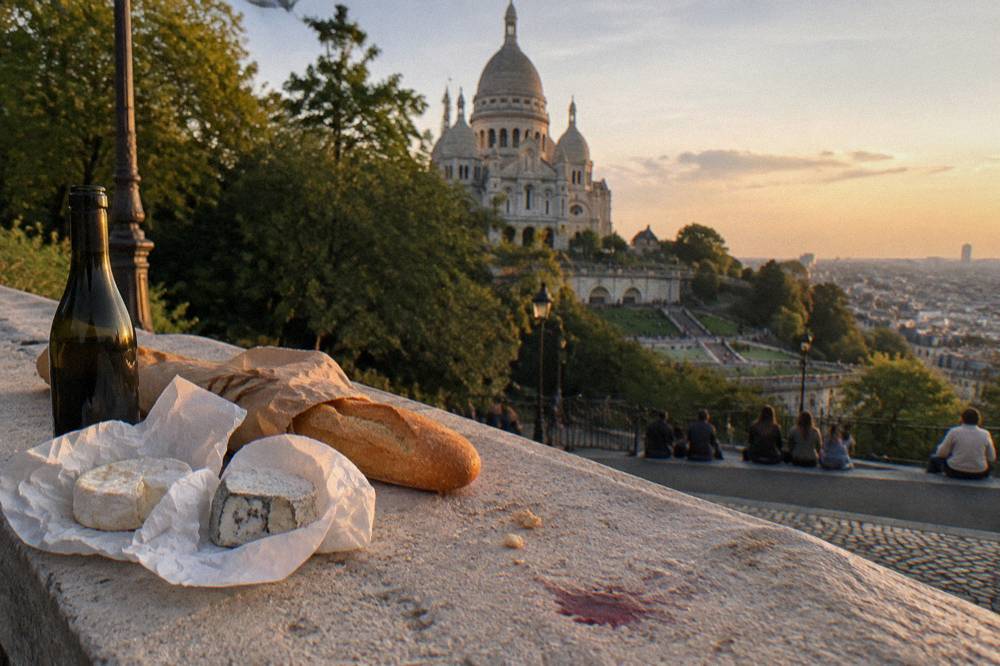
A few French dining rules quietly make the DIY day easier. Restaurants must display menus or plats du jour outside from 11:30 for lunch and 6 PM for dinner, so you can price a fallback lunch without committing. On-site customers can request a free carafe of tap water, and bread may only be charged if its price is visibly displayed beforehand. None of this needs a guide to use, but knowing it turns a picnic-plus-restaurant day from a guessing game into a plan.
For route depth beyond this article, the site's guide to Paris food markets and market tours breaks down each market neighborhood by stop, and the free and cheap food things to do guide covers the no-spend end of the same spectrum, from Wallace fountains to the 1 EUR student meal scheme. Between them, a traveler can assemble a full three-day eating plan without buying a single ticket.
The one thing to keep out of the plan is distance ambition. A route that chains Aligre, the Enfants Rouges, Rue Montorgueil and a Montmartre bakery in one day spends more time on the metro than at the counter. One neighborhood, done well, beats four done at a run, and the markets that close at 1:30 PM do not wait for a late itinerary.
When Does A Guided Tour Beat Going Alone?
A guided tour wins when time is short, when you want pairings explained rather than guessed, or when market logistics feel like work instead of fun. The Secret Dish, 10+ Tastings walk covers Montmartre with cheeses, breads, a Brittany crepe, macarons and wines over 2 to 3.5 hours, from $73 per person, and it carries a 4.8 rating from 5,387 reviews, one of the deepest review pools on this site's roster.
That review pool matters more than the rating itself. A 4.8 from 5,387 reviews is a pattern; a 5.0 from three reviews is a compliment paid by three people. When this site compares listings, it prints the count beside the rating for exactly that reason, and the Secret Dish walk is the strongest example on the market-tour-adjacent side of the roster. It is a walking food tour rather than a market tour, capped at 12 people, meeting in Montmartre, with free cancellation up to 24 hours before the start.
The guest reviews describe what a solo walker would have to invent for themselves. One traveler wrote that "lots of local history mixed with incredible bites. Walking was a nice pace, crowd management was good, Matthew took time to speak to each person and was very personable. Each bite left an impression!" Another named the guide directly: "Gaspard was great!! Super knowledgeable and so sweet! He took the time really explain all of what we ate and you cam tell he loves his job." That explanation layer is the product. A self-guided day can buy the same bites; it cannot buy the sentence that makes them interesting.
Dietary needs tilt the decision toward guided as well. The Secret Dish listing states that vegetarians are welcome but that vegan and gluten, dairy and cheese allergies cannot be accommodated. The Le Marais 10-tastings walk is adaptable for vegetarians, pescatarians and non-alcoholic options. A DIY traveler with allergies simply reads labels and asks in shops, which works, but a guided listing puts the policy in writing before you pay, and this site's rule of thumb is to confirm any dietary need with the operator before booking rather than assume.
Price, in the end, is the weakest reason to choose either side. The gap between a 20 EUR DIY bench lunch and a $73 guided walk is real but small on the scale of a Paris trip, and the picnic stroll at $172 costs more than many DIY days while removing all of the shopping. The stronger questions are how much time you have, whether you want the stories, and whether Monday, the day every market closes, happens to fall in the middle of your visit.
Common Questions About Self-Guided Food Tours In Paris
Is A Self-Guided Food Tour In Paris Worth Trying?
Yes, for travelers who enjoy planning: a market morning plus a fromagerie and a boulangerie can cost under 20 EUR per person in food. It is a poor fit if you want pairings and history explained, or if your only free day is a Monday, when all 83 listed Paris food markets are closed.
Which Day Should I Avoid For A DIY Food Walk?
Monday. Every market on the city's official list closes that day, and the covered halls are the only food-market option still trading. Saturday and Sunday mornings are the liveliest days, with the Raspail organic market running Sunday from 7 AM to 2:30 PM.
How Much Should I Budget For A Self-Guided Food Day?
Plan 15 to 25 EUR per person for a market-and-bench day: the average baguette tradition is 1.32 EUR, a croissant 1.20 to 1.60 EUR, and market cheese and fruit fill the rest. A box of six macarons at a famous maison adds about 21 EUR.
Can I Do A Self-Guided Food Tour Without Speaking French?
Yes, with modest effort. Market stalls and fromageries handle pointing and simple numbers all day, menus must be displayed outside before service, and the covered halls like the Enfants Rouges take walk-up orders with no reservation. A few phrases help at busy counters, but none of the core plan requires fluency.
Is A Picnic A Good Substitute For A Guided Tasting?
It substitutes for the food but not the narration. A DIY picnic from Aligre or the Raspail organic market delivers the same cheese, bread and wine at a fraction of a guided price. If you want the pairings explained and the shopping done for you, the market stroll with picnic, from $172 per person in a group capped at 10, is the guided version of the same idea.